
AI isn’t just some side project anymore. These days, it’s a real budget line for big companies, something boards talk about all the time. Global investment in AI is about to break $300 billion a year. McKinsey says AI could add up to $4.4 trillion to the economy every year. That’s huge. But even with all this promise, a lot of businesses still have trouble figuring out if their AI projects are actually paying off.
That’s the spot most CXOs are stuck in now.
Nobody’s asking if AI is cool or important anymore. Everyone agrees it is. The question now is much more basic: Are we actually getting real returns from utilising the AI development services? Is AI helping us make more money, boost margins, or cut risks in ways we can prove to our investors and stakeholders? If we pulled the plug on funding tomorrow, would the business even notice?
For executive teams, AI isn’t just a shiny new tool. It’s a real investment choice. Every dollar that goes into AI could have gone somewhere else, into growth, fixing operations, or other strategies. So, just experimenting or tracking how many models you’ve built isn’t enough. Even showing off technical improvements misses the point. What matters is whether AI is making a difference financially.
Our Co-Founder and CEO, Vinay Krishna Gupta, puts it this way: “Organizations that lead in AI maturity are the ones who connect their AI work straight to financial KPIs, not just technical milestones. That’s a big deal. You can count models or pilots all day, but that doesn’t answer the real question from the board: What’s the return?”
So, this blog is for CEOs, CFOs, COOs, and Chief Digital or Data Officers, the folks on the hook for results. It’s for leaders who sign off on budgets, explain strategy to the board, and have to show real numbers from innovation. Maybe you already use AI in customer experience, supply chain, finance, or product development. The next step is making sure the value is clear, trackable, and ready to scale.
Ahead, we’ll dig into how to build a finance-first framework for judging AI investments, how to pinpoint exactly what value AI brings (separate from all the other digital changes), how to figure out payback periods and margin impact, and how to tell the difference between a one-off pilot and real, lasting returns.
Because right now, success with AI is about proving it actually works for the business. The companies that come out on top aren’t just the ones spending the most. They’re the ones measuring smart and executing with financial focus.
Reframing ROI in the Context of Artificial Intelligence
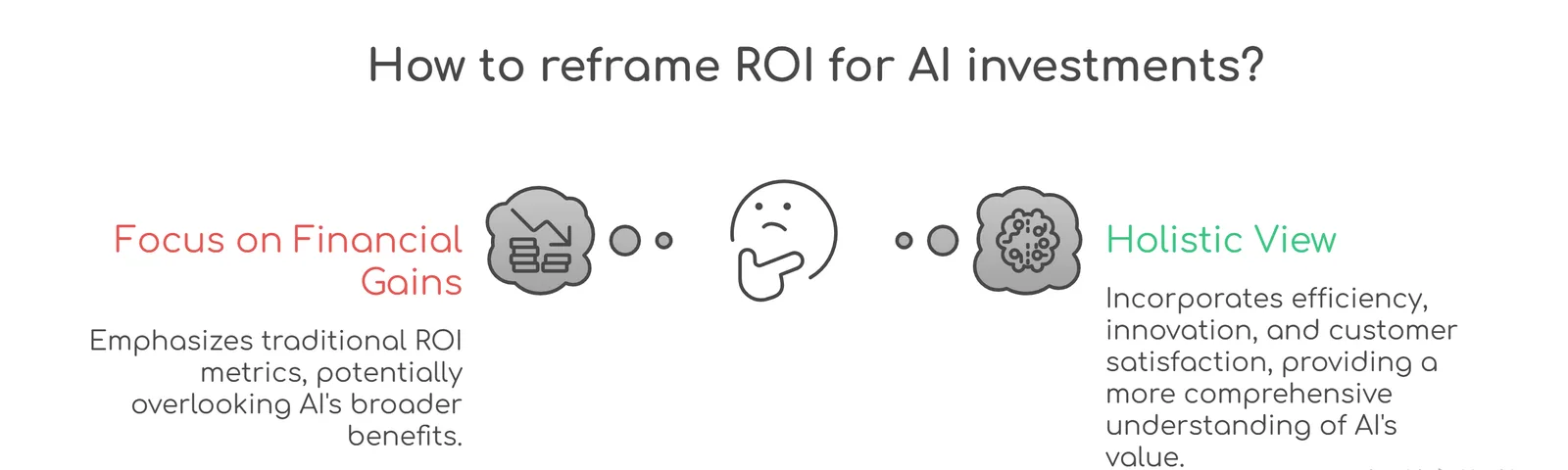
Traditional ROI models were built for predictable investments. You invest in a new plant, a software license, or a sales team expansion. You estimate costs, forecast revenue or savings, and measure the return over a defined period. The formula is straightforward:
ROI= (NetBenefit/InvestmentCost) x 100
For decades, this model has worked well for capital expenditures with clear inputs and outputs. But artificial intelligence does not behave like traditional capital.
AI systems learn. They evolve. They improve with more data and broader adoption. Their value compounds over time and often spills into adjacent processes. This makes the classic ROI lens necessary, but also insufficient.
Why Traditional ROI Falls Short for AI?
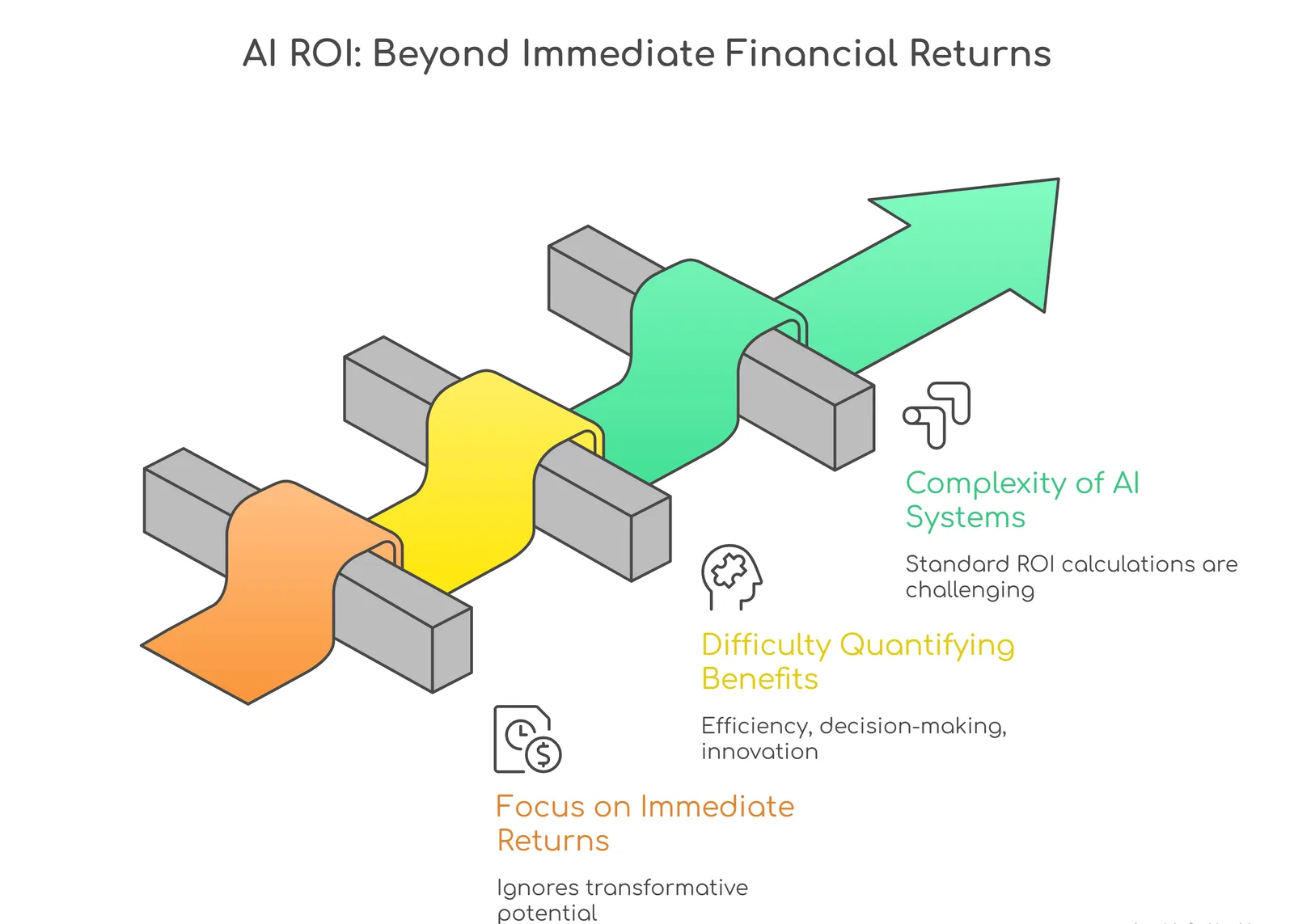
Traditional investments are pretty straightforward. You put in a million dollars, and if things go well, you get back $1.3 million. Easy to track, easy to explain.
AI just doesn’t work like that. At first, you’re cleaning up messy data, training models, trying to fit those models into existing workflows, and honestly, the results can seem underwhelming. But once the models get better and more people start using them, things take off. The real value often comes later, from unexpected places. Maybe smarter forecasts let you price things better, or automation frees up your team to chase bigger, more profitable projects.
The data backs this up. Companies that weave AI into their daily operations see way more financial upside than those just dabbling with isolated projects. Still, a lot of AI efforts get stuck before they really scale, and that makes early ROI numbers kind of misleading.
This puts CXOs in a tough spot. Boards want proof that investments pay off. Finance wants numbers they can defend. But the truth is, AI’s benefits spread out over different teams and evolve over time. It’s not a one-and-done calculation.
Moving from Project ROI to Portfolio ROI
To rethink ROI in the age of AI, you have to change how you look at things. Instead of treating AI as a bunch of separate projects, leaders need to see it as a core strategic skill.
Sure, a recommendation engine can boost conversions, and a forecasting model can cut inventory costs. Maybe a risk model slashes fraud losses. On their own, every one of these projects brings its own return. But together, they do something bigger, they ramp up your company’s data maturity, sharpen decision-making, and speed up operations.
So, the real question isn’t just “What’s the ROI on this one model?” It’s “What’s the payoff for building AI muscle across the whole business?”
Top organizations already get this. They treat AI as a long-term asset, not just an experiment. That shift changes how they measure success. It’s not only about direct profits. It’s about staying resilient, moving faster, and cutting down on risk, too.
Expanding the Definition of Return
Reframing ROI also requires broadening what qualifies as “return.” In the context of AI, returns typically emerge in three interconnected dimensions.
- First, revenue impact. AI can improve pricing accuracy, personalization, cross-sell performance, and product innovation. The financial impact may not always show up as entirely new revenue streams, but as incremental lift across existing channels.
- Second, cost efficiency. Automation, predictive maintenance, and workflow optimization reduce manual effort and errors. The savings may come from labor productivity, reduced downtime, or lower waste. However, these gains must be tied to real margin improvement, not just theoretical time saved.
- Third, risk and resilience. AI-powered fraud detection, compliance monitoring, and demand forecasting protect the organization from volatility. While harder to quantify, avoided losses and improved predictability have real financial value, especially in uncertain markets.
When ROI is reframed to include revenue growth, cost optimization, and risk mitigation together, the picture becomes more accurate and more strategic.
But the time horizon also matters…
Another critical shift involves time. Traditional ROI models often assume a fixed payback window. AI initiatives, however, frequently require an upfront foundation, data pipelines, governance, and talent development before generating significant returns.
Early-stage ROI may appear modest because infrastructure investments are included. Over time, as additional use cases leverage the same data and models, the marginal cost of innovation decreases while returns compound.
In this sense, AI behaves more like building a digital utility within the enterprise than deploying a one-off tool.
Shift from Measurement to Accountability
Reframing ROI does not mean lowering financial standards. On the contrary, it demands greater discipline. CXOs must ensure that AI initiatives are tied directly to business KPIs from day one. Clear baseline metrics, controlled pilots, and transparent attribution models are essential.
The difference lies in perspective. Instead of asking whether a single algorithm paid for itself in six months, leadership should evaluate how AI as a strategic capability is reshaping revenue velocity, cost structure, and risk exposure over a multi-year horizon.
In the context of AI, ROI is no longer just a formula. It is a framework for accountability, scale, and long-term enterprise value creation. Organizations that successfully reframe ROI with AI move beyond experimentation and into measurable transformation, where AI is not simply deployed, but monetized and institutionalized.
Determinants of AI ROI in Enterprise Environments
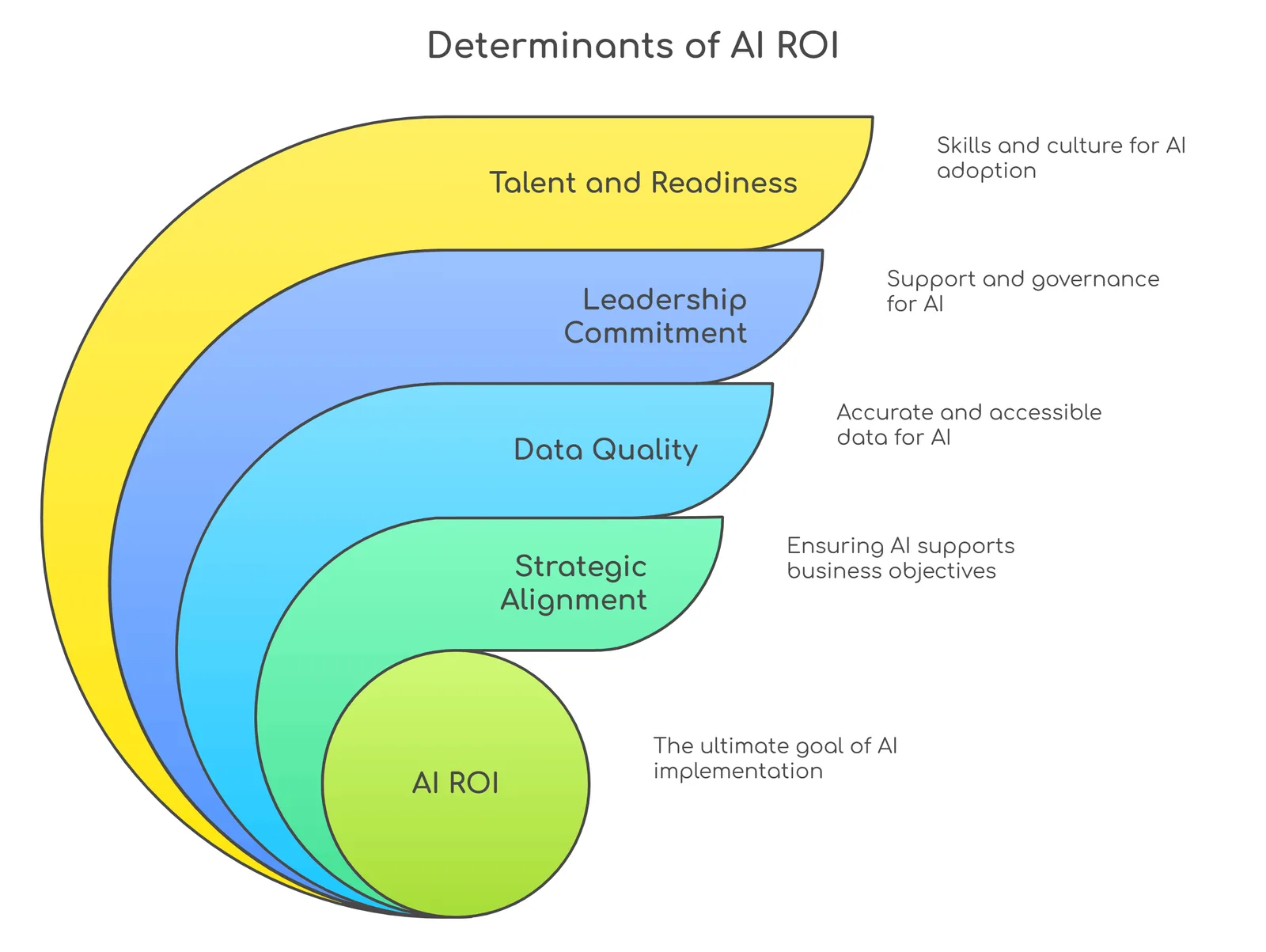
Artificial intelligence does not automatically generate returns simply because it is deployed. In enterprise environments, AI ROI is shaped by a combination of strategic, operational, financial, and cultural factors. Two organizations can invest similar amounts in AI technology and see dramatically different outcomes. The difference lies in the determinants behind value realization.
For CXOs, understanding these determinants is essential. AI ROI is not accidental. It is engineered.
Strategic Alignment with Business Objectives
The most significant driver of AI ROI is alignment with core business priorities. When AI initiatives are directly tied to revenue growth, margin expansion, customer retention, or risk reduction, value becomes measurable and defensible.
According to our Leaders, organizations that link AI efforts to clearly defined business outcomes are far more likely to report material financial impact. Conversely, projects launched purely for experimentation or competitive signaling often struggle to scale.
In practical terms, AI deployed to improve demand forecasting, optimize pricing, or reduce churn will produce clearer ROI than AI deployed without a defined economic objective. The determinant is not sophistication; it is relevance.
Data Quality and Accessibility
AI systems are only as effective as the data they consume. In enterprise settings, data is often fragmented across departments, legacy systems, and geographies. Poor data quality introduces bias, reduces model accuracy, and limits trust in outputs.
Research from Gartner consistently highlights data governance as one of the top barriers to AI value realization. Without clean, integrated, and timely data, models may function technically but fail commercially.
High ROI environments typically exhibit strong data governance, standardized definitions, and enterprise-wide access controls. The upfront investment in data architecture may appear costly, but it significantly increases the probability of sustained returns.
Leadership Commitment and Governance
AI ROI is also influenced by executive sponsorship and governance frameworks. When AI initiatives are owned solely by technical teams, they risk becoming isolated solutions. When leadership embeds AI into enterprise strategy, value accelerates.
Governance structures determine prioritization, funding continuity, and cross-functional collaboration. Clear accountability ensures that AI outcomes are measured against financial KPIs rather than technical milestones alone.
Organizations that treat AI as a strategic capability, rather than a side experiment, tend to scale successful use cases faster and sunset underperforming ones sooner. This disciplined approach protects capital and strengthens returns.
Talent and Organizational Readiness
Technology alone does not produce ROI. Human capability plays an equally critical role. Data scientists, engineers, domain experts, and business leaders must collaborate effectively.
According to us, enterprises with strong cross-functional AI teams are significantly more likely to achieve measurable financial impact. This is because domain expertise ensures that models solve real business problems, not abstract technical challenges.
Equally important is change management. Employees must trust and adopt AI-driven insights. If frontline teams ignore recommendations or revert to manual processes, projected ROI will not materialize. Adoption is a determinant often underestimated in financial projections.
Scalability of Use Cases
Many AI initiatives deliver promising results in pilot phases but fail to scale enterprise-wide. Scalability is a decisive determinant of ROI.
A model that improves performance in one region or product line may not generate a meaningful financial impact unless replicated across the organization. Scaling requires robust infrastructure, standardized processes, and ongoing monitoring.
Enterprises that design AI solutions with scalability in mind, considering integration, performance monitoring, and automation from the outset, are more likely to convert pilot success into sustained enterprise value.
Cost Structure and Investment Discipline
ROI is influenced not only by benefits but also by cost control. AI investments include infrastructure, cloud computing, talent acquisition, licensing, integration, and maintenance. Without disciplined budgeting, costs can escalate quickly.
The financial evaluation often follows the classic structure:
ROI = (FinancialGain − InvestmentCost) / InvestmentCost
However, in enterprise AI, both components of this equation are dynamic. Financial gains may grow over time as models improve, while costs may decrease as infrastructure is reused across multiple use cases. Organizations that standardize platforms and share assets across departments tend to achieve stronger cumulative ROI.
Measurement and Attribution Models
One of the most overlooked determinants of AI ROI is the ability to attribute outcomes accurately. In complex enterprises, performance improvements often result from multiple simultaneous initiatives.
Without clear baselines, controlled testing, and KPI tracking, it becomes difficult to isolate the specific contribution of AI. This weakens executive confidence and limits further investment.
High-performing organizations establish clear pre-implementation benchmarks and define success metrics before deployment. They measure lift in revenue, reduction in cycle time, decrease in error rates, or improvement in margin directly linked to AI intervention.
Cultural Readiness for Data-Driven Decisions
Finally, enterprise culture plays a subtle but powerful role. Organizations that rely heavily on intuition or hierarchical decision-making may resist algorithmic recommendations. In contrast, data-driven cultures are more likely to integrate AI outputs into daily operations.
ROI accelerates when decision-makers trust data, iterate quickly, and adapt processes based on insights. Cultural resistance, on the other hand, can quietly erode even technically sound AI investments.
All in all, in enterprise environments, AI ROI is shaped by strategic alignment, data quality, leadership commitment, talent capability, scalability, cost discipline, measurement rigor, and cultural readiness. None of these determinants operates in isolation. Together, they define whether AI remains an innovation experiment or becomes a financial engine.
For CXOs, the takeaway is clear. Maximizing AI ROI is less about chasing the most advanced algorithm and more about building the right ecosystem around it. When these determinants are intentionally managed, AI transitions from a technology investment to a measurable driver of enterprise performance.
AI Use Cases with Demonstrated ROI
For executive leaders, the conversation around artificial intelligence has moved beyond experimentation. The real focus today is on proven business impact. While AI can be applied in countless ways, only certain use cases consistently demonstrate measurable and repeatable return on investment across enterprise environments.
According to studies, companies that successfully scale AI in high-impact domains report meaningful gains in revenue growth and cost efficiency. Similarly, research shows that organizations concentrating AI efforts in clearly defined operational areas are more likely to generate positive ROI than those pursuing scattered pilots.
Below are enterprise AI use cases that have shown consistent financial returns across industries.
Revenue Optimization Through Intelligent Pricing and Personalization
One of the most direct paths to AI-driven ROI is revenue enhancement. Machine learning models can analyze customer behavior, historical transactions, competitor pricing, and market signals to recommend optimal pricing or personalized offers.
Retailers and e-commerce businesses have seen measurable increases in conversion rates and average order values by deploying recommendation engines. Financial institutions and airlines use dynamic pricing algorithms to adjust rates in real time, improving yield management.
The ROI in these scenarios is often visible in incremental revenue lift. Even a small percentage improvement in conversion or pricing accuracy can translate into millions of dollars at scale. Because revenue growth directly impacts top-line performance, these initiatives are often easier to defend at the board level.
Cost Reduction Through Process Automation
Operational efficiency remains one of the strongest AI value drivers. Intelligent automation, powered by AI models, can handle repetitive, rule-based tasks such as invoice processing, claims adjudication, document classification, and customer query resolution.
Organizations deploying AI-enabled automation frequently report reductions in processing time, error rates, and manual workload. Over time, this can lead to lower operational costs and improved productivity.
The financial impact is typically calculated using a standard ROI model:
ROI= (Cost Savings − Implementation Cost) / Implementation Cost
When automation reduces labor intensity or prevents costly errors, the savings accumulate quickly. In high-volume environments such as banking, insurance, and telecommunications, the scale effect amplifies returns significantly.
Predictive Maintenance in Asset-Intensive Industries
Manufacturing, energy, and transportation companies have demonstrated strong ROI through predictive maintenance. AI models analyze sensor data to detect early signs of equipment failure, allowing maintenance to be scheduled proactively.
Instead of relying on fixed maintenance cycles or reacting to breakdowns, predictive systems reduce unplanned downtime and extend asset life. Even a modest reduction in downtime can have a substantial financial impact on asset-heavy operations.
The ROI is not only in direct maintenance savings but also in increased production uptime and improved asset utilization. For enterprises operating large fleets or facilities, this use case has consistently proven its value.
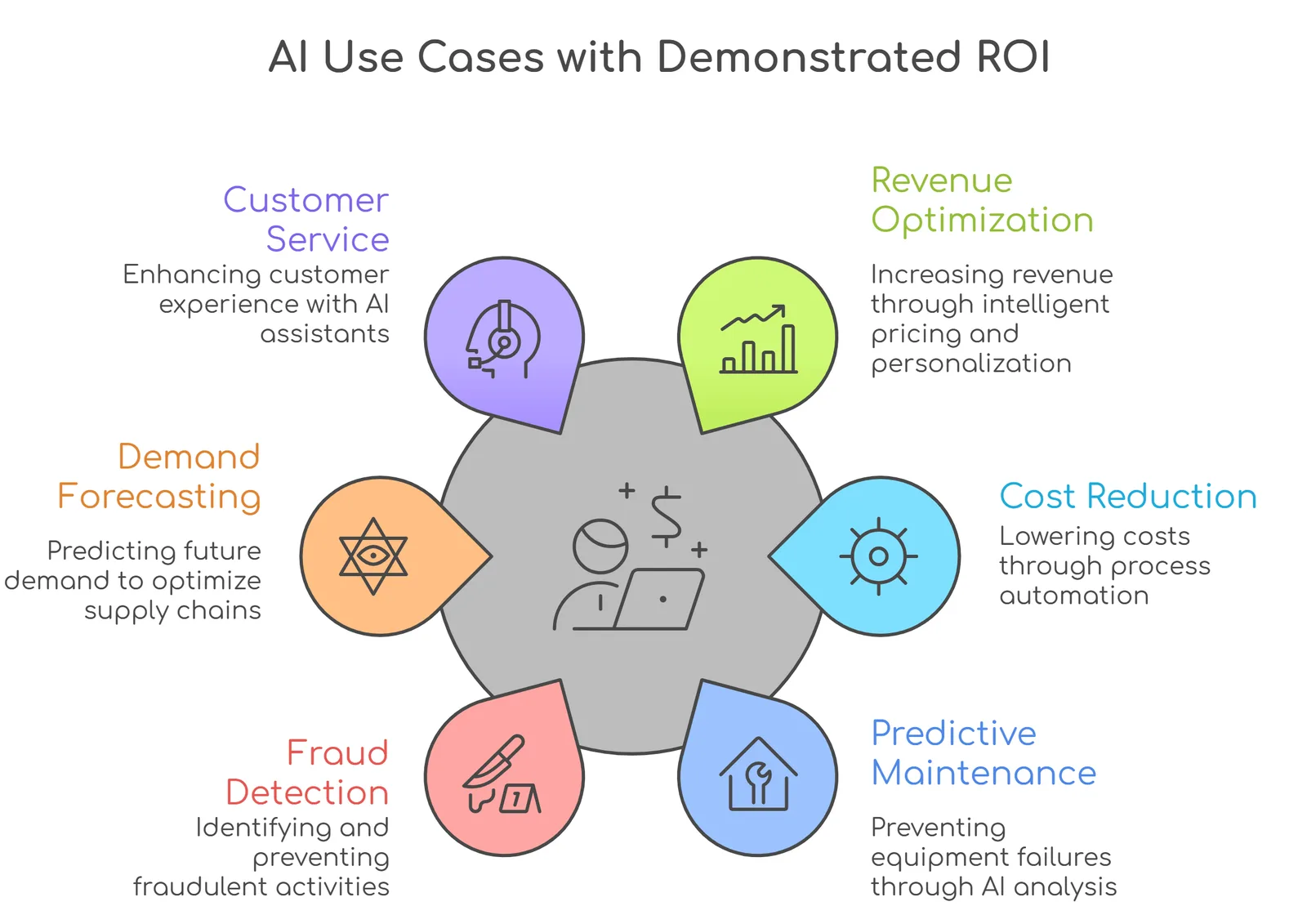
Fraud Detection and Risk Mitigation
AI-powered fraud detection systems analyze transaction patterns in real time to identify anomalies and suspicious behavior. Banks, payment processors, and insurance firms have leveraged machine learning to reduce fraud losses while minimizing false positives.
According to studies, AI-driven risk management systems are increasingly viewed as strategic assets because they protect revenue and enhance regulatory compliance. The ROI here often takes the form of avoided losses, reduced investigation costs, and improved customer trust.
Although risk mitigation benefits can be harder to quantify than revenue gains, enterprises that implement advanced detection models frequently report significant financial protection.
Demand Forecasting and Supply Chain Optimization
Supply chain volatility has elevated the importance of predictive analytics. AI models can forecast demand more accurately by incorporating historical sales data, seasonality, macroeconomic indicators, and real-time signals.
Improved forecasting reduces excess inventory, minimizes stockouts, and optimizes working capital. The financial benefits include lower holding costs, improved cash flow, and stronger customer satisfaction due to product availability.
In industries with thin margins, even small improvements in forecast accuracy can generate meaningful bottom-line impact. This makes supply chain AI one of the most defensible ROI cases in enterprise environments.
Customer Service Enhancement Through AI Assistants
AI-powered virtual assistants and AI chatbots are widely used to handle routine customer inquiries. When implemented effectively, they reduce call center volume, shorten response times, and improve customer experience.
The demonstrated ROI typically includes reduced staffing costs, faster resolution times, and higher customer retention rates. Additionally, AI systems can analyze conversation data to uncover insights that improve service design and product offerings.
For enterprises managing high customer interaction volumes, this use case often delivers both cost savings and revenue protection.
While these use cases have demonstrated measurable AI ROI, the real advantage emerges when organizations scale them systematically. A single predictive model may improve performance in one department. An enterprise-wide AI strategy multiplies that effect across functions.
The common thread across successful deployments is clarity of purpose, measurable KPIs, disciplined cost management, and strong adoption. AI use cases that are tightly connected to financial metrics, like revenue growth, margin expansion, cost reduction, or risk avoidance, are the ones that consistently justify continued investment.
Establishing a Measurement Framework for AI ROI
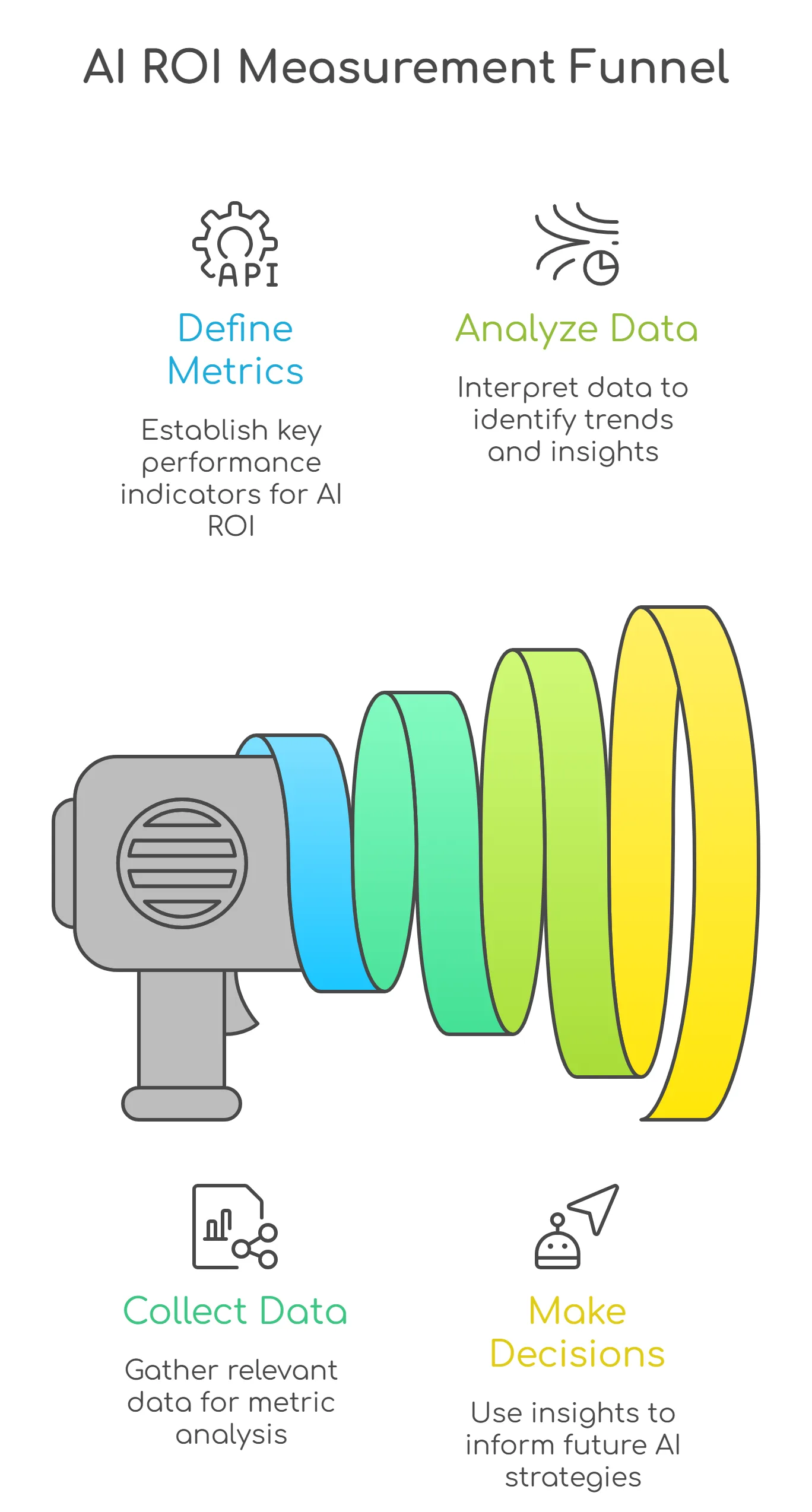
AI initiatives often begin with ambition but struggle with accountability. Many enterprises invest heavily in AI capabilities yet lack a structured method to measure financial outcomes. Without a clear framework, it becomes difficult to separate meaningful value from experimental momentum.
For CXOs, establishing a formal measurement framework is not optional. It is the foundation for disciplined capital allocation and long-term scalability.
Start with Financial Intent
A strong measurement framework begins before a model is built. The first question is not about algorithm selection or model accuracy. It is about economic intent. What specific financial metric is expected to improve?
AI initiatives should be anchored to clear business outcomes such as revenue growth, margin expansion, cost reduction, working capital efficiency, or risk mitigation. According to reports, organizations that define measurable business objectives at the outset are significantly more likely to capture financial returns from AI investments.
When financial intent is defined upfront, measurement becomes structured rather than reactive.
Establish a Clear Baseline
ROI cannot be calculated without a reference point. Before deploying AI, organizations must document baseline performance metrics. These may include current conversion rates, average handling time, inventory turnover, fraud loss rates, or operating costs.
The absence of baseline clarity is one of the most common reasons AI value becomes difficult to prove. If performance improves after deployment but other transformation initiatives are occurring simultaneously, attribution becomes blurred.
A measurement framework must therefore isolate the pre-AI state and create controlled comparisons wherever possible. This might involve pilot testing in selected regions, A/B testing, or phased rollouts that allow for performance contrast.
Define Direct and Indirect Value Streams
AI-driven outcomes often extend beyond immediate financial gains. A robust framework distinguishes between direct and indirect value streams.
Direct value may include incremental revenue lift or measurable cost savings. Indirect value may include improved customer satisfaction, faster decision cycles, enhanced forecasting accuracy, or risk avoidance.
Research from leading researchers suggests that many enterprises underestimate indirect benefits, even though these effects frequently compound over time.
For measurement purposes, both categories should be quantified wherever feasible. For example, improved forecast accuracy can be translated into reduced safety stock, which can then be converted into a working capital impact.
Apply a Standardized Financial Formula
Once financial gains and total investment costs are defined, the core ROI calculation remains grounded in financial fundamentals:
ROI= (Net Financial Benefit / Total AI Investment) x 100
However, in AI environments, both numerator and denominator require careful construction.
Total AI investment should include infrastructure, cloud costs, software licensing, data engineering, talent acquisition, integration, governance, and ongoing maintenance. Many organizations underestimate full lifecycle costs, which can distort ROI projections.
Net financial benefit must be attributable to AI influence. This may involve measuring incremental lift against a control group or tracking performance improvements after implementation while controlling for external variables.
Incorporate Time Horizon and Payback Period
AI ROI often unfolds over multiple phases. Initial investments may involve data architecture upgrades and model training, while returns accumulate gradually as adoption expands.
A comprehensive measurement framework, therefore, includes time-based metrics such as payback period and cumulative value over multiple years. Short-term ROI snapshots can undervalue initiatives that generate compounding returns.
Enterprises that evaluate AI investments over multi-year horizons are more likely to sustain funding and scale successful initiatives. Including time-adjusted metrics ensures that decision-makers understand both immediate and long-term impact.
Track Adoption and Behavioral Integration
Even the most accurate AI model generates no ROI if it is not used. Adoption rates and behavioral integration must be embedded into the measurement framework.
Metrics such as user engagement, workflow integration, decision override frequency, and automation utilization rates help determine whether AI outputs are influencing real business decisions.
If frontline teams ignore AI recommendations, projected financial gains may not materialize. Measuring adoption allows leaders to identify gaps in training, trust, or change management that could suppress ROI.
Establish Ongoing Monitoring and Governance
AI performance is not static. Models may degrade over time due to changing market conditions, data drift, or operational shifts. A strong measurement framework includes continuous monitoring of both technical performance and financial impact.
Regular performance reviews should assess whether expected gains are being realized and whether adjustments are required. Governance structures ensure that underperforming initiatives are recalibrated or retired, protecting capital efficiency.
Create Executive-Level Visibility
Finally, measurement must translate into executive dashboards that connect AI performance directly to financial KPIs. Boards and senior leadership teams require clarity, not technical detail.
Dashboards should link AI initiatives to revenue growth, margin improvement, cost savings, risk reduction, and return timelines. When AI performance is reported in financial language, confidence increases, and investment decisions become more disciplined.
Therefore, establishing a measurement framework for AI ROI transforms artificial intelligence from an innovation narrative into a financial instrument. It brings structure to value realization and transparency to investment decisions.
For CXOs, the objective is clear. AI should not merely demonstrate technical capability. It must prove economic impact. A well-designed measurement framework ensures that every AI initiative is evaluated not by novelty, but by measurable contribution to enterprise performance.
Structured Approach to Maximizing AI ROI
Artificial intelligence does not generate strong returns by default. It generates returns when it is aligned with strategy, embedded into operations, and governed with financial discipline. Many enterprises invest heavily in AI but fail to extract measurable value because implementation lacks structure. For CXOs, maximizing AI ROI requires a deliberate, repeatable operating model.
1. Align AI with Business Strategy
AI initiatives must directly support enterprise goals such as revenue growth, cost reduction, margin expansion, or risk mitigation. If a project cannot clearly link to a financial KPI, it should not move forward.
According to McKinsey & Company, companies that align AI investments with strategic priorities are significantly more likely to realize measurable returns.
2. Prioritize High-Impact Use Cases
Focus on initiatives that:
- Affect large revenue streams or major cost centers
- Have accessible, reliable data
- Offer measurable outcomes
Avoid small pilots with no clear path to scale.
3. Apply Clear ROI Discipline
Keep financial accountability simple and transparent:
ROI= (Net Benefit − Investment Cost) / Investment Cost
Track all costs, including infrastructure, cloud, talent, integration, maintenance, not just development expenses. Strong ROI depends on both maximizing benefit and controlling total lifecycle cost.
4. Strengthen the Data Foundation
AI performance depends on clean, integrated, and governed data. Weak data environments increase delays and rework. Research shows organizations with mature data capabilities achieve faster time to value from AI initiatives.
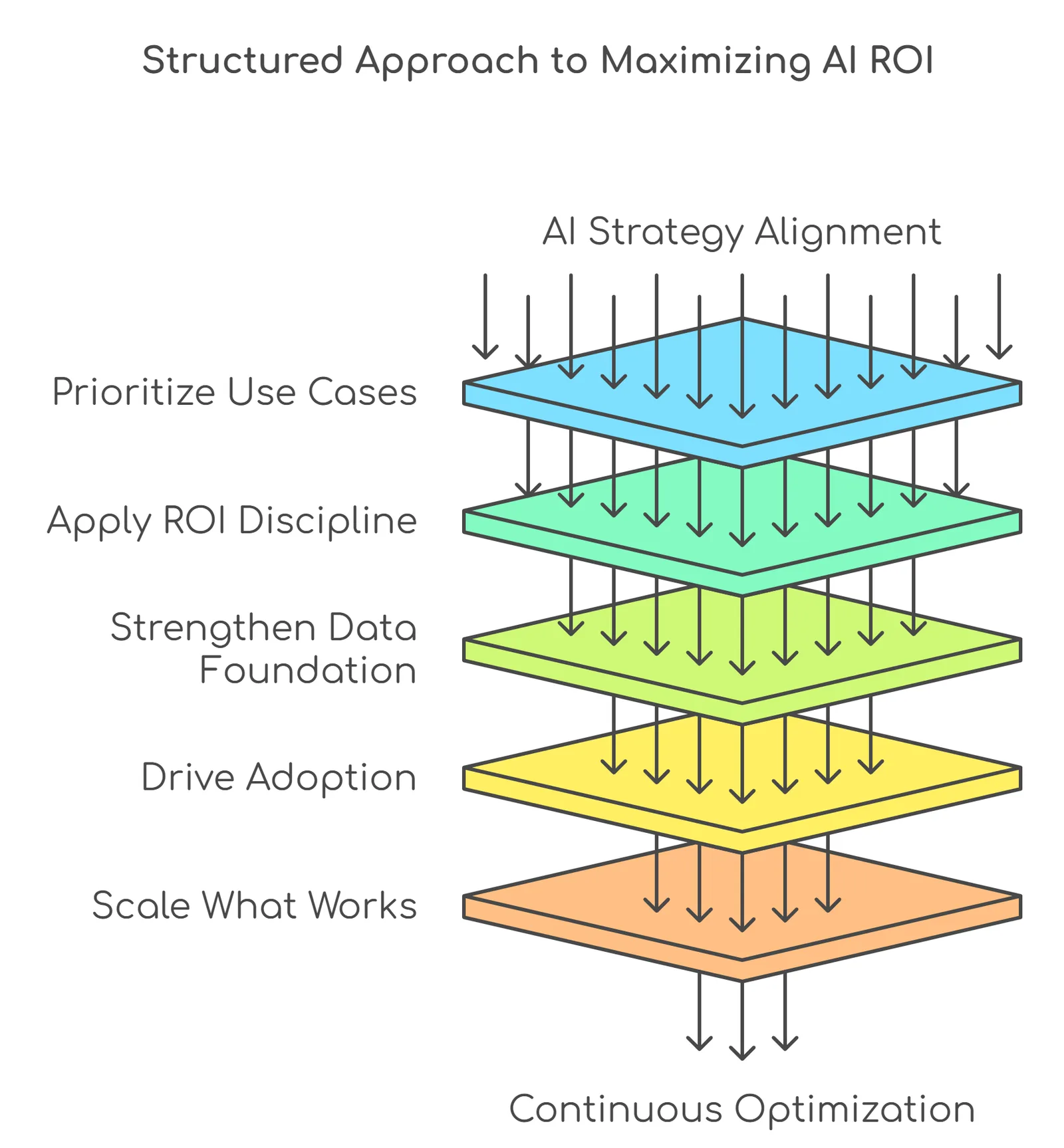
5. Drive Enterprise Adoption
AI only creates value when people use it.
- Embed AI outputs into workflows
- Align incentives with AI-driven decisions
- Monitor usage and impact
High model accuracy means little without operational adoption.
6. Scale What Works
Avoid disconnected pilots. Create reusable frameworks, shared data pipelines, and standardized governance so successful models can expand across business units. According to studies, organizations that scale AI systematically outperform those running isolated experiments.
7. Continuously Measure and Optimize
Markets shift, and models drift. Establish ongoing performance reviews to ensure projected benefits are being realized and costs remain justified.
In simple terms, maximizing AI ROI requires strategic alignment, financial discipline, strong data infrastructure, cross-team adoption, and disciplined scaling. When these elements work together, AI becomes a measurable driver of growth.
How did our Custom AI Solutions help Synapsica in reducing medical reporting time by over 80%?
Before implementing our solution, radiologists spent 45-60 minutes per case manually reviewing DICOM images and preparing spine reports. After deploying Antino’s custom AI platform, reporting time dropped to 5-10 minutes, reducing turnaround time by over 80% while maintaining diagnostic accuracy.
Key Solutions Implemented
1. Automated DICOM Image Processing
- AI models automatically analyzed DICOM scans across multiple spinal axes.
- Critical spinal measurements were captured instantly.
- Abnormalities such as deformities and degeneration were highlighted in real time.
- Reduced manual measurement and primary scan review time.
2. Automatic Image Annotation & Report Generation
- The system auto-generated structured spine reports.
- Pathologies like listhesis were identified and annotated automatically.
- Eliminated manual marking and repetitive documentation.
- Improved consistency and reduced human variability.
3. Verification-First Workflow
- Shifted radiologists from manual detection to AI-assisted verification.
- Clinicians reviewed and confirmed AI-flagged findings instead of starting from scratch.
- Reduced cognitive load while preserving clinical oversight.
- Accelerated case completion without compromising precision.
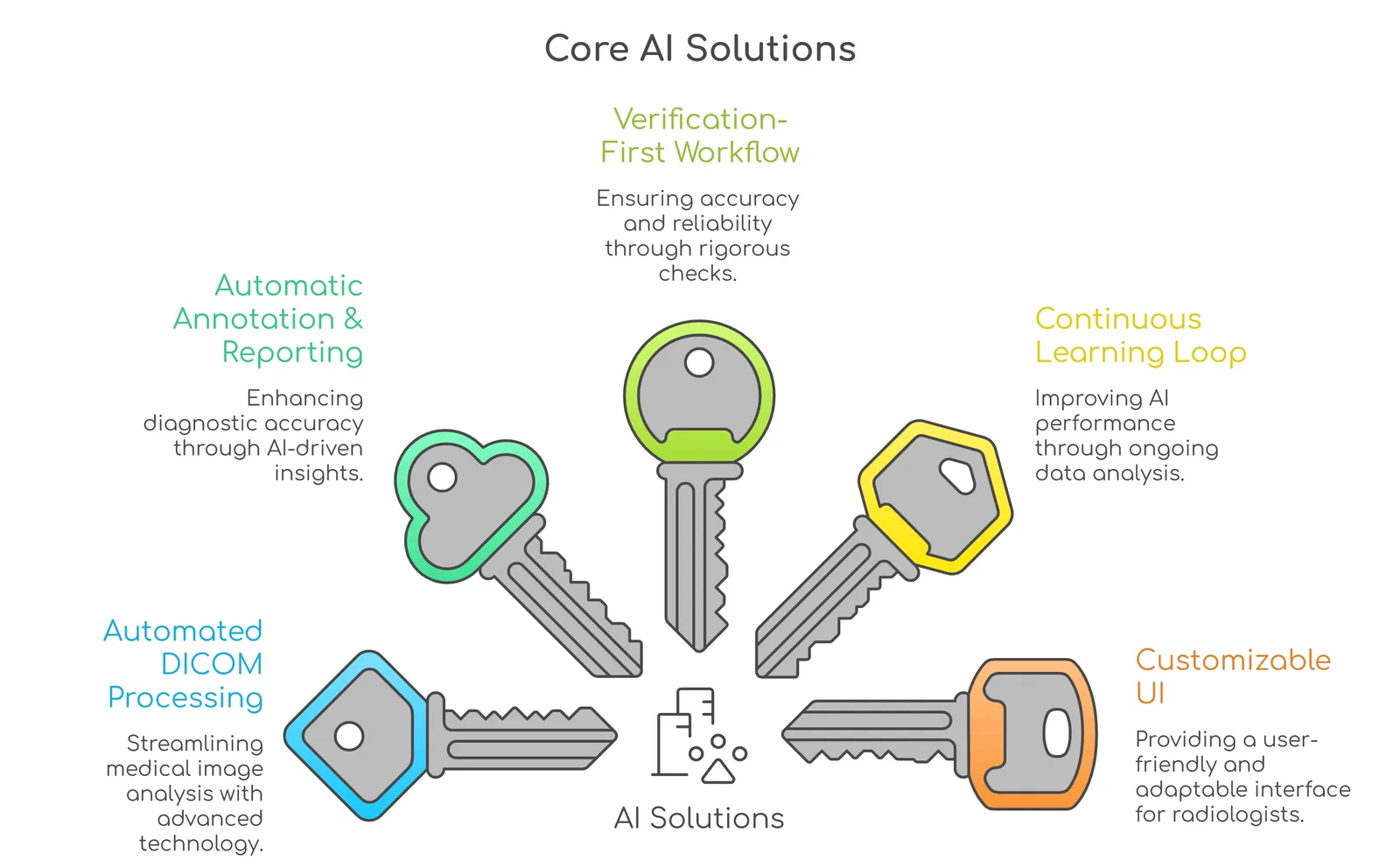
4. Continuous AI-ML Learning Loop
- Radiologist corrections and confirmations were fed back into the system.
- AI models continuously refined predictions over time.
- Improved accuracy with increased usage.
- Reduced repeat errors and edge-case inconsistencies.
5. Customizable, Radiologist-Centric UI
- Redesigned interface tailored to spine diagnostics.
- Adjustable layouts, zoom settings, and shortcut controls.
- Faster navigation across multi-axis imaging views.
- Workflow optimized to match radiologist preferences.
Business Impact
- Reporting time reduced by over 80%
- Increased daily case handling capacity
- Improved reporting consistency
- Reduced manual workload and fatigue
- Faster turnaround for spine diagnostics
By combining automation, machine learning, and workflow redesign, Antino transformed spine reporting at Synapsica from a manual, time-intensive process into a scalable, AI-augmented clinical workflow.
Are you Ready to Unlock Real Business Value with AI?
At Antino, we help organizations move from AI ideas to measurable outcomes. Our approach focuses on building custom AI solutions that fit your industry, workflows, and long-term business goals. Whether you need to reduce operational turnaround time, improve decision accuracy, automate manual processes, or enhance productivity, we design systems that deliver practical and scalable impact.
From strategy and development to deployment and continuous optimization, our team partners with you at every stage of the AI journey. We prioritize usability, integration, and measurable ROI so your teams can adopt AI with confidence. If you're ready to transform complex challenges into intelligent, efficient workflows, Antino can help you turn AI into a true competitive advantage.
Key Takeaways
- AI investment is a strategic capital allocation decision that must deliver measurable financial outcomes.
- Traditional ROI models need to be reframed for AI because value often compounds over time rather than appearing in a straight line.
- Measuring AI success requires linking initiatives directly to financial KPIs such as revenue growth, cost reduction, margin improvement, and risk mitigation.
- AI ROI is influenced by multiple enterprise determinants, including strategic alignment, data quality, leadership commitment, talent readiness, scalability, and disciplined cost management.
- High-impact AI use cases, such as intelligent pricing, automation, predictive maintenance, fraud detection, and demand forecasting, consistently demonstrate measurable returns when properly scaled.
- A structured measurement framework must include baseline metrics, direct and indirect value streams, lifecycle cost tracking, adoption monitoring, and multi-year evaluation horizons.
- ROI calculations should account for total AI investment and attributable financial gains. At its core, the financial logic remains:
ROI= (Net Financial Benefit / Total AI Investment) x 100
- Adoption and behavioral integration are just as important as model accuracy. AI only generates value when embedded into daily decision-making workflows.
- Scaling successful AI use cases across the enterprise multiplies returns and transforms AI from a pilot initiative into a long-term strategic capability.
- The Synapsica case demonstrates that custom AI solutions, when aligned with workflow design and precision requirements, can reduce operational time by over 80% while maintaining quality and consistency.
- Ultimately, organizations that treat AI as an enterprise capability, not just a technology deployment, are the ones that convert innovation into measurable, defensible business value.