Are you still evaluating when and how to implement AI across your asset and wealth management operations? While many organizations remain in the planning stage, others have already started integrating AI into their decision-making frameworks because AI adoption in the FinTech space has matured enough. According to the PwC Asset & Wealth Management Report, firms adopting AI-led transformation could see up to a 12% revenue increase by 2028.
But the real questions are-
Can traditional systems keep pace with the growing complexity of financial markets?
Can risk committees continue relying on historical reports when predictive insights could highlight risks before they emerge?
Can compliance teams effectively manage evolving regulatory requirements without real-time monitoring and automated intelligence?
And can portfolio managers realistically deliver hyper-personalized investment strategies at scale without AI-powered decision support?
These questions are pushing financial institutions to rethink how AI portfolio management is approached.
In this article, we explore what it takes to transition from static portfolio management to intelligent, AI-enabled systems. We will also examine how experienced technology partners like us can support organizations in implementing AI capabilities efficiently and at scale.
Business Rationale for Portfolio-Level AI Governance
What happens when multiple AI models are deployed across an organization without a unified layer of oversight?
For many enterprises in 2026, this is no longer a theoretical concern. As AI adoption accelerates, organizations are managing dozens, or even hundreds, of models across different business units. These models process large volumes of data, influence critical decisions, and often operate across distributed environments. Without a structured governance approach at the portfolio level, the risks can quickly multiply.
How do you ensure consistency in how models are built, deployed, and monitored?
How do you prevent bias, data misuse, or compliance gaps when multiple teams are developing AI solutions independently?
And how do leadership teams maintain visibility into the performance, risks, and value generated by their AI investments?
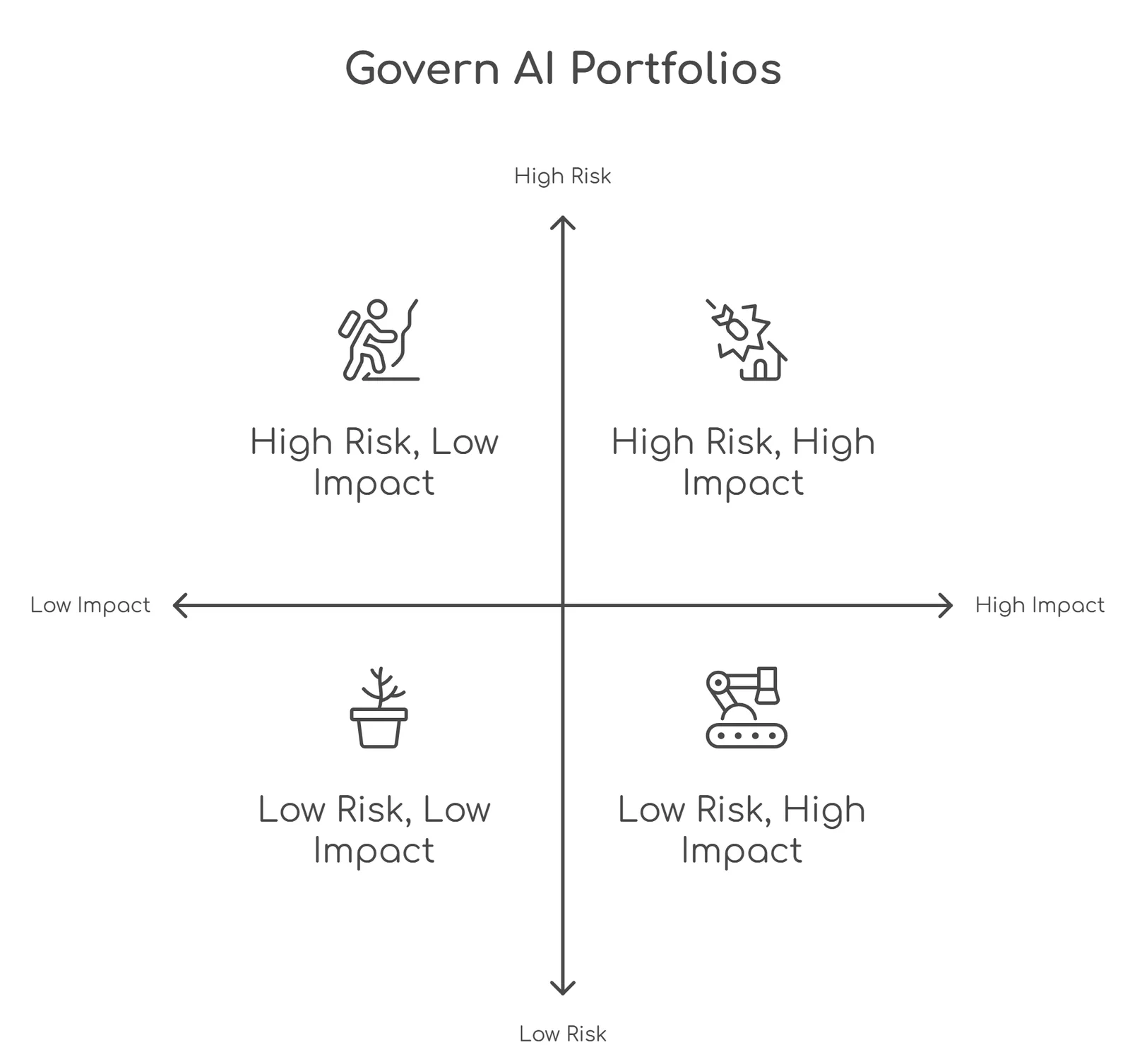
This is where portfolio-level AI governance becomes essential. Instead of managing AI initiatives in isolation, organizations establish oversight across the entire AI portfolio, ensuring that every model aligns with enterprise standards for transparency, accountability, and risk management.
At its core, portfolio-level governance helps organizations treat AI not just as a technology experiment, but as a strategic business capability. According to research from Gartner, a growing number of enterprises are prioritizing governance structures to ensure AI initiatives deliver measurable business value while maintaining regulatory and ethical standards.
What Is Portfolio-Level AI Governance?
Portfolio-level AI governance refers to the set of policies, frameworks, and oversight mechanisms that organizations use to manage all AI initiatives collectively rather than individually. It provides leadership teams with visibility into how AI systems are developed, deployed, and monitored across the enterprise.
This approach ensures that AI innovation continues to move forward while maintaining clear guardrails around data usage, model behavior, and compliance obligations. More importantly, it creates a standardized way to evaluate risk, performance, and return on investment across the entire AI portfolio.
Why Portfolio-Level Governance Matters for Businesses?
A well-structured governance approach strengthens the business value of AI initiatives. Organizations that implement portfolio-level governance often benefit in several ways…
- Alignment with strategic objectives
AI initiatives across departments are evaluated and prioritized based on how they contribute to overall business goals.
- Higher risk and compliance management
Governance frameworks ensure that models meet regulatory standards and reduce exposure to legal or reputational risks.
- Greater transparency and accountability
Leadership teams gain clear visibility into which AI models are active, how they perform, and what risks they may introduce.
- Improved collaboration across teams
Data scientists, compliance teams, and business leaders operate within shared governance standards, making it easier to coordinate AI initiatives.
- Better return on AI investments
By monitoring performance and outcomes across the portfolio, organizations can identify which AI initiatives deliver the greatest value and scale them accordingly.
Integrating Governance into Enterprise AI Strategy
For organizations adopting AI at scale, governance cannot be an afterthought. It must be embedded directly into the AI lifecycle, from initial planning to deployment and continuous monitoring.
Some practical ways enterprises can implement portfolio-level AI governance include…
- Establishing governance checkpoints during data preparation, model development, and deployment stages
- Maintaining centralized documentation that records model decisions, training data sources, and performance metrics
- Implementing automated monitoring to detect anomalies, bias patterns, or performance drift
- Creating dashboards that provide leadership teams with a real-time view of AI portfolio performance and risk indicators
When governance is built into the AI strategy from the beginning, organizations gain the ability to scale innovation responsibly. Instead of slowing down AI adoption, portfolio-level governance provides the structure needed to ensure that every model contributes to long-term business value while maintaining trust and accountability.
Use Cases of AI in Portfolio Management
Portfolio management has always been about making the right decisions at the right time. But with markets becoming more dynamic, data volumes growing rapidly, and client expectations rising, relying only on traditional tools and manual analysis is becoming increasingly difficult. This is where AI is starting to play a meaningful role.
Instead of replacing human expertise, AI works as an intelligent support system. It helps portfolio managers process massive datasets, detect patterns that might otherwise go unnoticed, and make faster, more informed decisions. When implemented thoughtfully, AI can improve efficiency, reduce risk exposure, and create better investment outcomes.
Below are some of the most practical and impactful ways AI is being used in portfolio management today.
Market Trend Analysis and Investment Insights
Financial markets generate an enormous amount of information every single day, including price movements, earnings reports, macroeconomic indicators, global news, and investor sentiment. For a portfolio manager, manually analyzing all of this data is nearly impossible.
AI systems can process structured and unstructured data simultaneously to identify trends, correlations, and emerging opportunities. For example, AI can analyze news articles, analyst reports, and social media signals alongside market data to detect early indicators of sector momentum or shifts in investor sentiment.
This allows portfolio managers to gain insights much faster and make decisions with a broader perspective of what is happening across the market.
Risk Identification and Early Warning Systems
Risk management is one of the most critical aspects of portfolio management. However, traditional risk models often rely heavily on historical data and may fail to capture emerging risks quickly enough.
AI improves this by continuously analyzing market movements, asset behavior, and macroeconomic indicators in real time. It can flag unusual patterns, volatility spikes, or correlations that signal potential risks.
For instance, if certain assets within a portfolio start showing abnormal volatility or unexpected correlations with other holdings, AI systems can alert managers early. This helps them reassess exposure and rebalance before risks escalate.
Portfolio Optimization and Asset Allocation
One of the most complex decisions in portfolio management is determining the right mix of assets. Managers need to balance returns, diversification, liquidity, and risk tolerance simultaneously.
AI-powered optimization models can simulate thousands of potential portfolio combinations and evaluate them against different market scenarios. By doing this, AI helps identify asset allocations that align more closely with an investor’s objectives.
Instead of relying on static models or periodic reviews, portfolio managers can continuously adjust allocations based on updated market conditions and data inputs.
Hyper-Personalized Investment Strategies
Clients today expect more personalized investment strategies that reflect their individual financial goals, risk tolerance, and investment horizons.
AI helps make this level of personalization scalable. By analyzing client profiles, investment behaviors, financial history, and market conditions, AI systems can recommend tailored portfolio strategies for different investors.
For wealth managers handling thousands of clients, this capability can significantly improve client engagement and satisfaction. Each portfolio strategy becomes more aligned with the client’s unique preferences rather than relying on broad segmentation.
Sentiment Analysis for Investment Decisions
Market sentiment often plays a powerful role in price movements, especially during uncertain or volatile periods.
AI can analyze large volumes of textual data, from news coverage and earnings calls to social media discussions, to understand how investors are feeling about certain companies, sectors, or markets.
For example, if negative sentiment around a specific industry begins to rise across multiple data sources, AI systems can detect this shift early. Portfolio managers can then evaluate whether it signals a short-term reaction or a deeper trend that may affect investment decisions.
Automated Rebalancing
Portfolio rebalancing ensures that an investment portfolio stays aligned with its target allocation and risk profile. Traditionally, this process is done periodically or triggered by significant market changes.
AI can make rebalancing more dynamic. By continuously monitoring market conditions, asset performance, and portfolio exposure, AI systems can recommend adjustments in real time.
This approach helps maintain portfolio stability without requiring constant manual intervention from portfolio managers.
Performance Monitoring and Predictive Analytics
Tracking portfolio performance is not just about reviewing past returns. Managers also need insights into how current positions may perform under different market scenarios.
AI enables predictive analytics that evaluate how portfolios might behave during various economic conditions, such as interest rate changes, inflation shifts, or geopolitical events.
This allows investment teams to stress-test their portfolios and understand potential outcomes before making major adjustments.
Fraud Detection and Compliance Monitoring
Regulatory scrutiny in the financial industry continues to increase, and firms must ensure their investment operations remain compliant.
AI can help by monitoring trading activities, transaction patterns, and portfolio changes to detect unusual behavior. If suspicious activity or policy violations occur, the system can raise alerts for further investigation.
This not only strengthens compliance but also reduces the risk of reputational or financial damage.
Supporting Human Decision-Making
Perhaps the most important use case of AI in portfolio management is how it supports human expertise rather than replacing it.
Portfolio managers bring strategic thinking, market intuition, and client understanding to the table. AI enhances this by handling complex data analysis and identifying patterns quickly.
When the two work together, investment teams can make decisions that are both data-informed and strategically sound.
As financial markets continue to evolve, the role of AI in portfolio management will only grow stronger. Organizations that adopt AI thoughtfully are able to respond faster to market changes, manage risk more effectively, and deliver more personalized investment strategies.
Rather than being a futuristic concept, AI is gradually becoming a practical tool that helps portfolio managers navigate complexity and make smarter investment decisions in a rapidly changing financial environment.
But, how does an AI Managed Portfolio help balance Innovation, Risk, and Return?
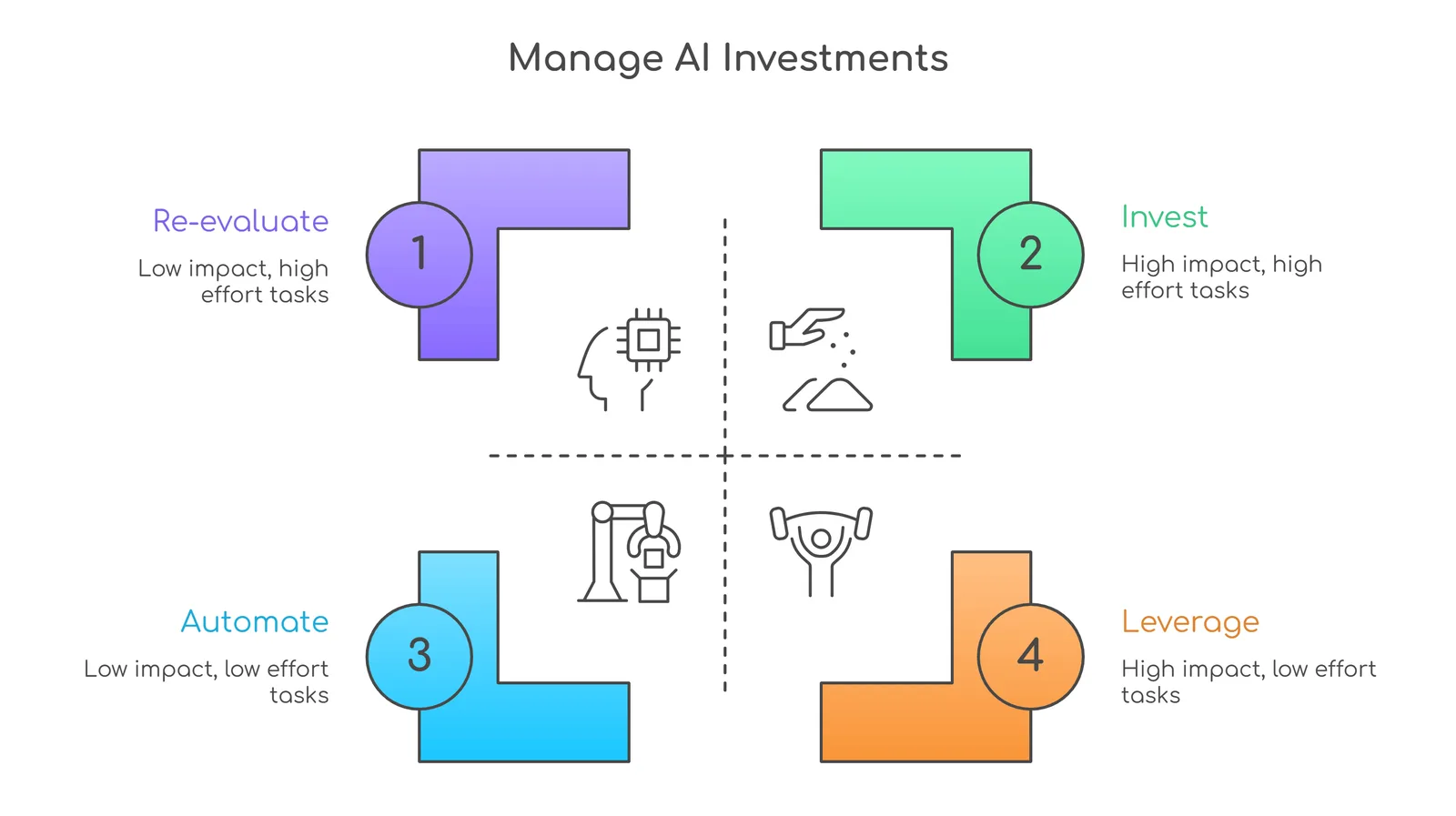
Introducing AI into portfolio management often raises an important question for financial leaders: how do you innovate without exposing the portfolio to unnecessary risk?
Innovation in investment strategies can unlock new opportunities, but it also comes with uncertainty. Market conditions shift quickly, new asset classes emerge, and investor expectations continue to evolve. Managing all these moving pieces while maintaining stable returns is not an easy task.
This is where AI-managed portfolios start making a meaningful difference. By combining advanced data analysis with continuous monitoring, AI helps portfolio managers strike a balance between exploring new opportunities and protecting the portfolio from excessive exposure.
Below are some of the ways AI contributes to maintaining that balance.
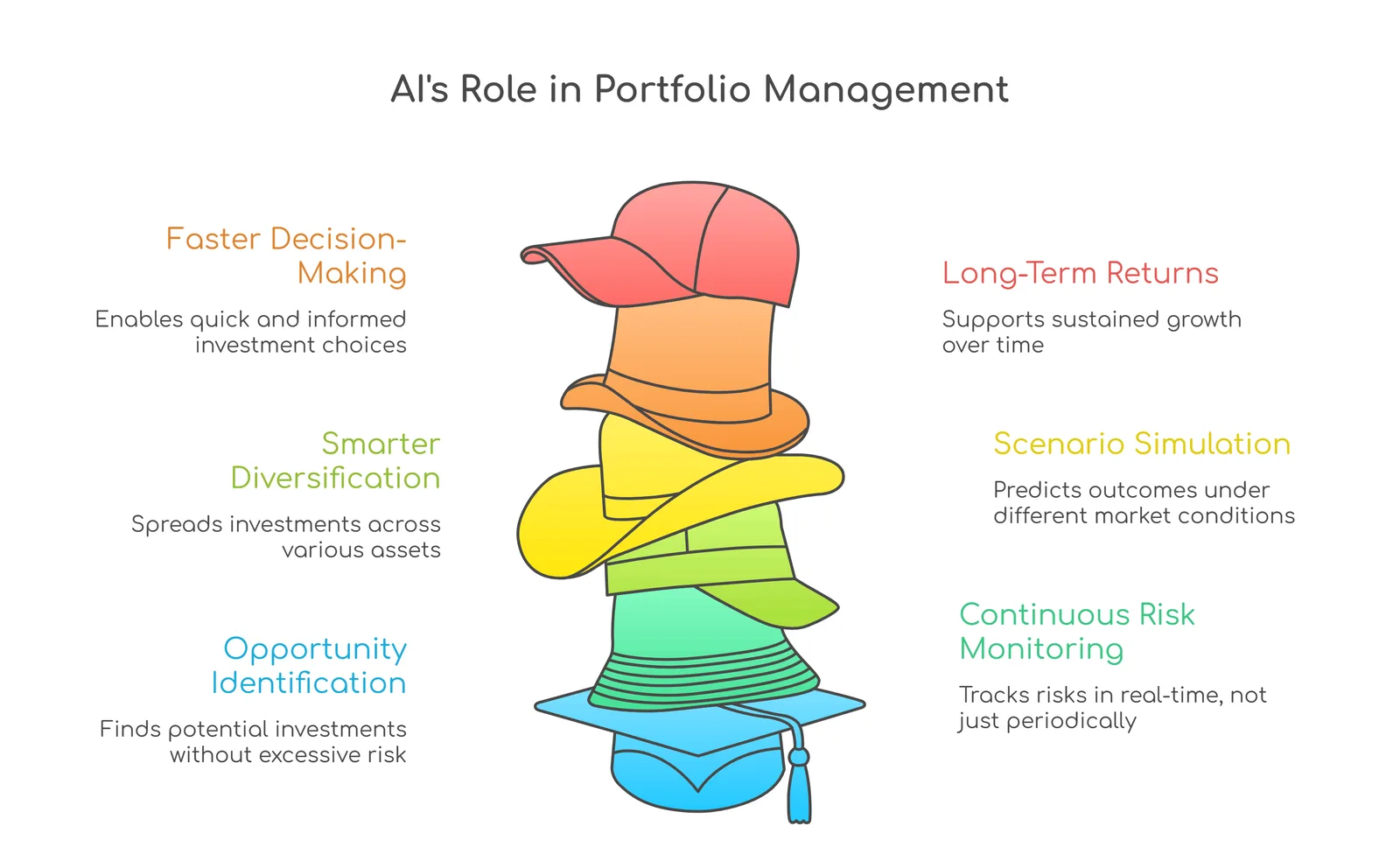
Identifying Opportunities Without Overextending Risk
One of the biggest challenges in portfolio management is identifying promising investment opportunities early while ensuring that the overall portfolio risk remains under control.
AI systems can analyze massive datasets, from market trends and macroeconomic indicators to sector performance and investor sentiment. By processing this information quickly, AI can highlight emerging investment opportunities that might otherwise take weeks of manual research to uncover.
However, AI also evaluates how a new asset or strategy might affect the portfolio’s overall risk profile. This allows portfolio managers to innovate and diversify without destabilizing the portfolio.
Continuous Risk Monitoring Instead of Periodic Reviews
Traditional portfolio monitoring often happens at fixed intervals, such as monthly or quarterly reviews, where managers assess performance and risks.
AI changes this approach by enabling continuous monitoring. Instead of waiting for the next review cycle, AI systems constantly analyze asset behavior, correlations, and volatility levels.
If market conditions begin to shift or certain holdings start behaving unexpectedly, the system can flag these signals early. This proactive visibility helps managers respond faster and reduce the chances of small risks growing into larger problems.
Smarter Portfolio Diversification
Diversification has always been a core principle of portfolio management. The idea is simple: spreading investments across multiple assets reduces the impact of a single loss.
But in practice, achieving true diversification can be complex. Some assets that appear unrelated may actually behave similarly under certain market conditions.
AI helps solve this challenge by analyzing historical data and real-time market movements to uncover hidden correlations between assets. This deeper understanding allows portfolio managers to design portfolios that are genuinely diversified rather than just appearing diversified on the surface.
Scenario Simulation and Predictive Planning
Another major advantage of AI-managed portfolios is the ability to simulate different market scenarios before making investment decisions.
AI models can test how a portfolio might perform during events such as economic slowdowns, interest rate hikes, or sudden market volatility. These simulations give managers a clearer picture of potential outcomes and help them plan more resilient investment strategies.
Instead of reacting after a market event occurs, portfolio managers can prepare for different possibilities in advance.
Faster and More Informed Decision-Making
Investment decisions often need to be made quickly, especially during periods of market volatility. Waiting too long for analysis can mean missing valuable opportunities.
AI accelerates the decision-making process by providing portfolio managers with real-time insights and data-driven recommendations. It processes information far faster than manual analysis and presents relevant insights in a structured way.
This allows managers to make timely decisions while still maintaining a careful balance between growth opportunities and risk exposure.
Supporting Long-Term Return Objectives
Balancing innovation and risk ultimately comes down to protecting long-term returns. AI contributes to this by helping portfolio managers maintain alignment between investment strategies and overall portfolio goals.
Through continuous monitoring, predictive analytics, and intelligent asset allocation insights, AI ensures that the portfolio stays on track even as market conditions evolve.
Rather than chasing short-term gains or reacting impulsively to market noise, AI-supported strategies encourage more disciplined, data-backed investment decisions.
It’s important to note that AI-managed portfolios do not replace the role of portfolio managers. Instead, they enhance human expertise.
AI brings speed, analytical depth, and pattern recognition, while human managers bring strategic judgment, experience, and a deep understanding of client objectives. When these strengths work together, the result is a portfolio management approach that balances innovation, risk control, and sustainable returns more effectively.
In an environment where markets are becoming increasingly complex, this collaboration between technology and human insight is what helps organizations build more resilient and forward-looking investment strategies.
Measuring Performance and Business Impact
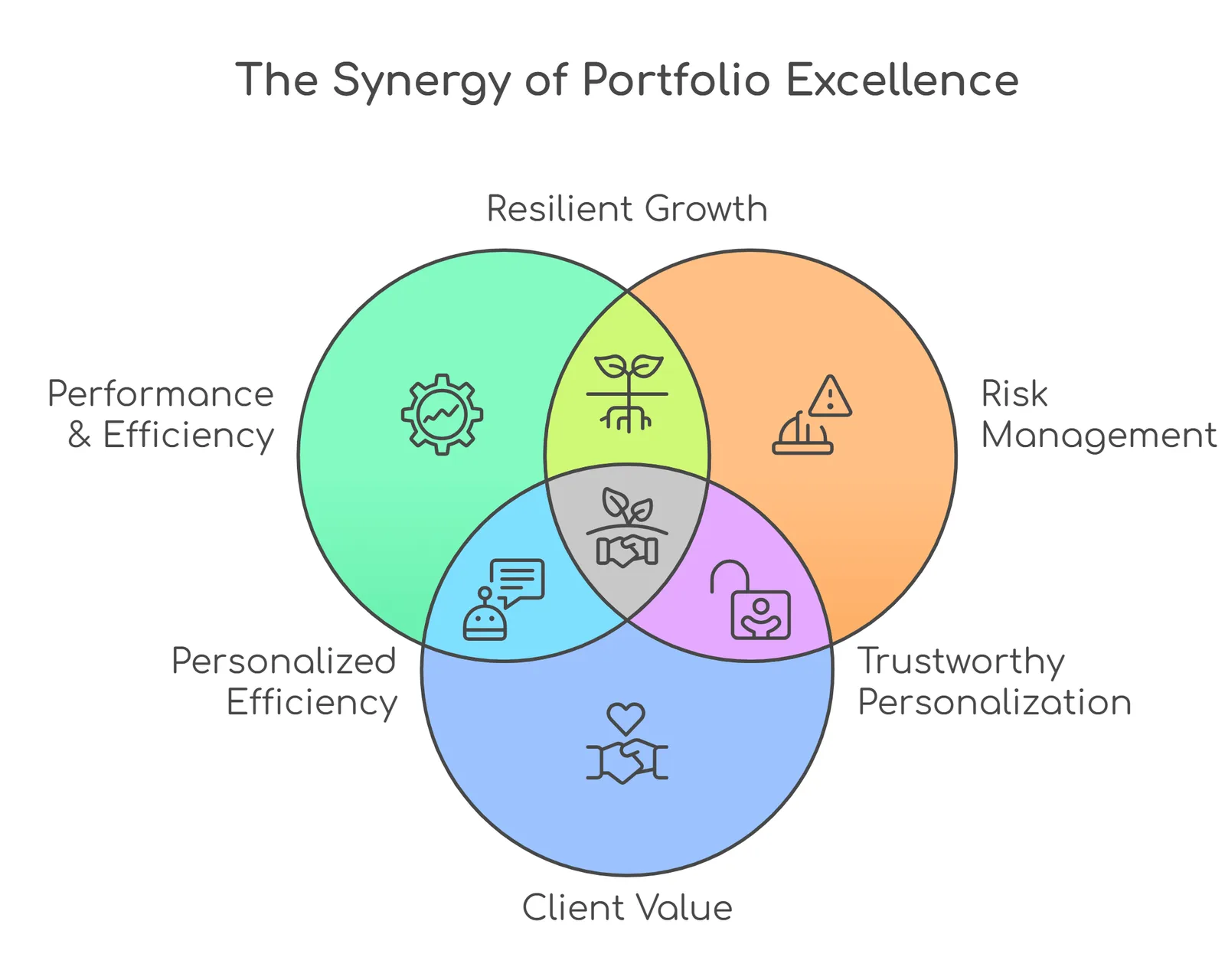
Adopting AI in portfolio management is about ensuring that the technology actually delivers meaningful results. For investment firms and financial institutions, the real value of AI becomes visible only when its impact on portfolio performance, operational efficiency, and decision-making quality can be clearly measured.
Without the right measurement framework, even the most advanced AI systems can become difficult to justify from a business perspective. That is why organizations need structured ways to evaluate both the financial outcomes and operational improvements generated by AI-driven portfolio management.
Below are some key areas organizations focus on when measuring the performance and business impact of AI-powered portfolios.
Portfolio Performance Improvement
One of the most direct indicators of AI’s impact is how it influences portfolio performance. This does not simply mean higher returns, but rather better risk-adjusted returns over time.
AI helps portfolio managers analyze a broader range of data sources and detect patterns that might not be visible through traditional analysis. By doing so, it can improve investment selection, asset allocation, and timing decisions.
To measure this impact, firms typically evaluate:
- Improvement in risk-adjusted returns
- Reduction in portfolio volatility
- Consistency of performance across different market conditions
- Comparison between AI-assisted portfolios and traditional portfolios
These insights help determine whether AI is contributing to stronger and more stable investment outcomes.
Risk Management Effectiveness
Another important area of measurement is how well AI strengthens risk management.
AI systems continuously monitor portfolio exposure, asset correlations, and market signals. When unusual patterns or risk indicators appear, they can alert portfolio managers early. This proactive approach allows investment teams to adjust positions before risks escalate.
Organizations often track metrics such as:
- Speed of risk detection and response
- Reduction in unexpected portfolio losses
- Improved drawdown management
- Stability of portfolios during volatile market periods
When AI improves visibility into potential risks, firms can make faster and more informed adjustments.
Operational Efficiency
Beyond investment performance, AI also impacts how efficiently portfolio management teams operate.
Tasks such as data processing, market analysis, and portfolio monitoring can consume a significant amount of time when done manually. AI automates many of these processes, allowing teams to focus more on strategic decision-making rather than repetitive analysis.
Operational impact can be measured through:
- Time saved in research and analysis processes
- Faster portfolio rebalancing decisions
- Reduced manual effort in data aggregation and reporting
- Improved productivity across investment teams
These efficiency gains often translate into lower operational costs and better utilization of talent.
Decision-Making Quality
AI contributes not only to faster decisions but also to better-informed decisions.
By providing portfolio managers with deeper insights into market conditions, investor sentiment, and asset correlations, AI supports more structured and data-backed investment strategies.
Organizations may evaluate this through indicators such as:
- Improved accuracy of investment forecasts
- Higher success rates in investment recommendations
- Greater confidence in data-driven decision-making
- Enhanced collaboration between data teams and portfolio managers
When decision-making becomes more insight-driven, firms are better positioned to respond to market changes with confidence.
Client Value and Portfolio Personalization
For wealth management firms and investment advisors, the impact of AI can also be measured through client outcomes.
AI enables deeper personalization by analyzing client preferences, financial goals, and risk tolerance. As a result, portfolios can be tailored more precisely to each investor’s needs.
Indicators of business impact in this area may include:
- Increased client satisfaction and retention
- Growth in personalized portfolio offerings
- Faster onboarding of new clients
- Improved transparency in portfolio recommendations
When clients feel that their portfolios are better aligned with their goals, trust and long-term relationships tend to strengthen.
Strategic Value of AI Investments
Finally, organizations evaluate whether AI initiatives are contributing to broader business objectives.
This involves assessing how AI supports innovation, improves competitiveness, and strengthens the firm’s ability to operate in a rapidly evolving financial environment.
Leadership teams may look at:
- Growth in AI-driven investment strategies
- Competitive advantages created by advanced analytics capabilities
- Expansion into new investment products or services
- Overall return on AI investment
These insights help determine whether AI is delivering long-term strategic value beyond short-term operational improvements.
Measuring performance and business impact ultimately helps organizations understand whether AI is truly improving how portfolios are managed.
When firms track the right metrics, they gain a clearer view of how AI-driven results influences returns, strengthens risk management, and improves operational efficiency. This not only justifies technology investments but also helps guide future innovation in portfolio management.
In the long run, organizations that continuously evaluate and refine their AI initiatives are more likely to build investment strategies that are resilient, data-driven, and aligned with evolving market dynamics.
Client Outcome: GoalTeller, An Intelligent Goal-Based Automation
For the GoalTeller project, an intelligent platform designed for goal-based financial planning and automation, Antino worked on strengthening the overall AI-driven portfolio management experience by improving how financial data is structured, visualized, and presented to users. The focus was on making complex investment insights easier to understand while ensuring that the platform supports informed and confident financial decision-making.
Some of the key enhancements delivered to the intelligent portfolio management system include…
- Enhanced Data Visualization
We addressed several technical challenges related to graph rendering, dynamic input forms, and pie chart accuracy. These improvements ensured that users could clearly see how their assets are distributed across different investments. As a result, the platform now provides more reliable visual summaries of portfolio allocation and overall financial health.
- AI-Powered Portfolio Insights
The platform was designed to surface meaningful insights automatically. Users can now see metrics such as investment performance scores, along with clear indicators of top-performing assets (“big winners”) and underperforming ones (“big losers”). It also highlights expense ratio details so users can better evaluate the efficiency of their portfolio and understand where their money is working hardest.
- User Behavior-Driven Feature Placement
To make the experience more intuitive, we restructured the homepage and navigation flow. Important tools, such as goal planning and investment tracking, were repositioned based on how users naturally interact with the platform. This change makes it easier for users to set goals, review their investments, and take action without unnecessary friction.
- Scenario Planning Capabilities
We supported the integration of a Scenario Planner, allowing users to explore how major life decisions might affect their financial plans. Whether someone is considering a career break, starting a business, or managing unexpected life events, the tool helps simulate different financial outcomes and prepare for them proactively.
- Automated Goal Progress Tracking
GoalTeller also includes a feature called “Lifeline,” which offers a clear view of how users are progressing toward multiple life goals, such as funding a wedding, saving for higher education, or building a retirement corpus. The system highlights whether each goal is currently on track or requires adjustments, helping users stay aligned with their long-term financial plans.
- Unified Design System Across Platforms
To ensure consistency and reliability, we developed a comprehensive design system that standardizes the platform’s look and feel across both web and mobile interfaces. This consistency plays an important role in building user trust, especially for a platform that offers automated financial guidance and investment recommendations.
By improving data handling for robo-advisory functions and automated investment insights, Antino helped GoalTeller create a smoother and more transparent experience. The result is a platform where investment decisions are closely tied to individual financial goals, making long-term financial planning more accessible and easier to manage for users.
How can Antino help you with an advanced AI Portfolio Management?
Organizations looking to scale AI in portfolio management often face a common challenge, and that is, translating advanced analytics into practical, enterprise-grade investment intelligence. At Antino, being a leading AI development company, we help financial institutions move beyond isolated AI experiments to build structured, scalable portfolio intelligence platforms.
Our approach combines strong data engineering foundations with advanced AI/ML models and intelligent automation to enable predictive portfolio insights, dynamic asset allocation, and real-time risk monitoring. By embedding AI across the portfolio lifecycle, we help organizations transform traditional investment operations into highly data-driven decision ecosystems.
Our teams work closely with investment firms, wealth platforms, and fintech innovators to design solutions that deliver clear, measurable business outcomes. If you’re exploring how AI can reshape your portfolio strategy, this is the right time to start the conversation. Get in touch with Antino’s experts to discover how intelligent portfolio management can unlock smarter investment decisions and long-term growth.
Short on time? Here’s the summary…
- AI is becoming central to portfolio management. Firms adopting AI-driven transformation could see up to 12% revenue growth by 2028, according to the PwC Asset & Wealth Management Report.
- Traditional portfolio systems are struggling to keep up with the speed, data complexity, and regulatory demands of modern financial markets.
- Portfolio-level AI governance is essential to manage multiple AI models across an enterprise while ensuring transparency, compliance, and risk control.
- AI enhances portfolio decision-making by analyzing large volumes of market data, detecting trends, and generating predictive investment insights.
- Key use cases include market trend analysis, risk detection, portfolio optimization, automated rebalancing, sentiment analysis, and hyper-personalized investment strategies.
- AI-managed portfolios help balance innovation, risk, and return by continuously monitoring assets, identifying opportunities early, and supporting smarter diversification strategies.
- Scenario simulations and predictive analytics allow portfolio managers to test strategies against different market conditions before making investment decisions.
- Human expertise remains critical. AI supports portfolio managers with deeper insights and faster analysis, but strategic judgment still drives final investment decisions.
- Measuring AI impact is crucial, with organizations tracking metrics such as risk-adjusted returns, portfolio stability, operational efficiency, and client outcomes.
- Antino’s real-world implementations, like GoalTeller, show how AI-powered insights, scenario planning, and goal tracking can improve financial planning and portfolio visibility for users.
- With the right technology partner, such as Antino, organizations can build scalable AI portfolio management platforms that deliver smarter insights, stronger risk governance, and long-term investment value.