
When executives talk about improving logistics performance, the conversation often circles around the same three goals: speed, cost efficiency, and reliability. Yet the reality on the ground tells a different story. Traffic congestion, rising fuel costs, driver shortages, changing customer expectations, and unpredictable disruptions continue to make route planning one of the most complex operational challenges in logistics.
Now add one more pressure point: customer expectations have fundamentally changed.
According to industry research, more than two-thirds of consumers now expect same-day or next-day delivery, and nearly 90% say delivery speed influences where they choose to buy from. For logistics leaders, that expectation doesn’t just increase operational pressure, but it also compresses decision-making time. Routes that once took hours of planning now need to be recalculated in minutes. So the question becomes
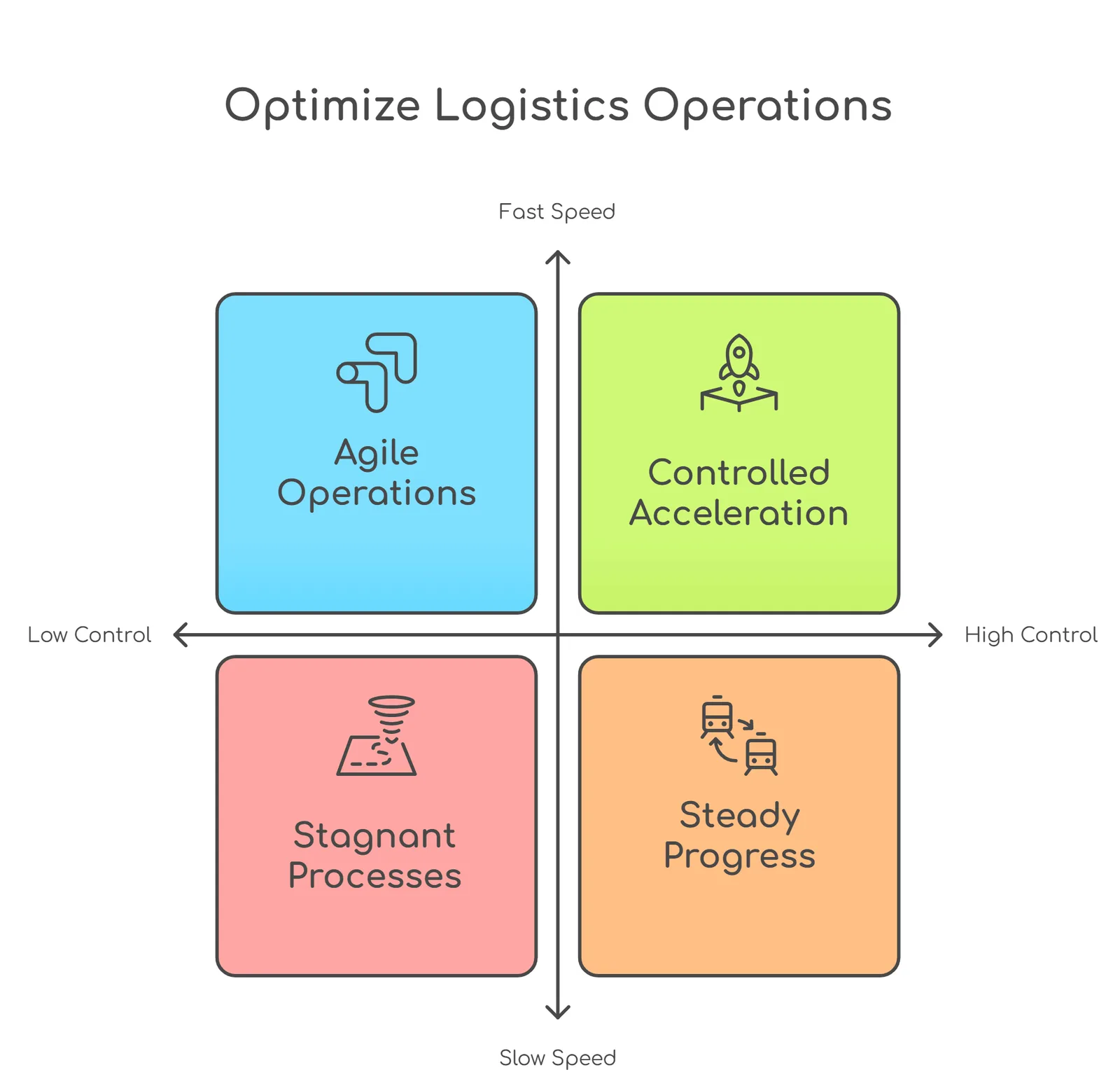
How do logistics companies move faster without losing control?
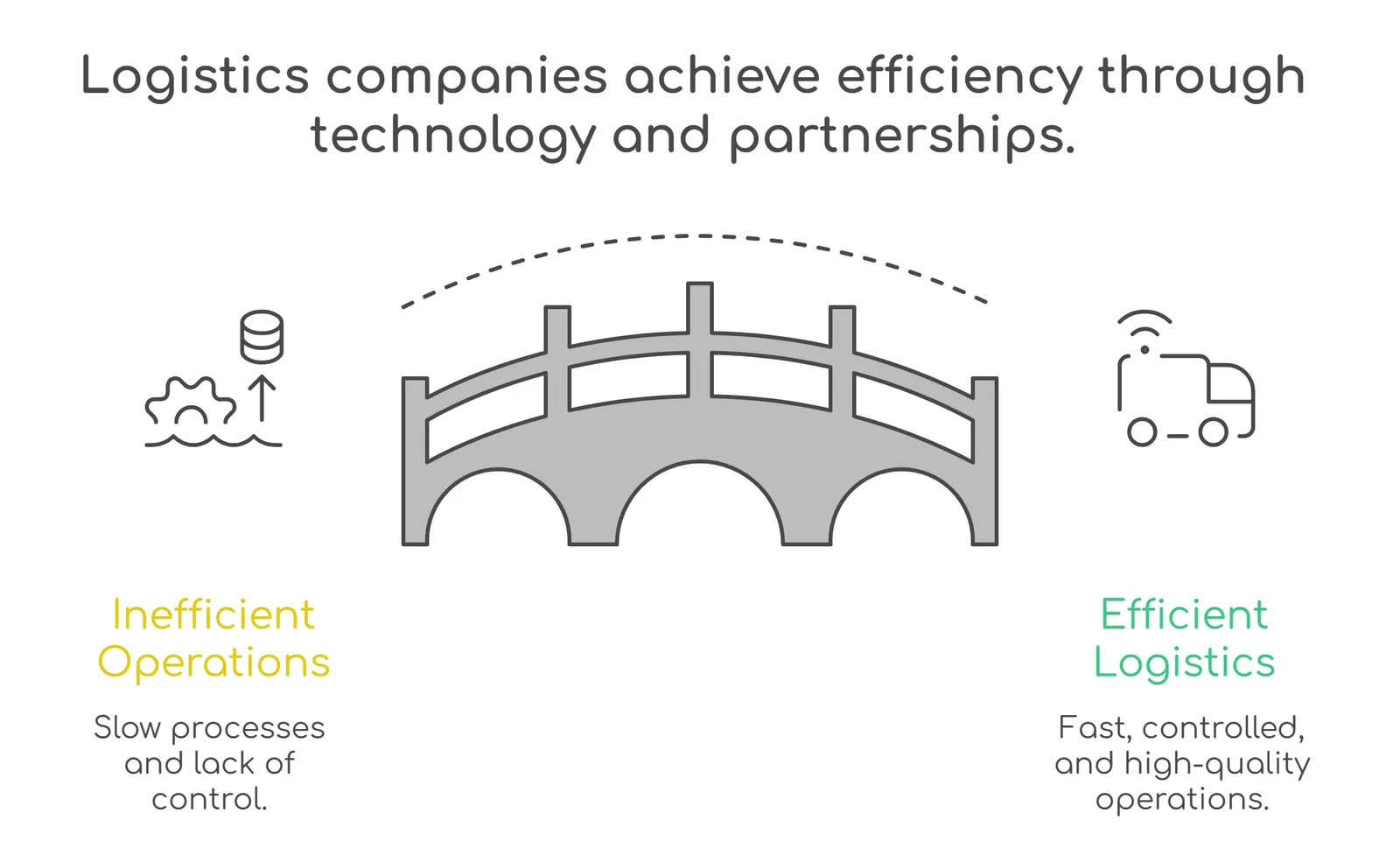
This is where AI route optimization is beginning to reshape the conversation.
Just think about traditional route planning for a moment. Dispatch teams juggle dozens, and sometimes hundreds, of variables like traffic patterns, delivery windows, driver availability, vehicle capacity, road restrictions, fuel efficiency, weather disruptions, and customer priorities. Even the most experienced planners can only process a fraction of that complexity in real time.
AI changes that equation entirely.
Instead of reacting to operational chaos, AI route planning continuously analyzes thousands of variables simultaneously, generating optimized routes in seconds rather than hours. It learns from historical patterns, predicts potential delays, and dynamically adjusts routes as conditions change on the ground.
But the real transformation happens when routing intelligence isn’t operating in isolation.
Yes, because isolation also matters…
When AI route optimization becomes part of a broader AI-driven logistics ecosystem, planning, operations, and decision-making begin to work from the same intelligence layer. Data flows seamlessly across systems, disruptions are detected earlier, and decisions are supported by predictive insights rather than guesswork.
For teams, this creates an incredibly powerful unified operational view. Instead of managing fragmented tools and reactive workflows, executives gain a clear, real-time window into their logistics performance, what many technology leaders call a “single pane of glass” for operational visibility.
And in an industry where disruptions are becoming more frequent, that visibility matters.
Consider the widespread infrastructure damage caused by Hurricane Helene in 2024, which flooded thousands of miles of roads and bridges across the southeastern United States. Truckload on-time performance dropped, emergency supply chains struggled to move efficiently, and shipments were forced into complex rerouting scenarios. Events like these raise a critical question for logistics leaders,
Can supply chains truly become resilient in the face of unpredictable disruptions?
With AI-driven route optimization, the answer is increasingly yes.
Modern AI models can quickly analyze road closures, weather conditions, and infrastructure disruptions to identify alternate routes, rebalance delivery loads, and prioritize time-critical shipments. In crisis situations, that capability can mean the difference between a delayed response and the rapid delivery of essential goods.
But AI-powered routing isn’t just about reacting to emergencies. It’s about building a smarter, more adaptive logistics engine, one that helps planners design better routes, respond faster to change, and consistently deliver better outcomes for customers.
In the sections ahead, we’ll explore what AI route optimization actually looks like in practice, and how Antino’s Mobility Suite is helping logistics organizations transform their routing operations, eliminate data silos, and unlock a new level of operational intelligence.
But first, what is AI route optimization?
Route optimization has always been a critical part of running an efficient logistics operation. In simple terms, it’s the process of determining the most efficient sequence of stops and travel paths for deliveries or service visits, while accounting for factors like distance, delivery windows, vehicle capacity, driver schedules, fuel usage, and customer commitments.
For years, companies relied on a mix of routing algorithms and the experience of dispatch teams to balance these variables. And while those approaches worked when operations were smaller and less dynamic, modern supply chains operate in a very different environment.
Today, logistics leaders must plan routes across hundreds or even thousands of deliveries daily, often while dealing with unpredictable traffic patterns, fluctuating demand, weather disruptions, and increasingly strict customer delivery expectations.
The reality is that manual planning and traditional routing tools can only process a limited number of variables at once. As complexity increases, even highly skilled planners struggle to adjust routes quickly enough to keep operations running smoothly.
This is where AI-powered route optimization fundamentally changes the game. Instead of relying solely on static rules or historical assumptions, AI systems continuously analyze massive volumes of data, from traffic conditions and delivery history to fleet availability, warehouse inventory, and driver performance. Using machine learning, the system doesn’t just calculate routes, but also learns from patterns, predicts potential bottlenecks, and recommends better routing strategies over time.
In practical terms,
This means routes that once required hours of manual coordination can now be generated or adjusted in seconds.
Another major advantage is how AI connects data across the broader logistics ecosystem. Information from sales forecasts, order management systems, warehouse operations, and customer service platforms can feed directly into the routing engine. When planners begin scheduling deliveries, the system already understands real-world constraints, such as stock availability, customer priority levels, or last-minute order changes.
The result is a routing process that is far more adaptive and resilient.
For example, if a driver calls in sick, a warehouse shipment gets delayed, or a sudden traffic incident blocks a major highway, AI routing can instantly recalculate delivery plans and redistribute loads across available vehicles. What used to trigger operational chaos becomes a manageable adjustment.
But perhaps the most valuable aspect of AI route optimization is its predictive capability. Rather than simply reacting to problems, AI can anticipate demand spikes, seasonal congestion patterns, or recurring delays on specific routes. This allows logistics teams to plan proactively by improving delivery reliability while controlling operational costs.
For logistics leaders, the impact goes beyond operational efficiency. AI-powered route optimization enables companies to deliver faster, reduce fuel consumption, improve driver productivity, and maintain consistent service levels, even as delivery volumes continue to rise.
In other words, it turns routing from a daily operational challenge into a strategic advantage for the entire supply chain.
Role of Artificial Intelligence in Modern Route Optimization
Logistics networks today operate in an environment where speed, visibility, and adaptability are undoubtedly expected. Customers want faster deliveries, fuel costs continue to fluctuate, and supply chains must remain resilient even during disruptions. In this environment, traditional routing systems that rely on static rules or manual intervention are often unable to keep up.
Artificial Intelligence (AI) is transforming how route optimization works by turning routing from a static planning activity into a dynamic, continuously improving decision system.
Below are some of the key ways artificial intelligence is shaping modern route optimization.
1. Real-Time Route Adjustments
AI systems continuously monitor live data such as traffic congestion, accidents, road closures, and weather conditions. When disruptions occur, routes can be recalculated instantly to avoid delays and maintain delivery commitments.
2. Predictive Traffic and Demand Analysis
AI can analyze historical delivery patterns, seasonal trends, and traffic data to predict future conditions. This allows logistics teams to plan routes proactively rather than reacting to issues after they occur.
3. Intelligent Load and Capacity Planning
AI helps ensure vehicles are utilized efficiently by analyzing delivery volumes, vehicle capacity, weight limits, and delivery windows. This reduces empty miles and maximizes fleet productivity.
4. Dynamic Scheduling and Dispatching
Instead of relying on fixed schedules, AI enables dynamic dispatching where delivery plans can evolve throughout the day based on new orders, cancellations, or operational changes.
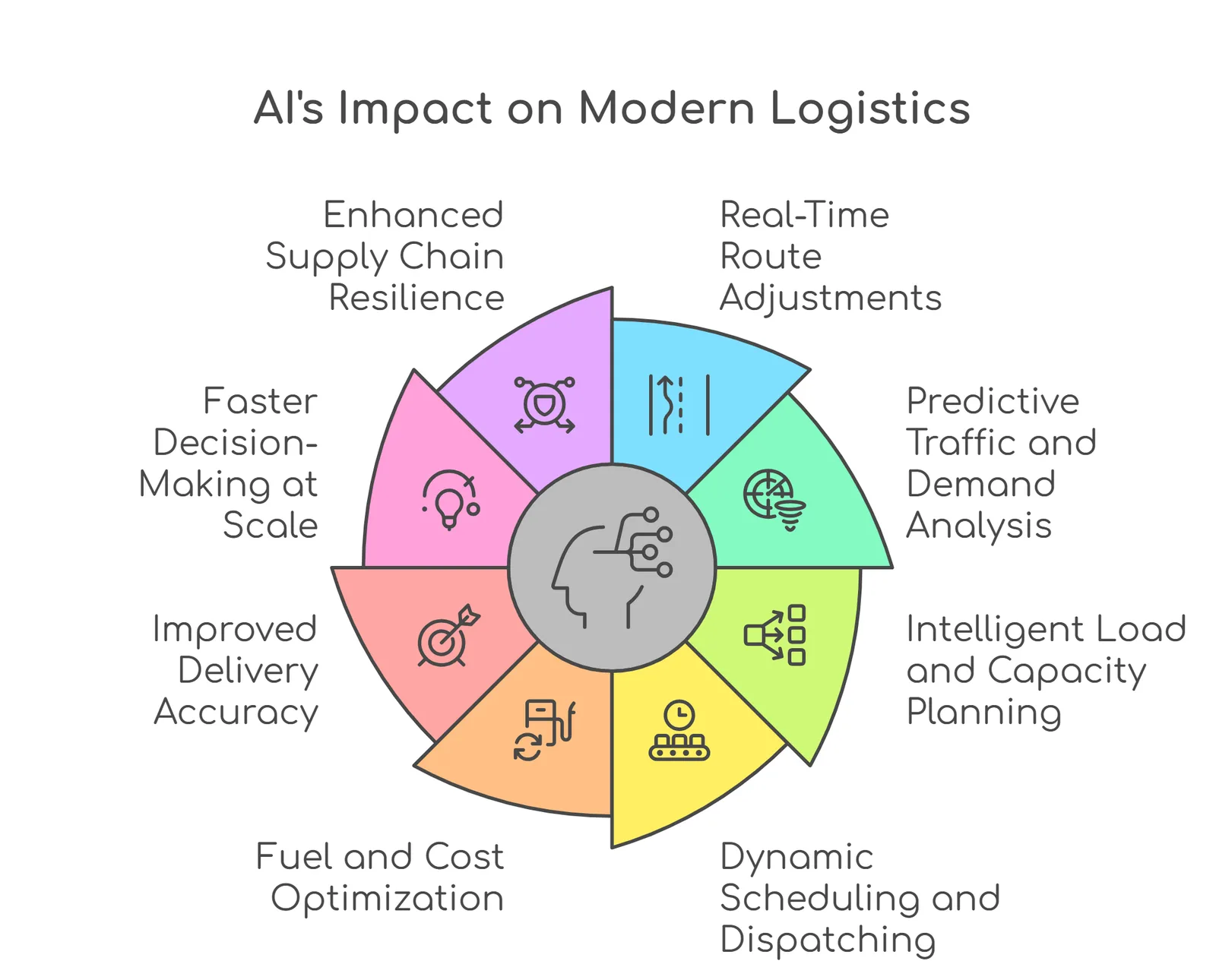
5. Fuel and Cost Optimization
By identifying the most efficient routes and reducing unnecessary mileage, AI helps organizations lower fuel consumption, operational expenses, and overall carbon emissions.
6. Improved Delivery Accuracy
AI-powered routing improves estimated time of arrival (ETA) predictions by considering multiple real-world variables. This helps logistics companies provide more reliable delivery timelines to customers.
7. Faster Decision-Making at Scale
For large logistics operations managing thousands of deliveries, AI can process millions of routing combinations in seconds, something that would be impossible for manual planners to achieve.
8. Enhanced Supply Chain Resilience
During unexpected disruptions such as severe weather events, infrastructure issues, or demand surges, AI can quickly identify alternate routes and rebalance delivery networks to minimize operational impact.
Why Does This Matter for Logistics Leaders?
Artificial intelligence is not simply improving route planning, but is also redefining how logistics networks operate. With AI-driven routing, companies gain the ability to respond faster, operate more efficiently, and scale delivery operations without increasing complexity.
For modern logistics organizations, the role of AI in route optimization is ultimately about creating a smarter, more connected supply chain, one where every delivery decision is backed by data, intelligence, and continuous learning.
Use Cases for AI Route Optimization
Every logistics leader knows that route planning rarely goes exactly as planned. A driver calls in sick, traffic suddenly builds up on a major highway, a customer requests a last-minute delivery change, or a warehouse dispatch gets delayed. What looked like the “perfect route plan” at 8 a.m. can fall apart by noon.
This is exactly where AI route planning proves its real value. Instead of forcing teams to constantly react to disruptions, AI helps logistics operations anticipate challenges, adjust routes in real time, and keep deliveries moving efficiently.
Across industries, companies are now using AI route optimization not just to save time, but to create smarter, more responsive delivery networks. Below are some practical use cases that show how this technology is making a real difference in everyday logistics operations.
1. Last-Mile Delivery Optimization
The last mile is often the most expensive and complex part of the delivery journey. With multiple delivery stops, tight delivery windows, and unpredictable urban traffic, even small inefficiencies can quickly increase costs.
AI helps by automatically designing delivery routes that minimize travel distance, balance workloads across drivers, and account for real-time traffic conditions. The result is faster deliveries, fewer delays, and better utilization of the delivery fleet.
For customers waiting for a package, this translates into something simple but powerful: their delivery actually arrives when the tracking link says it will.
2. Dynamic Rerouting During Disruptions
Anyone who has worked in logistics knows that unexpected disruptions are part of the job. Road closures, vehicle breakdowns, weather events, or sudden order changes can derail even the best route plans.
AI-driven systems monitor these changes continuously and can instantly suggest alternate routes. Instead of dispatch teams scrambling to manually reassign deliveries, the system automatically identifies the best possible adjustment.
This ensures that deliveries continue moving forward, even when conditions on the ground change.
3. Multi-Stop Delivery Planning
Many logistics operations require drivers to complete dozens of stops in a single route. Determining the best sequence manually becomes extremely complicated as the number of stops increases.
AI solves this by analyzing thousands of possible route combinations in seconds and identifying the most efficient sequence of stops while still respecting delivery windows and vehicle capacity limits.
For drivers, this means less time navigating inefficient routes and more time completing deliveries.
4. Fleet Utilization and Capacity Management
One of the hidden costs in logistics operations is underutilized vehicles. Sometimes trucks leave warehouses partially filled simply because planners do not have full visibility into how loads should be distributed.
AI can evaluate order volumes, vehicle capacity, and route distance to recommend better load distribution across the fleet. This reduces unnecessary trips, improves vehicle utilization, and ultimately lowers operational costs.
In simple terms, it ensures that every mile driven is working harder for the business.
5. Service and Field Operations Routing
Route optimization isn’t just for delivery companies. Many businesses with field service teams, such as maintenance technicians, repair services, and installation crews, face similar routing challenges.
AI can help assign service requests to the most suitable technician based on location, skill set, job priority, and travel time. This ensures that urgent tasks are handled quickly while keeping technician schedules balanced and efficient. A growing category of AI dispatcher for field service teams tools is now extending this approach by treating technician availability, equipment requirements, and job constraints as hard rules inside the optimization engine rather than filters applied after the route is built which reduces the manual conflict resolution dispatchers traditionally handle.
For businesses, it improves response time. For technicians, it reduces unnecessary travel between jobs.
6. Peak Season and Demand Surge Management
During peak shopping seasons or promotional events, delivery volumes can spike dramatically. Managing these surges using traditional planning methods can overwhelm operations teams.
AI systems can analyze historical data and forecast demand spikes in advance. Based on these insights, they recommend route adjustments, fleet allocation strategies, and delivery schedules that keep operations running smoothly even when order volumes increase.
This helps logistics companies scale operations without losing delivery reliability.
7. Sustainability and Fuel Efficiency
Sustainability has become a growing priority for logistics leaders. AI route optimization contributes directly by reducing unnecessary mileage, minimizing idle time, and identifying more fuel-efficient routes.
Even small improvements in route efficiency can translate into significant reductions in fuel consumption and carbon emissions across a large fleet.
For companies working toward environmental goals, smarter routing becomes a practical step toward building greener logistics operations.
At its core, AI route optimization is about making everyday logistics decisions smarter and faster. Instead of relying on static route plans or manual adjustments, businesses can operate with systems that continuously learn, adapt, and improve.
For dispatchers, it reduces the stress of constant replanning.
For drivers, it simplifies daily routes.
And for customers, it delivers what they care about most: reliable, on-time deliveries.
As logistics networks grow more complex, these real-world use cases highlight how AI is turning route optimization from a routine operational task into a strategic advantage for modern supply chains.
Measuring ROI from AI-Driven Route Optimization
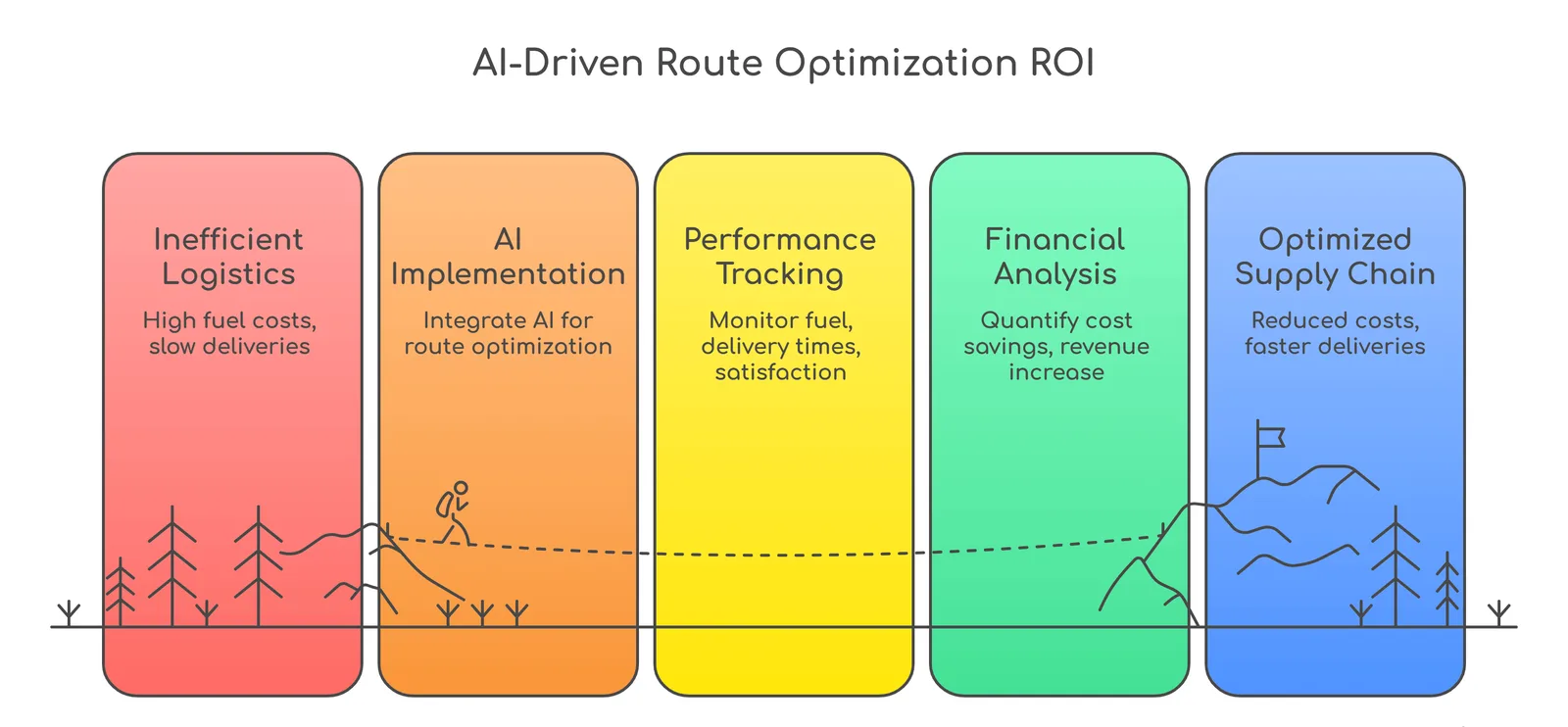
For many logistics leaders, the biggest question around AI adoption isn’t whether the technology works; it’s whether it delivers measurable business value. When investing in AI-driven route optimization, C-suite leaders want to understand one thing clearly: How does this translate into financial and operational impact?
The advantage of route optimization is that its benefits are highly measurable. Every delivery route, mile traveled, fuel consumed, and driver hour logged produces data. When AI improves these variables, even slightly, the impact scales quickly across an entire fleet.
Measuring the return on investment (ROI) from AI-driven routing requires tracking improvements across several operational and financial metrics. Below are the most important areas where organizations typically see measurable returns.
1. Reduction in Fuel Costs
Fuel is one of the largest operational expenses for logistics companies. Even small improvements in route efficiency can significantly reduce fuel consumption.
AI-powered route optimization identifies shorter routes, reduces idle time in traffic, and minimizes unnecessary detours.
How ROI is measured:
- Total miles driven before vs. after AI implementation
- Fuel consumption per vehicle
- Cost per mile across the fleet
Example impact:
A logistics fleet that reduces travel distance by just 8-12% can save millions annually, depending on fleet size and fuel prices.
2. Increased Delivery Efficiency
Traditional route planning often leads to inefficient stop sequences or uneven distribution of deliveries across drivers. AI ensures routes are optimized to maximize productivity.
Key improvements include:
- More deliveries completed per route
- Reduced travel time between stops
- Balanced workloads across drivers
How ROI is measured:
- Average deliveries per driver per day
- Time spent per delivery route
- Total routes required for daily operations
When drivers can complete more stops within the same working hours, companies increase capacity without adding more vehicles or staff.
3. Lower Labor and Overtime Costs
Manual route planning frequently results in delays that push drivers into overtime hours. AI-driven routing reduces unnecessary travel time and improves schedule predictability.
How ROI is measured:
- Reduction in overtime hours
- Driver idle time during routes
- Labor cost per delivery
When routes become more predictable, companies gain better control over workforce planning and scheduling.
4. Improved On-Time Delivery Rates
Customer satisfaction in logistics often depends on one key metric, and that is on-time delivery performance.
AI helps improve delivery reliability by accounting for real-time traffic, delivery windows, and historical route performance when generating plans.
How ROI is measured:
- On-time delivery percentage
- Average delivery delay per route
- Failed or missed delivery attempts
Higher delivery reliability not only improves customer experience but also reduces costly re-deliveries.
5. Reduced Operational Planning Time
In many logistics organizations, dispatch teams spend hours manually planning and adjusting delivery routes. AI automation significantly reduces this workload.
How ROI is measured:
- Time spent on route planning
- Number of dispatchers required to manage operations
- Time taken to respond to route disruptions
Instead of reacting to problems all day, operations teams can focus on improving strategy and efficiency.
6. Better Fleet Utilization
One of the hidden inefficiencies in logistics operations is underused vehicles. Some trucks leave warehouses partially loaded, while others are overloaded.
AI analyzes order volumes, vehicle capacities, and route distances to optimize fleet allocation.
How ROI is measured:
- Vehicle capacity utilization rate
- Number of trips per vehicle
- Reduction in empty or partial loads
Better utilization means businesses can handle higher delivery volumes without expanding fleet size.
7. Reduced Failed Deliveries and Returns
Missed delivery attempts can create additional costs through repeat deliveries, customer support involvement, and reverse logistics.
AI improves estimated arrival times and route accuracy, helping drivers reach customers within the correct delivery windows.
How ROI is measured:
- Failed delivery attempts
- Redelivery costs
- Customer service complaints related to delivery delays
Reducing failed deliveries has a direct impact on operational efficiency and customer retention.
8. Sustainability and Environmental Savings
Many organizations are now measuring logistics performance not only by cost but also by environmental impact. Optimized routing leads to fewer miles driven and lower emissions.
How ROI is measured:
- Reduction in total fleet mileage
- Lower fuel consumption
- Estimated reduction in carbon emissions
For companies with sustainability commitments, this becomes an important part of ESG reporting.
9. Scalability Without Operational Complexity
As businesses grow, delivery volumes increase. Without AI, scaling logistics operations often requires hiring more planners, adding more vehicles, and increasing infrastructure.
AI-driven routing enables organizations to manage higher-order volumes without proportional growth in operational costs.
How ROI is measured:
- Delivery volume growth vs. operational cost increase
- Planner-to-route ratio
- Fleet growth requirements
This ability to scale efficiently often becomes one of the largest long-term ROI drivers.
10. Strategic Decision-Making Through Data Insights
Beyond operational efficiency, AI-powered routing platforms generate valuable insights about logistics performance.
Leaders can analyze data such as:
- High-performing delivery zones
- Consistently delayed routes
- Peak delivery hours
- Driver performance patterns
These insights help executives make better strategic decisions about fleet expansion, warehouse locations, and delivery models.
The true return on AI-driven route optimization is rarely tied to a single metric. Instead, it comes from the combined impact of multiple improvements across fuel savings, labor efficiency, delivery reliability, and operational productivity. For logistics leaders, the result is a network that runs leaner, faster, and more predictably.
Antino’s AI Mobility Suite Route Optimization Capabilities
Modern mobility and logistics operations require far more than simple route planning. Companies today manage complex fleets that include electric vehicles, leased assets, subscription-based mobility services, and on-demand driver allocations. To operate efficiently in this environment, businesses need intelligent systems that can connect fleet data, driver activity, vehicle health, and operational planning into a single ecosystem.
Antino’s AI Mobility Suite is designed to meet this need by combining artificial intelligence, IoT-based vehicle data, predictive analytics, and cloud-based fleet management capabilities. The platform enables mobility providers, fleet aggregators, leasing companies, and logistics operators to optimize routes, improve asset utilization, and streamline day-to-day operations through intelligent automation.
Fleet Final 1
Rather than treating routing as a standalone process, the suite integrates route optimization with fleet allocation, vehicle diagnostics, charging management, and financial workflows—creating a unified system that supports smarter mobility decisions across the organization.
Below are the key route optimization capabilities within Antino’s AI Mobility Suite.
1. AI-Based Fleet Allocation and Smart Dispatching
One of the biggest challenges in fleet operations is assigning the right vehicle and driver to the right trip at the right time. Antino’s platform uses artificial intelligence to analyze fleet availability, driver schedules, trip demand, and vehicle conditions to automate this process.
The system can dynamically assign vehicles to trips while ensuring optimal utilization across the fleet. This reduces idle vehicles, prevents overuse of specific assets, and helps operators maximize fleet productivity.
Key capabilities include:
- Automated driver and vehicle assignment
- Intelligent dispatching based on demand and location
- Real-time tracking of vehicle availability
- Data-driven fleet utilization insights
2. Real-Time Fleet Monitoring and Route Visibility
Operational visibility is critical for managing mobility services at scale. The AI Mobility Suite provides real-time monitoring through integrated GPS tracking, telematics data, and geofencing capabilities.
Fleet managers can track vehicle movements, monitor route progress, and identify potential delays before they impact operations. This allows teams to respond quickly to route disruptions and maintain delivery or service commitments.
Core features include:
- Real-time GPS tracking and trip analytics
- Geofencing for route compliance and safety
- Live vehicle location monitoring
- Operational dashboards for fleet performance insights
3. Predictive Maintenance and Vehicle Health Monitoring
Route optimization is not only about planning trips, but it also depends on the reliability of the vehicles executing those routes. Antino’s platform integrates IoT-based diagnostics and predictive analytics to monitor vehicle health continuously.
By identifying potential faults before they become major issues, the system helps prevent unexpected breakdowns that could disrupt routes and impact service reliability.
Predictive capabilities include:
- Automated service reminders and maintenance alerts
- Real-time vehicle health diagnostics
- Fault detection through IoT sensors
- Fleet-wide maintenance tracking and scheduling
This proactive approach helps reduce vehicle downtime while ensuring that fleets remain route-ready at all times.
4. Dynamic Pricing and Demand-Based Allocation
Mobility and rental businesses often experience fluctuating demand based on location, time of day, and seasonality. Antino’s AI-powered system uses predictive analytics to adjust pricing and fleet allocation accordingly.
By aligning vehicle availability with demand patterns, companies can ensure that vehicles are deployed where they are needed most.
Key benefits include:
- AI-driven demand forecasting
- Dynamic pricing models for peak and off-peak usage
- Optimized vehicle allocation based on utilization trends
- Improved revenue generation from fleet assets
5. EV Charging Optimization and Energy-Aware Routing
With electric vehicles becoming a growing part of modern fleets, route optimization must also consider charging infrastructure and battery performance.
Antino’s mobility platform includes smart EV energy management capabilities that help operators plan routes while factoring in battery levels, charging station locations, and energy consumption patterns.
EV optimization features include:
- Smart charging station locator
- Battery health monitoring and analytics
- Optimized charging schedules for fleet efficiency
- Fleet-wide energy consumption insights
This ensures that electric vehicles can operate efficiently without disruptions caused by charging limitations.
6. Automated Leasing, Contracts, and Financial Workflows
Route optimization also depends on efficient operational workflows behind the scenes. Antino’s platform integrates automated leasing management, digital contracts, and financial settlements into the mobility ecosystem.
This allows organizations to manage vehicle rentals, subscriptions, and leasing operations alongside fleet routing activities.
Operational capabilities include:
- Automated rental contracts and approvals
- Subscription-based vehicle access models
- Digital invoicing and payment tracking
- Vendor payouts and financial reconciliation
These integrations reduce administrative overhead and allow fleet managers to focus on operational efficiency.
7. Electronic Proof of Delivery and Route Documentation
To ensure transparency and accountability in fleet operations, Antino’s solution includes electronic proof of delivery (ePOD) functionality.
Drivers can digitally record delivery or vehicle handover events, generate automated receipts, and resolve disputes using documented route data.
Key advantages include:
- Digital documentation for vehicle handovers
- Automated receipts and confirmations
- Faster dispute resolution
- Improved operational transparency
8. Cloud-Based Architecture for Scalable Route Operations
The AI Mobility Suite is built on a cloud-based architecture that allows mobility operators to manage fleets across multiple regions from a centralized platform.
With integrated analytics and API-based connectivity, organizations can connect the platform with external systems such as OEM databases, payment platforms, and supply chain management tools.
Architecture advantages include:
- Centralized fleet management dashboards
- Multi-region operational support
- API integration with OEM and logistics systems
- Secure cloud infrastructure for scalable mobility operations
Business Impact of Antino’s AI Mobility Suite
Organizations using the platform have seen measurable improvements in fleet operations. For example, one fleet aggregator increased vehicle utilization by 35% through AI-driven dispatching, real-time fleet tracking, and automated driver assignments.
By combining route optimization with predictive analytics, IoT connectivity, and intelligent fleet management, Antino’s AI Mobility Suite enables businesses to transform traditional fleet operations into data-driven mobility ecosystems.
The result is a mobility platform that not only improves route planning but also enhances vehicle reliability, operational visibility, and overall fleet profitability.
How did we Enable AI Route Optimization for Skye Air Ahead of Its $4M Fundraise?
Antino supported Skye Air in advancing its drone-based logistics by developing an AI-powered Drone Delivery Management System (DDMS). The platform was built to strengthen Drone-as-a-Service (DaaS) operations, particularly for hyperlocal and last-mile delivery use cases across sectors like healthcare, e-commerce, and quick commerce.
Some of the key capabilities implemented for Skye Air include:
- AI-Driven Route Optimization
The system uses artificial intelligence to identify the most efficient flight routes, helping ensure faster and more reliable deliveries while optimizing payload movement across short-distance logistics networks. - Support for BVLOS Operations
The platform enables Beyond Visual Line of Sight (BVLOS) drone operations, allowing drones to complete longer and more complex delivery missions without requiring constant visual monitoring from operators.
- Real-Time Monitoring and Insights
A centralized dashboard was integrated to provide real-time visibility into drone activity, delivery status, and operational performance, helping teams monitor missions and make faster decisions. - Regulatory-Aligned Flight Planning
Flight planning capabilities were built in alignment with DGCA (Directorate General of Civil Aviation) guidelines to ensure that drone operations remain compliant with regulatory requirements.
- Predictive Fleet Maintenance
AI-driven predictive maintenance features help monitor drone health and performance, allowing potential technical issues to be detected early and improving overall fleet reliability and uptime.
Overall, the solution helped Skye Air streamline its drone logistics operations and build a more scalable and future-ready delivery infrastructure.
How can Antino help you with advanced AI Route Optimization?
Ready to take the guesswork out of route planning?
Antino, being a leading AI development company, has helped businesses move beyond traditional routing by bringing AI-driven intelligence into every stage of route planning and fleet operations. Our advanced mobility solutions analyze real-time traffic conditions, delivery priorities, vehicle availability, and operational constraints to design routes that are faster, more efficient, and far more adaptable to change. Instead of constantly reacting to disruptions, your teams can rely on a system that continuously learns from operational data and automatically recommends smarter routing decisions.
With Antino’s AI-powered approach, route optimization becomes part of a connected logistics ecosystem, where fleet visibility, predictive insights, and automation work together to improve delivery performance, reduce operational costs, and enhance customer satisfaction. Whether you’re managing large-scale logistics networks or growing mobility services, Antino helps you turn complex routing challenges into data-driven opportunities for efficiency, scalability, and smarter operations. Contact us right away!