The traffic visuals you see in movies shot in the USA, UAE, or even the UK, for that matter, you know how managed and clean that looks. But do you still think that it’s all fiction? Well, if you are, then you’ve got it totally wrong. The way the UAE, the USA, and even Japan manage their traffic is just phenomenal, and it’s all thanks to a smart traffic management system you didn’t know about. Cities across the world are already achieving this level of efficiency through smart traffic management systems that work quietly in the background.
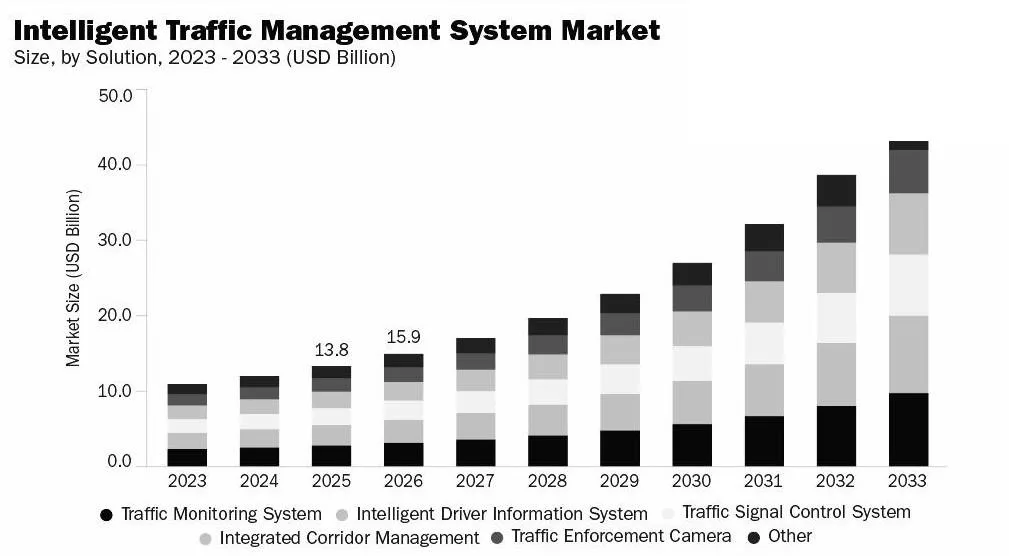
And this shift is only getting stronger. According to the Grand View Research Report, the global intelligent traffic management system market is expected to reach USD 48.67 billion by 2033, growing at a CAGR of 17.8% from 2026 to 2033. This growth is largely driven by the increasing number of vehicles on the road and the rising need for real-time traffic insights for both commuters and authorities.
If you think about it, movies have always given us a glimpse of what the future could look like. Films like Blade Runner 2049 showcased futuristic cities with advanced mobility systems and highly coordinated traffic. While we may not be navigating flying vehicles anytime soon, the real challenge today is managing what we already have, and that is, our existing roads and growing urban traffic.
With cities expanding and transportation demands increasing, traffic management systems are under constant pressure to evolve. They need to become smarter, more efficient, and better connected. But what actually goes into building such systems? Let’s break it down.
What is a Smart Traffic Management System?
A smart traffic management system (STMS) is an advanced, technology-driven solution designed to monitor, control, and optimize traffic flow in real time. Unlike traditional traffic systems that rely on fixed signal timings and manual oversight, smart systems use data, automation, and connectivity to make dynamic decisions based on actual road conditions.
In simple terms, it’s a system that understands what’s happening on the road right now and responds instantly to improve it.
How is it different from traditional traffic systems?
Traditional traffic management works on pre-defined rules. Signals change at fixed intervals, regardless of whether a road is empty or congested. This often leads to:
- Unnecessary waiting time
- Traffic build-up at intersections
- Inefficient use of road infrastructure
A smart traffic management system replaces this static approach with a data-driven, adaptive model.
It continuously collects information from multiple sources and adjusts traffic signals, routes, and controls in real time. The result is smoother traffic flow, reduced congestion, and better overall efficiency.
Core components of a smart traffic management system
A smart system is a combination of multiple interconnected components working together.
1. Data Collection Layer
This is where the system gathers real-time data from the road.
- CCTV cameras
- IoT sensors embedded in roads
- GPS data from vehicles
- Mobile and navigation apps
These inputs provide continuous updates on traffic density, speed, incidents, and road conditions.
2. Communication Network
All collected data needs to move quickly and reliably.
- High-speed networks (4G/5G, fiber optics)
- Vehicle-to-Infrastructure (V2I) communication
- Cloud-based data transfer
This layer ensures that data flows seamlessly between devices and control systems.
3. Data Processing & Analytics Engine
This is the “brain” of the system.
- Processes large volumes of real-time data
- Identifies patterns and traffic conditions
- Uses AI/ML models to predict congestion
It transforms raw data into actionable insights.
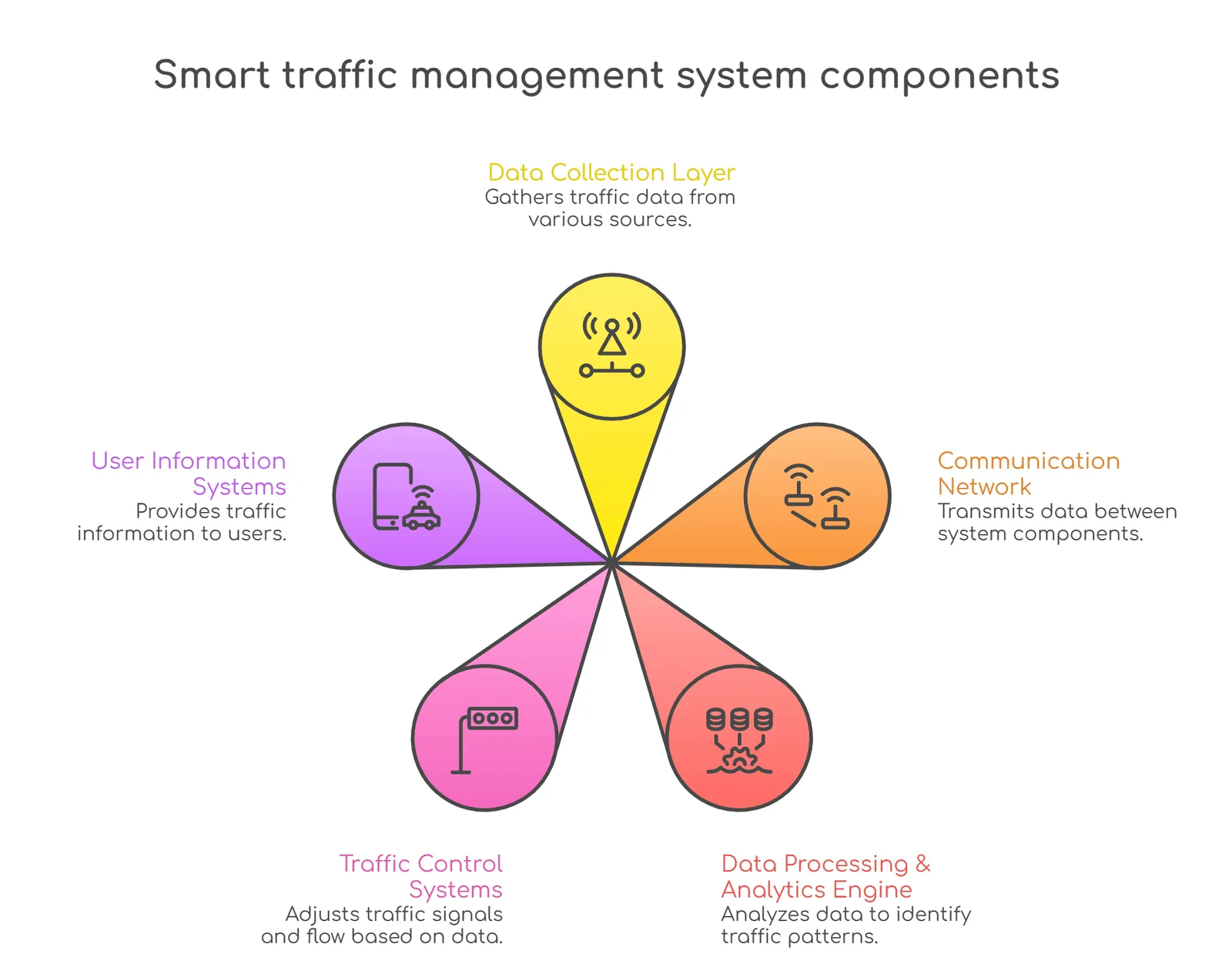
4. Traffic Control Systems
Based on insights, the system takes action.
- Adaptive traffic signals that change dynamically
- Smart traffic lights that prioritize emergency vehicles
- Automated lane management and rerouting
This is where real-time optimization happens.
5. User Information Systems
Smart traffic systems also communicate with users.
- Digital signboards with live updates
- Navigation app integrations
- Alerts for congestion, accidents, or diversions
This helps drivers make informed decisions.
How does it work in reality?
A smart traffic management system follows a continuous cycle:
- It collects real-time data from roads and vehicles
- Processes and analyzes the data instantly
- Identifies congestion or unusual patterns
- Adjusts signals or suggests alternate routes
- Continuously learns and improves over time
All of this happens within seconds, often without any human intervention.
Role of AI and Automation
AI plays a major role in making these systems intelligent.
- Predicts traffic congestion before it happens
- Optimizes signal timings dynamically
- Detects incidents like accidents or violations
- Improves decision-making over time using historical data
Automation ensures that responses are instant, consistent, and scalable.
Key Benefits
Smart traffic management systems are designed to solve real-world urban challenges.
- Reduced traffic congestion and travel time
- Lower fuel consumption and emissions
- Faster emergency response times
- Improved road safety
- Better utilization of existing infrastructure
Instead of building more roads, cities can make existing roads smarter.
A smart traffic management system is a key part of a smart city ecosystem. It connects infrastructure, vehicles, and users into a single network that works together to improve mobility.
As urban populations grow and traffic becomes more complex, these systems are becoming essential for building efficient, sustainable, and future-ready cities.
Core Technologies powering Smart Traffic Management Systems
Smart traffic management systems are powered by a combination of connected, real-time, and intelligent systems working together. What makes them truly powerful today is how these technologies are evolving to become faster, smarter, and more predictive.
As Vinay Krishna Gupta (Co-Founder & CEO, Antino) puts it:
“Smart traffic is no longer about control, it’s about real-time intelligence that adapts faster than the traffic itself.”
Let’s break down the core technologies that are shaping modern traffic systems.
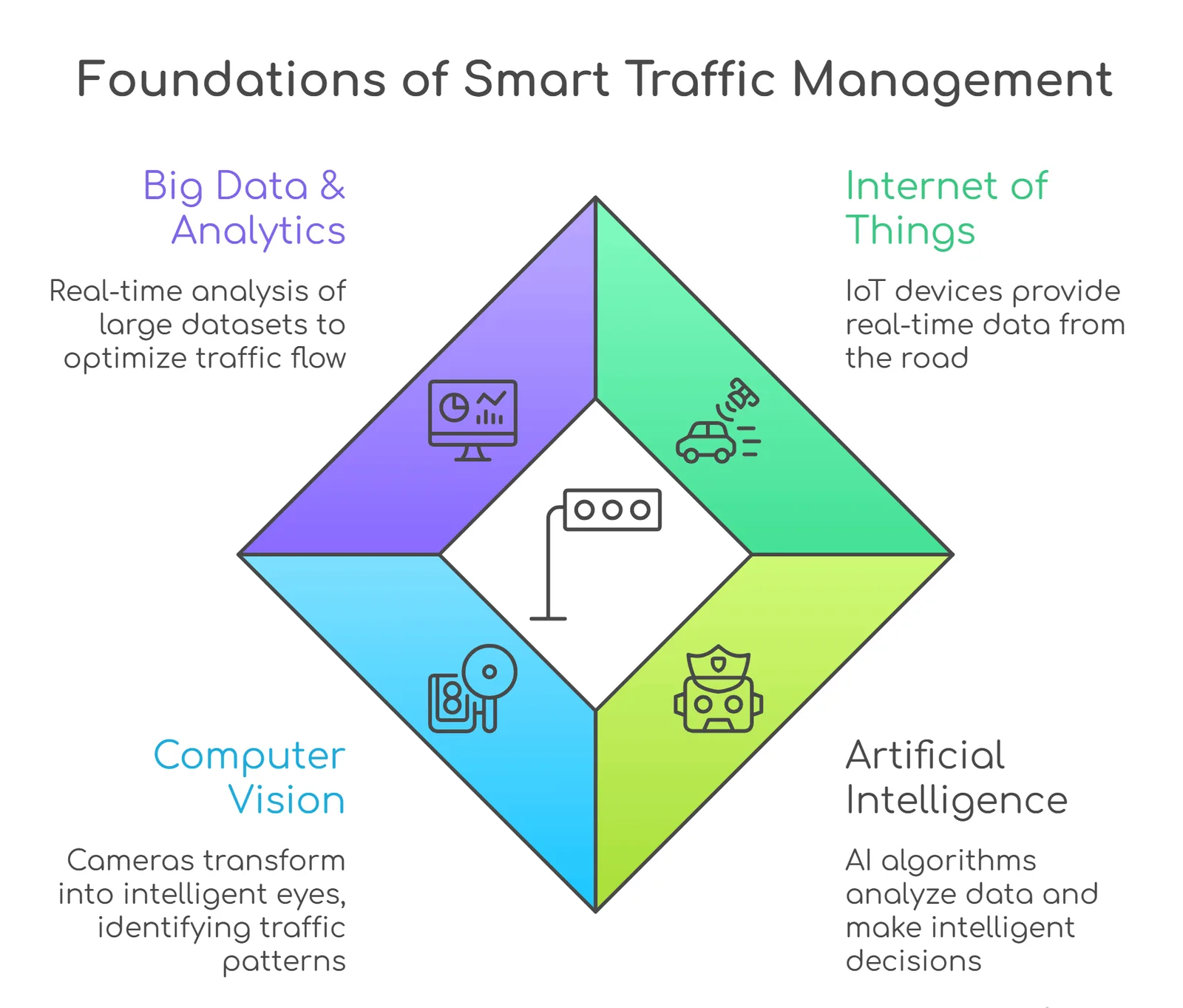
Internet of Things (IoT) acts like the eyes & ears on the road
At the heart of any smart traffic system is IoT.
Sensors, cameras, and connected devices are installed across roads, signals, and intersections to continuously collect data. These devices track:
- Traffic density
- Vehicle speed
- Lane usage
- Environmental conditions
This constant stream of data gives the system real-time visibility, which is the foundation for everything that follows.
Artificial Intelligence & Machine Learning act like the brain
If IoT collects the data, AI makes sense of it.
AI and machine learning models analyze traffic patterns, predict congestion, and make decisions in real time. Instead of reacting to problems, the system can:
- Predict traffic build-up before it happens
- Adjust signal timings dynamically
- Detect incidents like accidents or violations
Over time, these systems learn and improve, making traffic management more efficient with every cycle.
Computer Vision turns Cameras into Intelligence..
Modern traffic systems don’t just record video because they understand it deeply.
With computer vision:
- Cameras can detect vehicle types, count cars, and monitor flow
- Identify violations like red-light jumping or wrong turns
- Recognize incidents instantly without human monitoring
This turns basic surveillance into actionable intelligence.
Big Data & Real-Time Analytics make sense of scale
Traffic systems generate massive amounts of data every second.
Big data platforms process this information in real time to:
- Identify patterns across different locations
- Analyze peak traffic hours
- Support long-term planning and optimization
Without this layer, data would be overwhelming and unusable.
Cloud Computing powers scalability
Smart traffic systems need to handle data from thousands of sources simultaneously.
Cloud infrastructure makes this possible by:
- Storing and processing large datasets
- Enabling real-time access across systems
- Scaling resources based on demand
It ensures that the system remains fast and reliable, even during peak traffic hours.
5G & High-Speed Connectivity for enabling real-time response
Speed is critical in traffic management.
With 5G and advanced networks:
- Data is transmitted with minimal delay
- Systems can respond instantly to changing conditions
- Communication between vehicles and infrastructure becomes seamless
This is especially important for future-ready systems like connected and autonomous vehicles.
GPS & Geolocation Technologies to track movement
Accurate location tracking is essential for understanding traffic flow.
GPS and geolocation systems help:
- Track vehicle movement in real time
- Provide accurate ETAs
- Support navigation and rerouting
This data is also used to optimize routes and reduce congestion.
Vehicle-to-Everything (V2X) Communication
One of the most exciting advancements is V2X communication.
This allows vehicles to communicate with:
- Traffic signals
- Road infrastructure
- Other vehicles
The result is a connected ecosystem where:
- Signals adapt based on approaching vehicles
- Drivers receive real-time alerts
- Traffic flow becomes more coordinated
Automation & Edge Computing for faster decisions on the ground
Instead of sending all data to the cloud, edge computing processes data closer to where it’s generated.
This allows:
- Faster decision-making at intersections
- Reduced latency
- More efficient system performance
Automation ensures that actions, like changing signals or triggering alerts, happen instantly without manual intervention.
What makes modern traffic systems “smart” is not just the technology itself, but how all these technologies work together in real time.
IoT collects data. AI understands it. Cloud and connectivity move it. Automation acts on it. The result is a system that adapts, learns, and evolves. And as cities continue to grow, these technologies will play a critical role in building faster, safer, and more efficient urban mobility systems.
How is AI advancing the roadmap to smart city traffic?
If smart traffic systems are the foundation of modern cities, then AI is what’s pushing them forward. AI is helping cities predict, adapt, and optimize traffic in ways that weren’t possible before.
Instead of reacting to congestion after it happens, cities can now stay one step ahead.
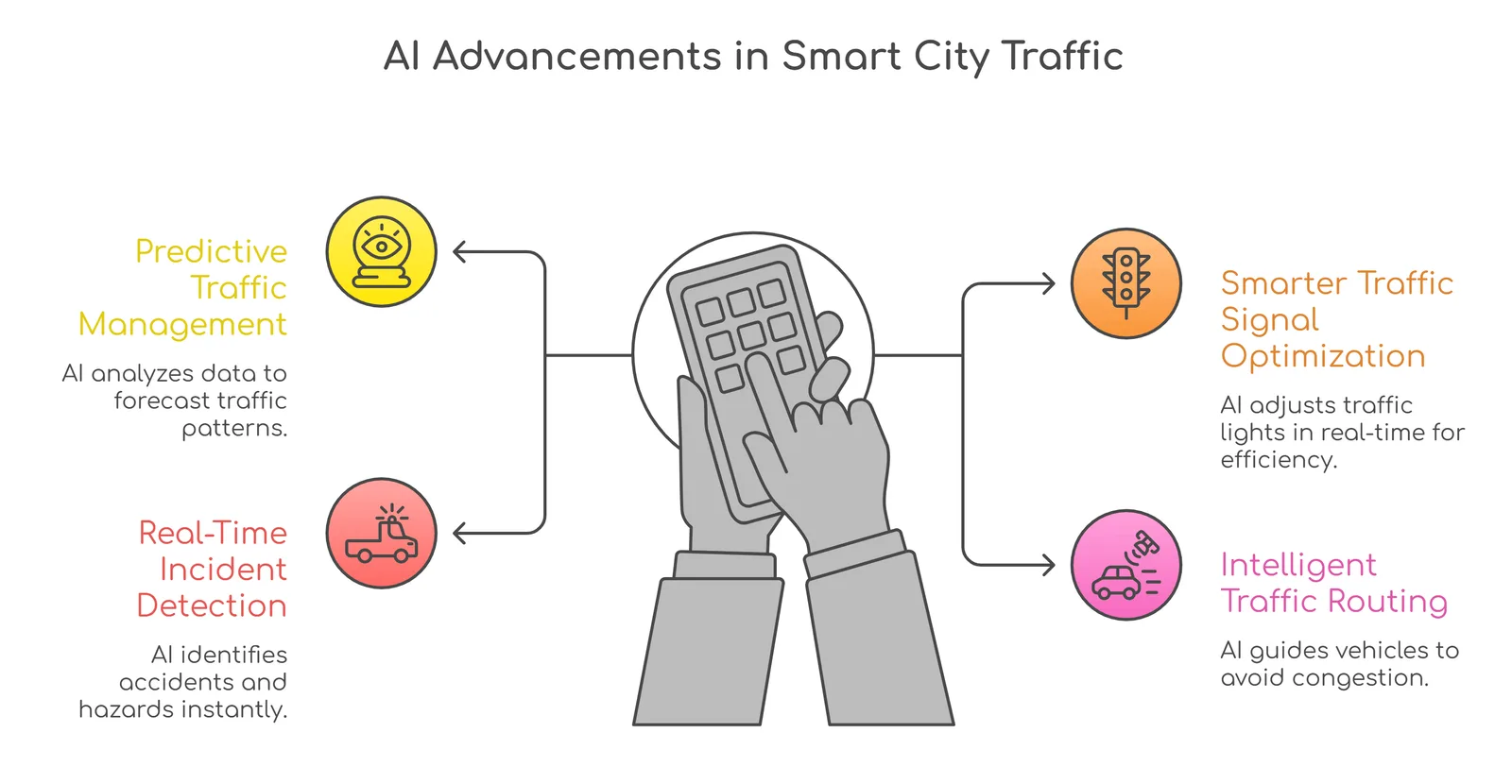
Predictive Traffic Management
Traditional systems respond to traffic conditions. AI changes that by making systems predictive.
By analyzing historical data along with real-time inputs, AI can:
- Anticipate traffic build-up before peak hours
- Identify patterns based on time, weather, or events
- Suggest proactive measures to reduce congestion
This shift from “reacting” to “predicting” is a major step toward smarter urban mobility.
Smarter Traffic Signal Optimization
One of the most visible impacts of AI is at traffic signals.
Instead of fixed timers, AI enables:
- Dynamic signal timing based on live traffic flow
- Prioritization for emergency vehicles
- Better coordination between multiple intersections
This reduces unnecessary waiting time and keeps traffic moving more smoothly across the city.
Real-Time Incident Detection
AI-powered systems can instantly detect unusual activity on the road.
Using computer vision and data analytics, they can:
- Identify accidents or sudden traffic disruptions
- Detect violations like wrong turns or signal jumps
- Trigger alerts for faster response from authorities
This significantly improves response time and enhances road safety.
Intelligent Traffic Routing
AI also improves how traffic is distributed across roads.
By analyzing real-time conditions, it can:
- Suggest alternate routes to drivers
- Prevent overcrowding on specific roads
- Balance traffic across the network
This not only reduces congestion but also improves overall travel time.
Demand Forecasting & Resource Planning
AI helps cities prepare better for traffic demand.
- Predicts high-traffic zones during peak hours
- Helps deploy traffic personnel more efficiently
- Supports planning for infrastructure improvements
This makes traffic management more strategic rather than reactive.
Enhancing Public Transport Integration
Smart cities focus on overall mobility.
AI helps integrate traffic systems with public transport by:
- Optimizing bus and metro schedules based on traffic
- Giving priority to public transport at signals
- Improving last-mile connectivity
This encourages people to shift toward more sustainable travel options.
Improving Safety Through Data
AI continuously learns from traffic data to improve safety.
- Identifies accident-prone zones
- Recommends preventive measures
- Enhances monitoring in high-risk areas
Over time, this leads to safer roads and better urban planning.
Role in Autonomous & Connected Mobility
AI is also laying the groundwork for future mobility.
- Supports communication between vehicles and infrastructure
- Helps autonomous vehicles navigate complex traffic scenarios
- Enables coordinated traffic movement across systems
While fully autonomous traffic may still be evolving, AI is already building the ecosystem needed for it.
Automation at Scale
Managing traffic in a large city involves thousands of moving parts.
AI enables:
- Automated decision-making across intersections
- Reduced human intervention
- Consistent and scalable traffic control
This makes it possible to manage entire city networks efficiently.
AI is redefining traffic systems, literally. It brings together data, automation, and intelligence to create systems that:
- Learn continuously
- Adapt in real time
- Improve with every interaction
As cities grow and mobility demands increase, AI will play a central role in shaping faster, safer, and more connected urban environments. In many ways, smart traffic has become all about building a city that thinks ahead.
6 Features Global Cities are seeking in Smart Traffic Management Systems
Traffic isn’t slowing down anytime soon, especially in a country like India, where urban population and vehicle ownership are growing at an incredible pace. Cities are expanding, daily commutes are getting longer, and the pressure on existing infrastructure is only increasing.
In fact, reports suggest that Indian cities lose billions of dollars every year due to traffic congestion, with cities like Bengaluru and Delhi often ranking among the most congested globally. At the same time, initiatives like the Smart Cities Mission are pushing cities to adopt smarter, tech-driven solutions to manage traffic more efficiently.
So, what exactly are modern cities looking for in traffic management systems? Here are six key capabilities shaping the future.
1. Video Traffic Detection with Edge Processing
Indian roads are unpredictable because one small disruption can quickly turn into a massive traffic jam. That’s why cities are investing in smart video detection systems.
With connected CCTV cameras and AI-powered computer vision:
- Traffic can be monitored in real time
- Incidents like accidents, illegal parking, or lane violations can be detected instantly
- Alerts can be sent to traffic control rooms within seconds
Cities like Delhi already use AI-enabled traffic cameras to monitor violations and manage congestion at major intersections. Edge computing makes this even faster by processing data locally, reducing delays in decision-making.
2. Safety & Pollution Analytics
Traffic management today is about safety and sustainability.
Modern systems can track:
- Air quality and pollution levels
- Vehicle emissions in high-traffic zones
- Dangerous driving behavior, like sudden braking or overspeeding
For example, Delhi’s air quality monitoring systems are increasingly being integrated with traffic data to understand how congestion impacts pollution. This helps authorities make smarter decisions, like restricting vehicle entry during peak pollution days.
3. Predictive Traffic Planning
Traffic may look chaotic, but it often follows patterns, especially in Indian cities where peak hours are highly predictable.
With AI and data analytics, cities can:
- Identify congestion-prone areas
- Predict traffic build-up during festivals, rains, or events
- Plan diversions before problems occur
In cities like Bengaluru, traffic patterns during office hours are so consistent that predictive systems can help optimize signal timing and reduce delays proactively.
4. Smart Junction Management
Intersections are where most traffic problems and accidents happen.
In India, a large percentage of urban road accidents occur at junctions due to:
- Poor signal coordination
- Mixed traffic (cars, bikes, pedestrians)
- High vehicle density
Smart junction systems use sensors and AI to:
- Analyze turning movements and traffic flow
- Adjust signal timings dynamically
- Prioritize buses, emergency vehicles, or pedestrians
Cities like Mumbai and Delhi have started deploying adaptive traffic signals that change in real time based on traffic conditions.
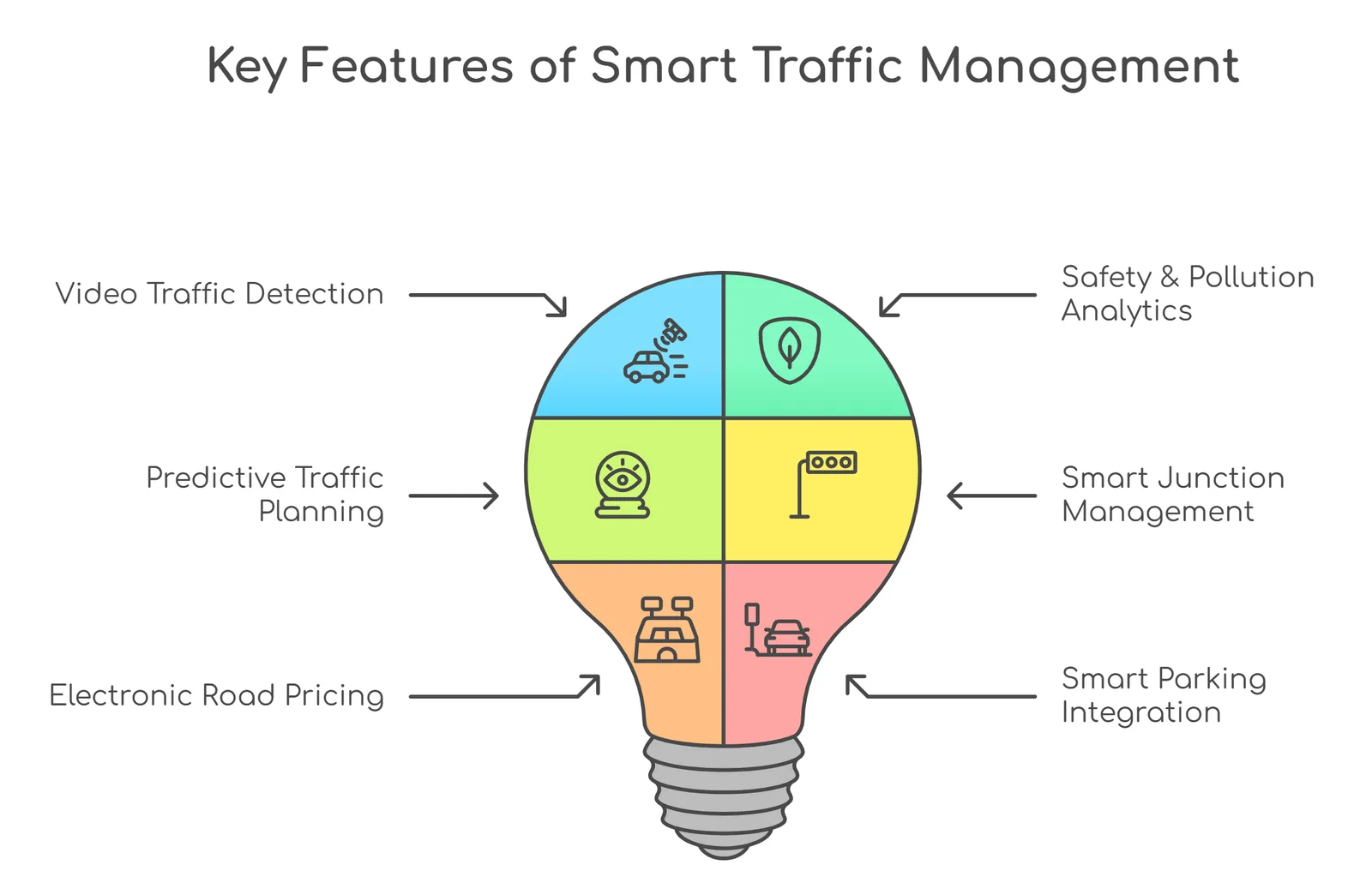
5. Electronic Road Pricing & Congestion Control
While still evolving in India, congestion pricing is gaining global attention as a way to reduce traffic.
The idea is simple:
- Charge higher fees for driving in busy areas during peak hours
- Encourage people to use public transport instead
Globally, cities like Singapore and London have already implemented such systems successfully. In India, discussions around congestion pricing have started in cities like Delhi to manage traffic in high-density zones.
As urban mobility grows, this could become a key tool for controlling vehicle volume.
6. Smart Parking Integration
Parking is a hidden but major cause of traffic congestion.
Studies suggest that a significant portion of urban traffic comes from drivers simply looking for parking. In Indian cities, this problem is even more visible in crowded markets and commercial areas.
Smart parking systems help by:
- Showing real-time parking availability
- Guiding drivers to the nearest empty spot
- Reducing unnecessary road circulation
Cities like Pune and Delhi have already introduced app-based smart parking solutions, helping reduce congestion and improve the overall driving experience.
What ties all these features together is real-time intelligence and connected systems. Modern traffic management has now become all about
- Understanding traffic patterns
- Predicting problems before they happen
- Creating a smoother and safer experience for everyone on the road
For countries like India, where traffic complexity is on another level, these technologies are becoming essential for building future-ready, livable cities.
Real-world examples of Smart Traffic Management Systems
Smart traffic management is already being used by cities around the world to make roads safer, faster, and more efficient. What’s interesting is that each city approaches the problem differently, depending on its infrastructure, population, and mobility needs.
Let’s look at some well-known, real-world examples that show how smart traffic systems are actually working on the ground.
Singapore | Congestion Pricing
Singapore is often seen as a benchmark for traffic management.
The city uses an Electronic Road Pricing (ERP) system, where drivers are charged for entering high-traffic areas during peak hours. The pricing is dynamic and changes based on congestion levels.
What makes it smart:
- Sensors and cameras track vehicle movement
- Charges are applied automatically
- Traffic flow is maintained at optimal speeds
The result? Singapore has been able to control congestion without endlessly expanding roads, something many growing cities struggle with.
London | Smart Congestion Charge Zone
In London, traffic in central areas was once a major issue.
To tackle this, the city introduced a congestion charging system, where drivers pay a fee to enter busy zones. This is supported by:
- Camera-based vehicle tracking
- Automated billing systems
- Integration with public transport policies
Since implementation, London has seen:
- Reduced traffic volume
- Increased use of public transport
- Improved travel times in central areas
Los Angeles | AI-Powered Traffic Signals
Los Angeles deals with one of the most complex traffic systems in the world.
The city has implemented AI-based adaptive traffic signal control systems across thousands of intersections.
What it does:
- Adjusts signal timings based on real-time traffic
- Coordinates signals across multiple intersections
- Reduces stop-and-go traffic
This has helped reduce travel time and improve traffic flow without major infrastructure changes.
Copenhagen | Greener Traffic with Smart Signals
Copenhagen is focused not just on traffic flow, but also on sustainability.
The city uses smart traffic systems to:
- Prioritize bicycles and public transport
- Reduce idle time at intersections
- Lower emissions from vehicles
As a result:
- Traffic flow has improved
- Pollution levels have reduced
- Public transport efficiency has increased
It’s a great example of how traffic management can support environmental goals.
Dubai | Integrated Smart Mobility Ecosystem
Dubai has taken a highly integrated approach to traffic management.
Through initiatives by the Roads and Transport Authority, the city uses:
- AI-powered traffic control systems
- Real-time monitoring through sensors and cameras
- Smart apps for mobility and navigation
Dubai’s system connects traffic signals, public transport, and ride-hailing services into one ecosystem, helping the city move closer to its smart city vision.
Bengaluru | Adaptive Signals in Indian Traffic
Closer to home, Bengaluru has started adopting adaptive traffic signal systems to handle its heavy traffic.
These systems:
- Adjust signal timings based on real-time traffic density
- Use sensors and cameras at intersections
- Reduce waiting time at signals
While still evolving, this is a strong step toward smarter traffic management in Indian cities.
Delhi | AI-Based Traffic Monitoring
Delhi has implemented AI-powered traffic monitoring systems at key intersections.
These systems help:
- Detect traffic violations automatically
- Monitor congestion levels
- Improve enforcement without manual intervention
They also support better planning by providing data insights to traffic authorities.
What do these examples show?
Even though each city has a different approach, the goal is the same, and that is, to make traffic more efficient, safer, and sustainable.
Some focus on pricing strategies. Some focus on AI and automation. Others focus on sustainability and public transport. But the common thread is that smart traffic management is about using data and technology to make better decisions in real time.
So, if you’re planning to build or invest in smart traffic solutions, focus on improving everyday mobility for people, not just managing vehicles.
Future outlook of Intelligent Traffic Management Systems
Traffic management is moving far beyond signals and surveillance. What we’re heading toward is a world where cities anticipate, adapt to, and optimize traffic continuously. And honestly, we’re already seeing the early version of that future.
As urban populations grow and mobility becomes more complex, intelligent traffic systems are evolving into fully connected, AI-driven ecosystems that work in real time.
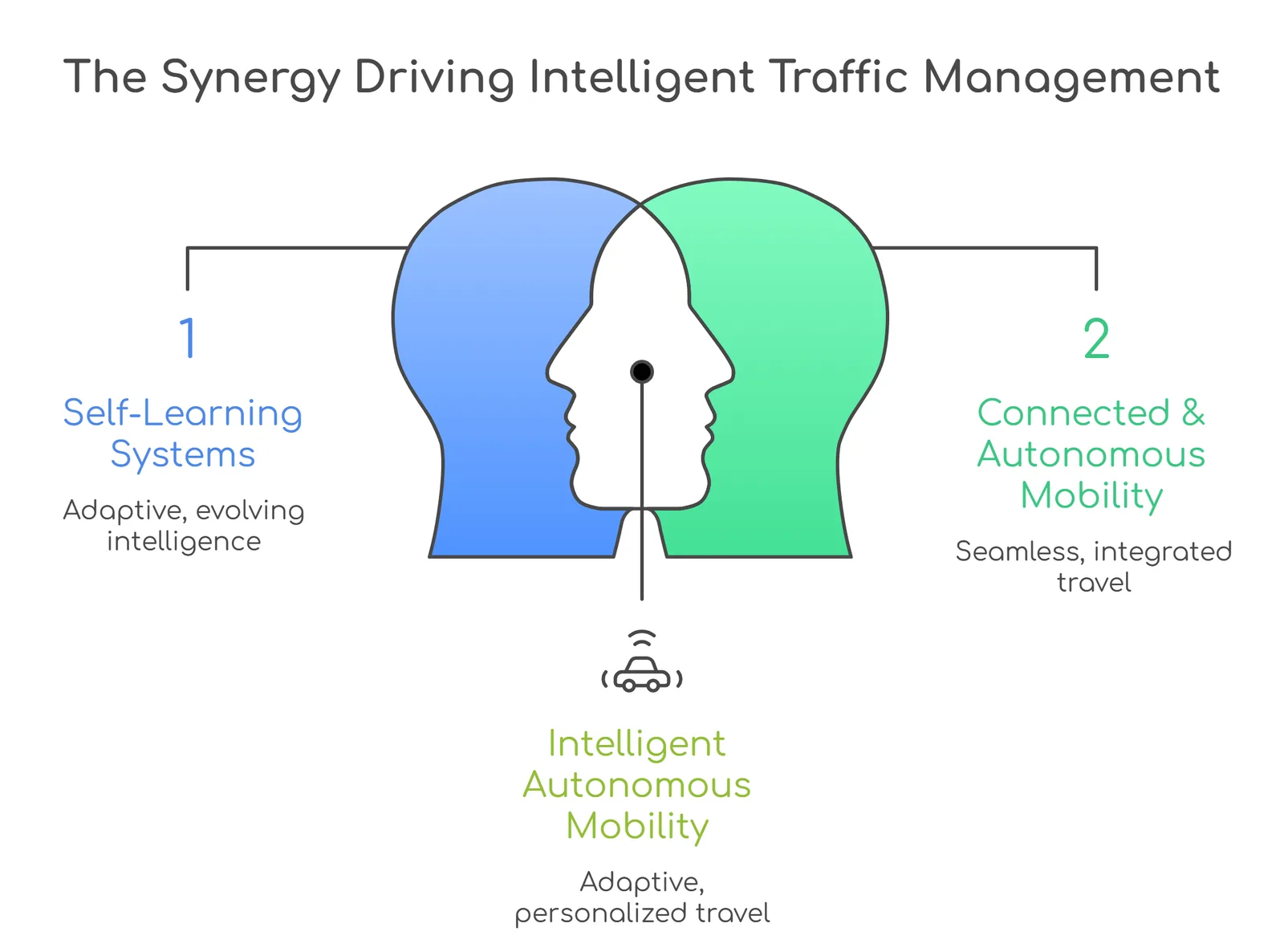
Self-Learning Systems
The next phase of traffic management is all about systems that learn on their own.
Instead of relying on pre-set rules, future systems will:
- Continuously learn from traffic patterns
- Adapt signal timings automatically
- Improve decisions based on past outcomes
This means traffic systems will get smarter over time, without constant human intervention.
Rise of Connected & Autonomous Mobility
As connected and autonomous vehicles become more common, traffic systems will need to interact directly with them.
We’re moving toward a setup where:
- Vehicles communicate with traffic signals
- Roads share real-time updates with cars
- Traffic flow is coordinated across the entire network
This kind of Vehicle-to-Everything (V2X) communication will make traffic smoother and more predictable.
Hyper-Personalized Mobility Experiences
Future traffic systems will impact individual journeys.
- Real-time route suggestions based on live conditions
- Personalized travel recommendations
- Integration with ride-hailing and public transport apps
The idea is simple: instead of adapting to traffic, traffic adapts to you.
Sustainability Will Be at the Core
With growing focus on climate change, traffic systems will play a big role in reducing emissions.
Future systems will:
- Minimize idle time at signals
- Promote eco-friendly routes
- Prioritize electric and public transport
Cities will use traffic data not just to manage congestion, but to build greener urban environments.
Digital Twins of Cities
One of the most exciting trends is the use of digital twins, which are virtual replicas of cities.
These models allow authorities to:
- Simulate traffic scenarios
- Test infrastructure changes before implementation
- Plan for events, disruptions, or future growth
It’s like having a “test version” of the city where decisions can be validated before going live.
Integration Across Everything
Traffic systems will no longer operate in isolation.
They’ll be deeply integrated with:
- Public transport systems
- Emergency services
- Urban planning tools
- Mobility apps and platforms
This creates a single, connected ecosystem where every part of the city works together.
Faster Decisions with Edge & Real-Time Tech
Speed will continue to be a game-changer.
With edge computing and high-speed networks:
- Decisions will happen instantly at intersections
- Data won’t always need to travel to the cloud
- Systems will respond in milliseconds
This is critical for handling high-density traffic in large cities.
AI Will Move from Support to Control
Today, AI assists traffic management. In the future, it will drive it.
- Fully automated traffic control systems
- Minimal manual intervention
- Continuous optimization across the network
AI won’t just support decisions, it will make them.
The future of intelligent traffic management is about making existing systems smarter, faster, and more connected. We’re moving toward cities where:
- Traffic flows more naturally
- Delays are minimized
- Safety is improved
- And mobility feels seamless
It’s not a distant vision anymore. Step by step, cities are already building this future.
How can Antino help you with Smart Traffic Solutions?
Building smart traffic solutions is about creating a system where data, infrastructure, and real-time decisions work seamlessly together. At Antino, as an experienced Artificial Intelligence development company, we help you move from idea to execution with clarity. Whether you’re looking to build adaptive traffic systems, integrate AI-driven analytics, or create connected mobility platforms, our experts focus on designing solutions that actually work in real-world city environments.
What makes Antino a strong partner is our ability to simplify complex ecosystems. From IoT integrations and real-time data processing to scalable cloud architecture and intelligent automation, we help you build solutions that are not only efficient today but ready for tomorrow. With a strong focus on performance, usability, and long-term scalability, we ensure your smart traffic system evolves as your city grows.