

Insurtech is picking up pace fast. And it’s not only because of new tech coming in, but also because people today simply expect things to be easier, quicker, and more transparent. That said, technology is still doing most of the heavy lifting here. We’re already used to apps simplifying our everyday lives, so when insurance starts doing the same, it naturally feels like the right move.
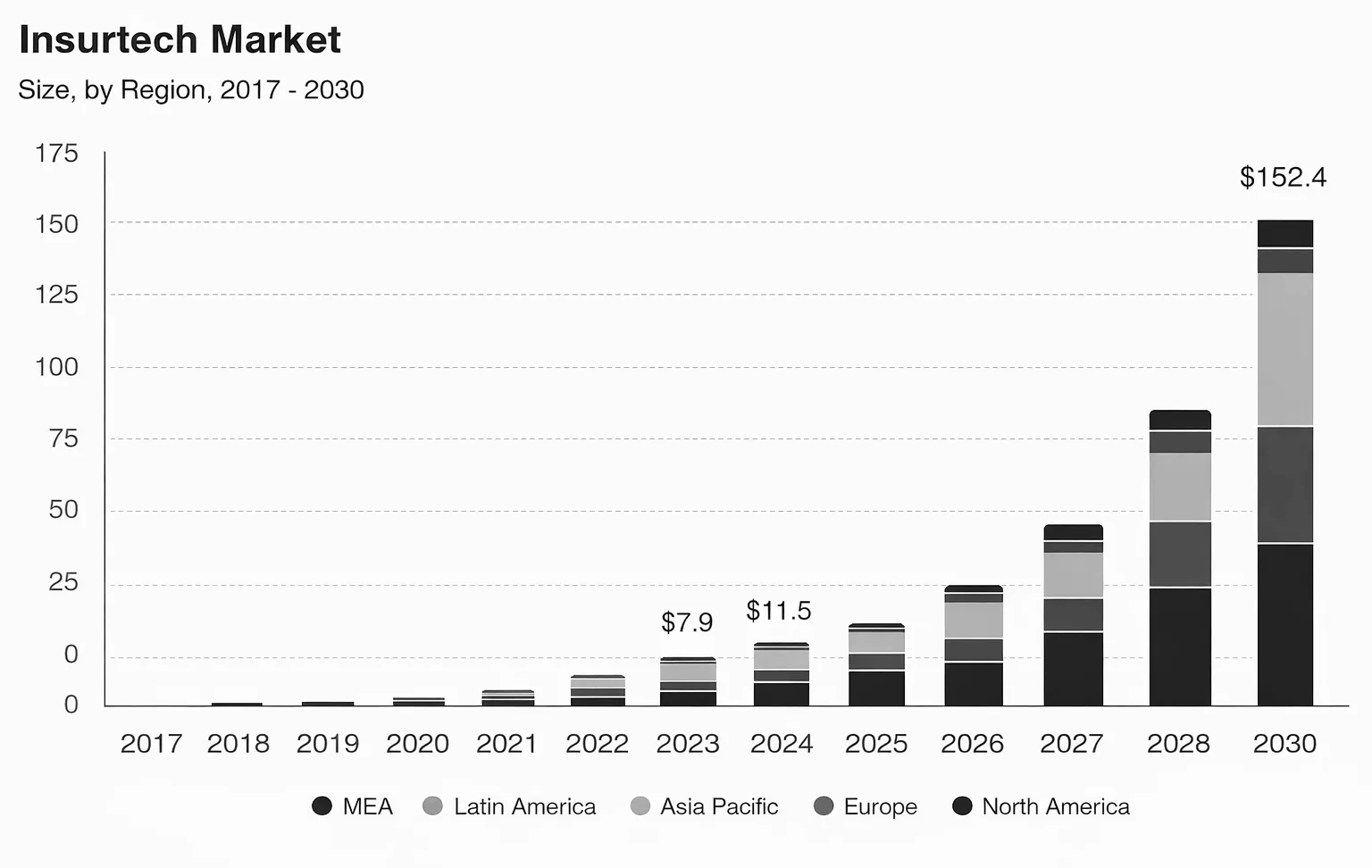
So, what is Insurtech? And why is it expected to reach $152.4 billion by 2030?
In simple terms, Insurtech is about making insurance work the way people want it to. It brings in the kind of ease you see with brands like Swiggy, the personalization you experience on Netflix, and the efficiency you expect from Amazon. Something that once felt complicated suddenly becomes much more straightforward.
With insurance mobile app development, the impact is felt across the board, whether it’s underwriters, brokers, or policyholders. It helps cut down the back-and-forth, saves time, and makes the whole process smoother for everyone involved.
Well, the numbers also assert that the urgency to embrace digital insurtech is accelerating, and those who continue to wait may miss opportunities to benefit from this wave of transformation.
Insurance Mobile App Development: The Disruption in InsurTech
Insurance technology is quietly reshaping how the entire industry works. It’s now about being ready for whatever comes next. Companies that are investing in insurtech today understand one simple thing: staying ahead isn’t a bonus anymore, it’s the baseline. If you want to stay competitive, insurtech is no longer optional.
When insurers start building a modern tech stack or invest in insurance app development with the right tools, the impact shows up everywhere:
- Policy processes become faster and smarter with AI
- Routine queries get handled instantly through automation and chatbots
- Claims become smoother with mobile-first journeys and real-time updates
A fascinating aspect of this shift is how rapidly it is occurring. While insurance was previously viewed as having a slower evolution compared to other industries, currently, we’re seeing large, traditional insurance entities as well as smaller/newly established tech-based companies all embracing insurtech approaches to redefine their business model.
Speed and efficiency are important factors that have always been present, but the most significant cases for adopting an insurtech model are to improve relationships with customers through simple, transparent, and value-added experiences.
At the same time, there are many opportunities for forward-thinking insurers to continue to innovate and comply with a strict regulatory environment, balance the need for innovation and insurance mobile app development with financial accountability, while still delivering great customer service at a competitive price point.
It's the example set by those companies and people who understood there was an opportunity to embrace technology to improve their operations, regardless of existing laws/regulations. Thus, we continue to see new and innovative ways that companies will adapt moving forward.
But, Why do insurance companies need a Mobile App?
Because today's world consists of most life experiences living on a smartphone, insurance shouldn't feel like it is being left behind.
We are so used to completing everything within a couple of clicks. However, insurance without a mobile application still feels like a lengthy process (like waiting for calls or e-mail messages back and forth). This gap can easily be closed by insurance app development.
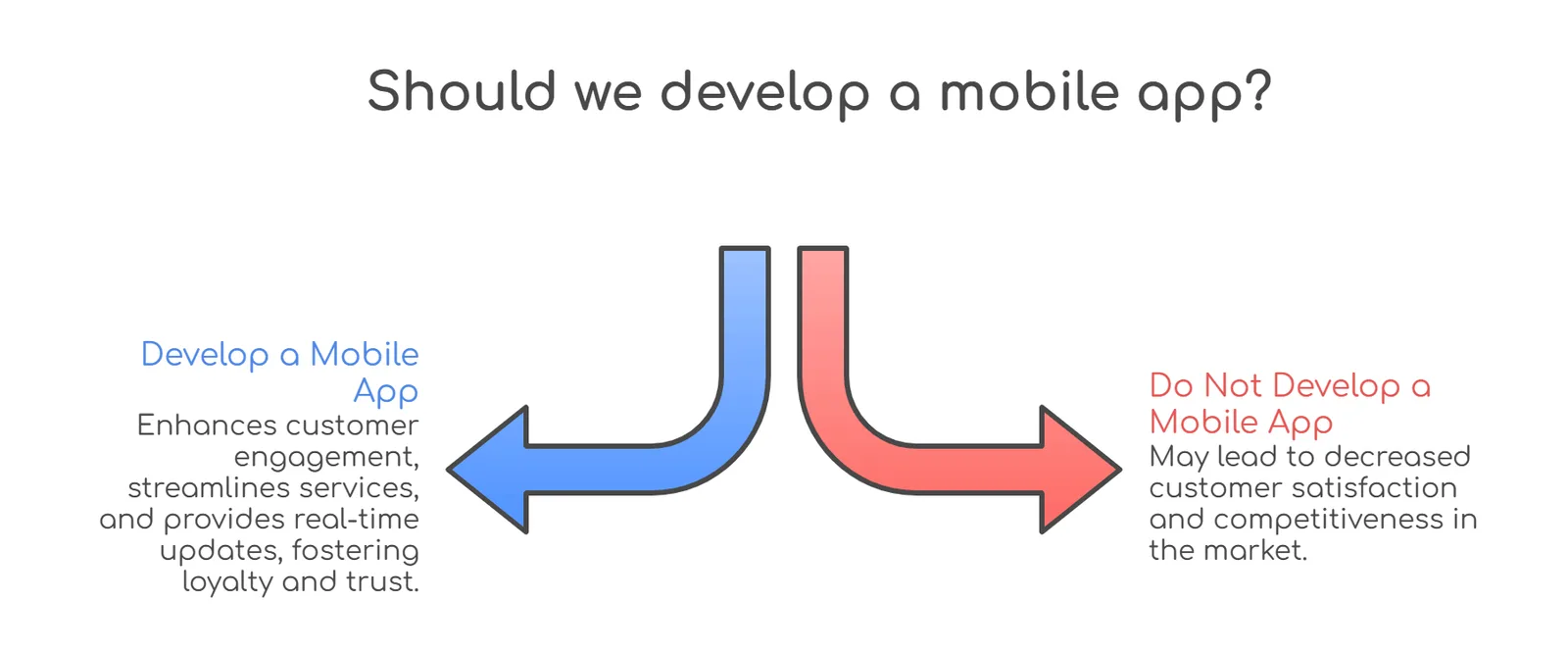
A mobile application allows for easy, seamless access to your insurance. Instead of needing to chase for updates or sort through numerous documentation you can manage your insurance all in one place and all in real-time. And the difference becomes very clear when you look at everyday use cases…
- Buying or renewing a policy
Without an app: Filling out forms, multiple calls, waiting for confirmations.
With an app: Compare plans, select, and renew in minutes.
- Raising a claim
Without an app: Calling support, emailing documents, waiting for responses.
With an app: Upload documents, submit claims, and track status in real time.
- Checking policy details
Without an app: Searching emails or contacting an agent.
With an app: Everything is available instantly in one dashboard.
- Customer support
Without an app: Long wait times on calls or delayed email replies.
With an app: Chatbots or in-app support for quick resolutions.
- Document submission
Without an app: Scanning, attaching, and sending files manually.
With an app: Click, upload, done.
Mobile apps have many advantages for insurance providers, which include improving the customer experience and maintaining relevance in today’s competitive marketplace.
A mobile application can reduce the volume of manual tasks, improve operational speed, and create a timely experience for the client. In addition, providing clients with timely updates, the ability to track the status of their claim, and providing instant responses enhances their sense of control over the process of completing their claim.
Mobile apps are no longer merely a basic need, it is also a must-have to use a mobile app for claims processing, which can have a significant impact on how long clients must wait to receive payment for their claim.
Here are the most common types of insurance apps and how they are used in real life…
1. Customer or Policyholder Apps
These are designed for end users who buy and manage insurance policies. They allow customers to view policy details, renew plans, raise claims, and track updates without needing to call or email anyone.
Example:
A user gets into a minor car accident. Instead of calling an agent and waiting, they open the app, upload photos, submit the claim, and track its progress in real time.
2. Agent or Broker Apps
These apps are built for insurance agents and brokers who handle sales and customer relationships. They help manage leads, track customer interactions, share policy details, and close deals faster while on the move.
Example:
An agent meeting a client can instantly pull up different policy options on the app, explain benefits, calculate premiums, and even complete the purchase on the spot.
3. Claims Management Apps
These apps focus specifically on handling the claims process from start to finish. They streamline claim submission, document verification, approvals, and payouts, making the entire journey faster and more transparent.
Example:
After a health emergency, a user uploads hospital bills through the app. The system verifies documents, updates status, and processes the claim without repeated follow-ups.
4. Underwriting Apps
These are used by insurers to assess risks and decide policy terms. They use data, analytics, and sometimes AI to evaluate applications quickly and accurately.
Example:
Instead of manually reviewing every application, the app analyzes customer data and provides a risk score, helping underwriters make faster decisions.
5. Telematics or Usage-Based Insurance Apps
These apps track user behavior, usually for motor or car insurance, and adjust premiums based on actual usage. They rely on real-time data like driving habits, speed, and distance.
Example:
A safe driver who avoids harsh braking and overspeeding gets rewarded with lower premiums, all tracked through the app.
6. Wellness and Health Insurance Apps
These apps go beyond just insurance and focus on preventive care and healthy living, especially in health insurance. They track fitness, offer health tips, and sometimes reward users for maintaining a healthy lifestyle.
Example:
A user who regularly walks or completes fitness goals earns reward points or discounts on their health insurance premium.
7. Enterprise or Internal Insurance Apps
These are used within insurance companies to manage operations, data, and workflows. They connect different teams, like underwriting, claims, and customer support, to improve efficiency.
Example:
An internal app helps teams track policy approvals, manage customer requests, and reduce manual coordination between departments.
Each of these apps solves a specific gap in the insurance journey. Together, they create a connected ecosystem where processes are faster, communication is smoother, and the overall experience feels a lot more user-friendly.
In simple terms, insurance apps are turning a traditionally complex industry into something that feels much more accessible and easy to navigate.
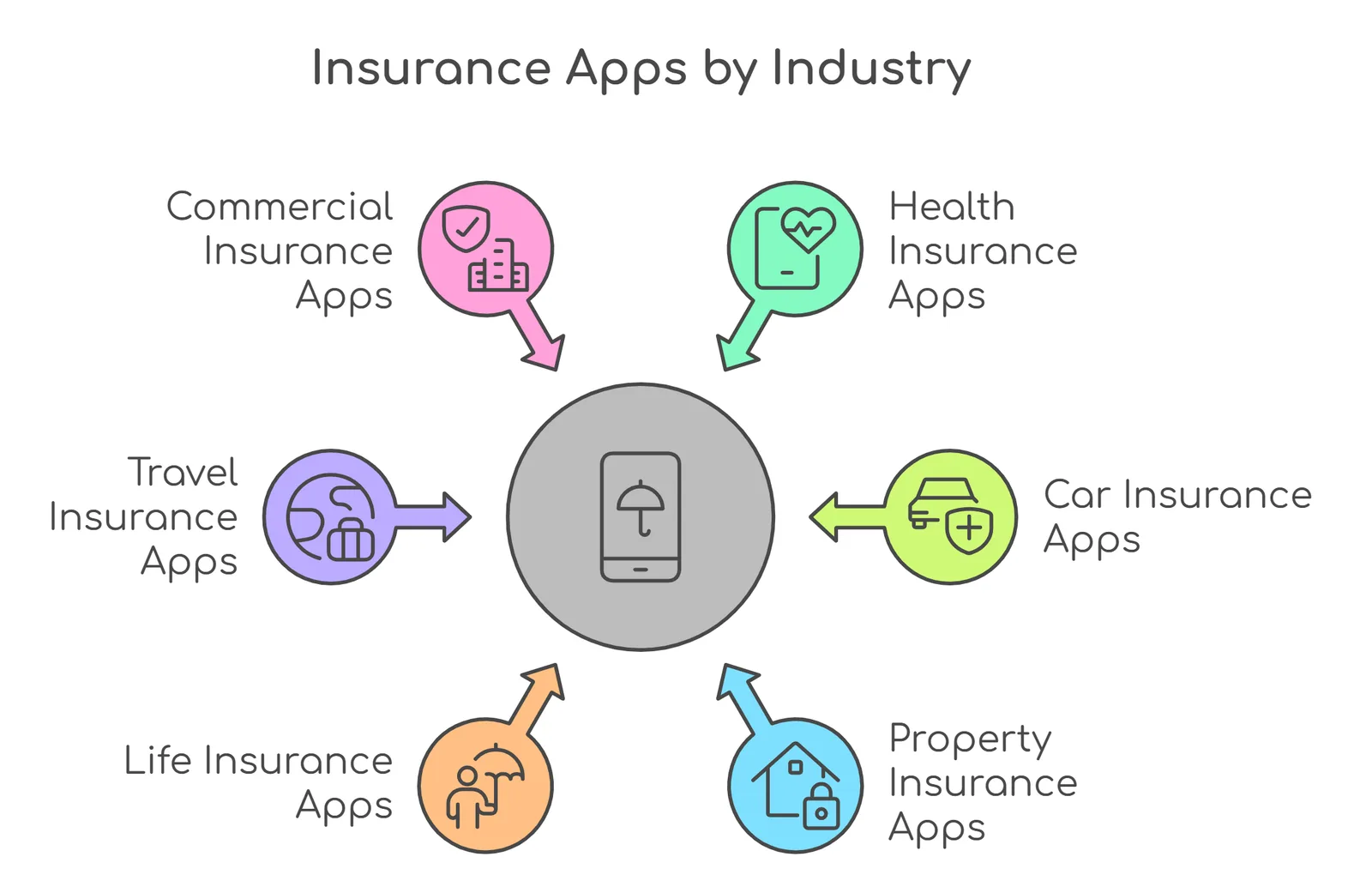
Types of Insurance Apps Based on Industry
Insurance apps are also designed based on the type of coverage they offer. Each category focuses on solving very specific user needs, depending on the situation.
1. Health Insurance Apps
These apps focus on making healthcare access and claims simpler. They often include features like teleconsultation, digital health records, and wellness tracking. Some even connect with fitness devices to monitor activity and reward healthy habits.
Example: A user can consult a doctor through the app, store medical reports, and submit hospital bills for claims without visiting the insurer.
2. Car Insurance Apps
These apps are built around driving-related services and real-time data. Many of them use telematics to track driving behavior and adjust premiums accordingly. They also help with accident reporting and emergency assistance.
Example: After an accident, a user can instantly report the incident, upload images, and request roadside help directly through the app.
3. Property or Home Insurance Apps
These apps help homeowners and renters manage their policies and report damages easily. They simplify the process of documenting and submitting claims for property-related issues.
Example: If there is water damage at home, a user can upload photos and file a claim through the app without long paperwork.
4. Life Insurance Apps
These apps are focused on simplifying long-term policy management. They make it easier to buy policies, pay premiums, and manage nominee or beneficiary details.
Example: A user can update beneficiary information or track policy maturity details without contacting an agent.
5. Travel Insurance Apps
These apps are designed for people on the move. They provide quick access to coverage details, emergency support, and claim filing while traveling.
Example: If a flight gets delayed or baggage is lost, the user can raise a claim instantly through the app.
6. Commercial or Business Insurance Apps
These apps cater to businesses that need to manage multiple insurance policies. They help track coverage for assets, employees, and liabilities in one place.
Example: A business owner can manage insurance for office equipment, employee health, and liability coverage through a single dashboard.
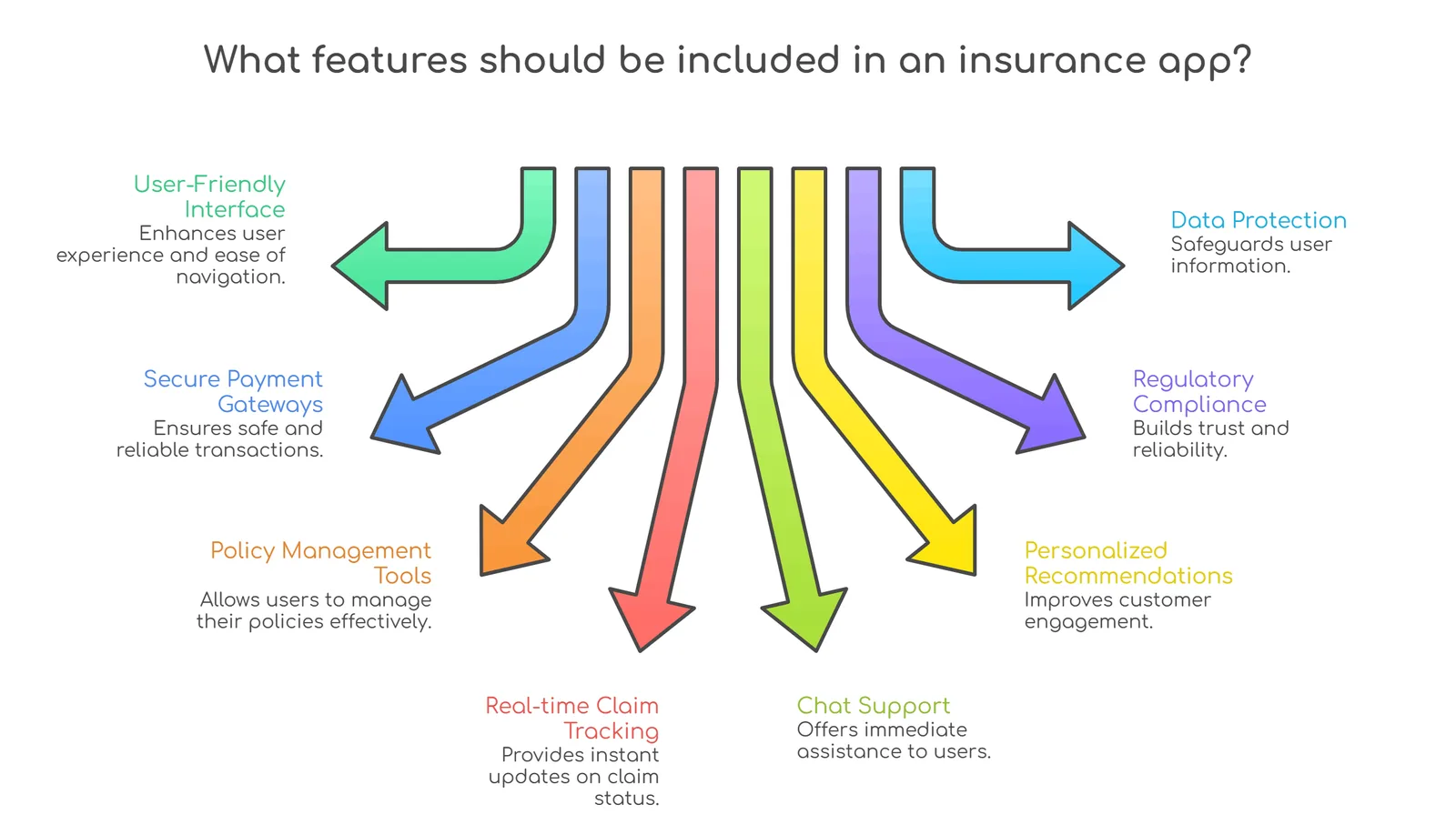
Must-Have Features while considering Insurance App Development
Creating an insurance app today goes beyond merely displaying your policies on the screen of a mobile device. It also requires providing the user with an enjoyable experience to make purchasing an insurance policy quick and effortless for them in their everyday lives.
Consumers want the convenience of using other applications to be the same for their insurance application; however, the insurance company must still complete all business activities required to process a request, which is usually much more complicated than a user can comprehend.
To create an effective insurance app, here are some features that must be included…
1. Easy Onboarding and Login
The first interaction sets the tone. A long, complicated signup process can push users away.
Keep it simple with mobile number login, OTP verification, and options like biometric login.
Example: Instead of filling out long forms, a user signs up in seconds using their phone number and accesses their dashboard instantly.
2. Clean Dashboard with Policy Overview
Users should not have to search for basic information.
A simple dashboard that shows active policies, renewal dates, and claim status makes everything easier to understand.
Example: A user opens the app and immediately sees when their car insurance is expiring and what actions they need to take.
3. Seamless Policy Purchase and Renewal
Buying or renewing insurance should feel as easy as ordering something online.
The app should allow users to compare plans, calculate premiums, and complete the purchase in a few steps.
Example: A user compares two health plans, selects one, pays, and gets the policy instantly without any calls.
4. Quick and Transparent Claims Process
This is where most users judge the app.
Allow users to raise claims, upload documents, and track progress in real time without confusion.
Example: After a hospital visit, a user uploads bills and tracks the claim status without calling customer support multiple times.
5. Real-Time Notifications and Updates
Timely communication builds trust.
Push notifications for renewals, claim updates, and important alerts keep users informed.
Example: A reminder pops up a few days before policy expiry so the user does not miss renewal.
6. In-App Support and Chat Assistance
Users expect instant help.
Providing chat support or a help section reduces dependency on calls and emails.
Example: A user confused about coverage can quickly ask a question in the app and get clarity within seconds.
7. Secure Document Storage
Insurance involves a lot of paperwork.
Allow users to store and access important documents safely within the app.
Example: Instead of searching emails, a user finds all policy documents in one place.
Features That Make the Insurance App Stand Out
Beyond the basics, these features help create a more engaging and modern experience…
1. Personalization Based on User Behavior
The app can show relevant plans, reminders, or tips based on user activity.
Example: A frequent traveler gets suggestions for travel insurance plans directly on the home screen.
2. Integration with Wearables and IoT
Especially useful for health and motor insurance.
Apps can connect with fitness trackers or driving data to offer better insights and rewards.
Example: A user who maintains daily step goals gets rewards or premium benefits on their health insurance.
3. Self-Service Options
Users prefer doing things on their own instead of depending on support.
Allow them to update details, download documents, or make changes easily.
Example: A user updates their address or nominee details directly in the app without contacting an agent.
AI-Powered Features That Are Changing the Game
AI is becoming a key part of modern insurance apps, making them smarter and more proactive.
1. Smart Chatbots for Instant Support
AI chatbots can handle common queries instantly, reducing wait times.
Example: A user asks about claim status and gets an immediate update without human intervention.
2. AI-Based Claim Assessment
AI can speed up claim verification by analyzing documents and detecting errors or fraud.
Example: A claim gets processed faster because the system automatically verifies uploaded documents.
3. Predictive Recommendations
AI can suggest the right policies based on user profile, behavior, and past data.
Example: A user gets a suggestion to upgrade their health coverage based on recent medical history trends.
4. Fraud Detection and Risk Analysis
AI helps identify suspicious activities and reduces risk for insurers.
Example: The system flags unusual claim patterns for further review, preventing misuse.
Not only should an insurance app function properly, but it should also have a natural, responsive, and trustworthy experience for users in the important moments when they use an insurance app. A combination of necessary features along with modern technologies and AI-enabled intelligence will help create a true use case for users, elevating the application from a mere tool to a valued part of their day-to-day lives.
Cost to build an Insurance Mobile Application
The cost of building an insurance mobile app is not a fixed number. It depends on what you’re trying to build, how advanced the features are, and how scalable you want the app to be in the long run.
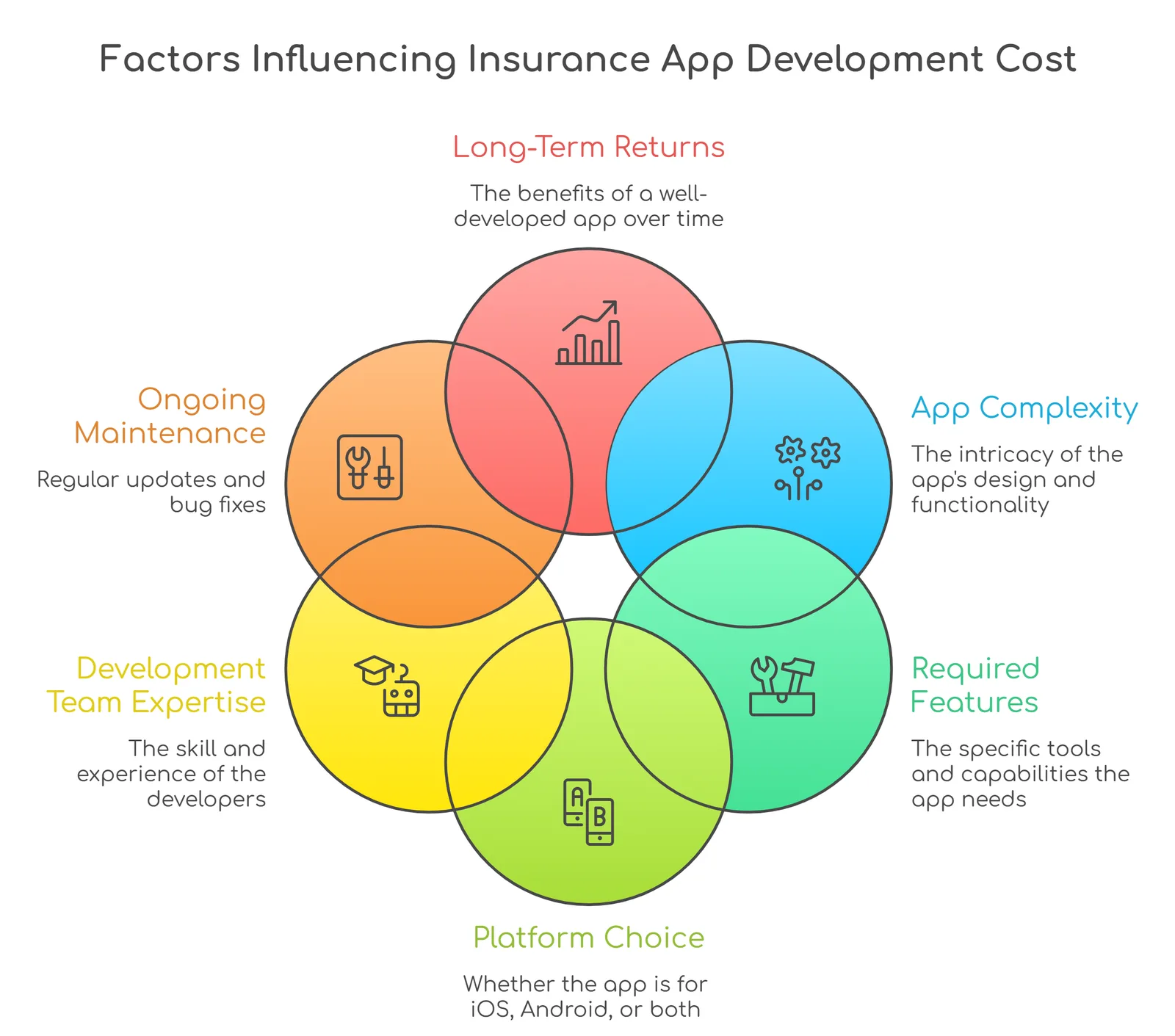
At a basic level, you can build a simple app to manage policies and basic claims. But if you’re aiming for a more competitive product with AI, real-time tracking, and integrations, the investment naturally goes up.
Let’s break down what actually influences the cost:
- Features and functionality
More features like claims automation, chat support, or AI recommendations increase development effort.
- UI/UX design
A clean, intuitive design requires more planning and design effort.
- Backend infrastructure
Handling user data, documents, and real-time updates needs a strong backend.
- Third-party integrations
Payment gateways, APIs, wearables, and telematics systems add complexity.
- Security and compliance
Insurance apps deal with sensitive data, so strong security measures are essential.
Estimated Cost Breakdown for building an Insuracen Mobile Application
Here’s a simple comparison to help you understand how costs scale based on app complexity…
| App Type | Features Included | Estimated Cost (USD) | Timeline |
| Simple App | Basic login, policy viewing, renewal reminders, simple UI | $15,000 - $30,000 | 2 - 4 months |
| Advanced App | Claims management, document upload, in-app chat, payment integration, dashboards | $30,000 - $80,000 | 4 - 8 months |
| Complex App | AI features, chatbots, real-time tracking, IoT/telematics, analytics, scalability | $80,000- $150,000+ | 8 - 12+ months |
What Each Level Actually Looks Like?
- Simple App
Good for getting started. It covers the basics but still relies on some manual processes in the background.
Example: Users can view policies and get renewal reminders, but may need support for claims.
- Advanced App
This is where things start becoming seamless. Most user actions can be completed inside the app without external support.
Example: Users can raise claims, upload documents, and make payments directly.
- Complex App
Built for scale and differentiation. This includes automation, AI, and integrations that create a smarter experience.
Example: The app suggests policies, tracks driving behavior for car insurance, or uses AI to speed up claim approvals.
If you’re building an insurance app, it’s important to think beyond just the initial cost. A cheaper app with limited features might save money upfront, but it can struggle to meet user expectations later.
The smarter approach is to start with what your users truly need, then scale with the right features over time. That way, you build something that can actually grow with your business.
Compliance & Security Considerations: Key Aspect of Insurance App Development
When it comes to insurance apps, features and design can grab attention, but compliance and security are what build trust. You are dealing with sensitive data like personal details, financial information, medical records, and policy documents. One small gap can lead to serious consequences, both for the business and the user.
That is why compliance and security are not something you add later. They need to be built into the app from day one.
Why does it matter so much?
Insurance is a highly regulated space. Companies need to follow strict guidelines while also making sure user data stays protected at all times. At the same time, users today are more aware than ever. If they feel their data is not safe, they will not think twice before switching to another provider.
Key Compliance Considerations
1. Data Protection Regulations
Insurance apps must follow regional and global data privacy laws depending on where they operate.
Example: If your app operates across regions, you may need to align with frameworks like GDPR or local data protection laws in India. This ensures user data is collected, stored, and processed responsibly.
2. KYC and Identity Verification
Verifying user identity is a must in insurance.
Example: Instead of manual verification, apps can enable digital KYC where users upload documents and complete verification within minutes.
3. Secure Payment Compliance
If your app handles payments, it needs to follow strict payment security standards.
Example: Ensuring secure transactions through encrypted p2p payment gateway helps protect users from fraud.
4. Audit Trails and Transparency
Every action within the app should be traceable.
Example: If a claim is processed or updated, there should be a clear record of who made the change and when.
Key Security Features to Include
1. End-to-End Data Encryption
All sensitive data should be encrypted, whether it is being stored or transferred.
Example: User details and documents remain protected even if there is an attempted breach.
2. Multi-Factor Authentication
Adding an extra layer of security beyond just passwords.
Example: Users log in using OTPs or biometric authentication, such as fingerprint or face recognition.
3. Role-Based Access Control
Not everyone should have access to everything.
Example: An agent can view customer policies, but only authorized personnel can approve claims or access sensitive financial data.
4. Fraud Detection Systems
Insurance apps are often targets for fraudulent claims.
Example: The system can flag unusual claim patterns or repeated requests for further verification.
5. Regular Security Updates and Testing
Security is not a one-time setup. It needs continuous monitoring.
Example: Regular testing helps identify vulnerabilities before they become serious issues.
In insurance app development, compliance and security are not just technical requirements. They are the foundation of user trust.
A well-secured and compliant app not only protects your business from risks but also reassures users that their data is in safe hands. And in a space like insurance, that trust makes all the difference.
Real-World Examples of Insurance Mobile Apps
Insurance applications are more than conceptual or theoretical now because several businesses have created their physical existence as working solutions to streamline the entire scope of activities relating to insurance products, including how one purchases an insurance policy, through to how to manage claims against an insurance policy.
Real-life examples of insurance applications in use will provide you with a better understanding of the real nature and effects of using insurance applications.
Digit Insurance | Built for Simplicity and Scale
Digit Insurance is known for making insurance feel less complicated and more accessible. The goal was clear from the start: make the entire journey, from buying a policy to raising a claim, smooth and hassle-free.
To support this vision, Antino worked closely with Digit to build a strong digital foundation that could handle both scale and complexity.
What Digit needed?
- Faster assistance powered by technology
- Strong backend systems to run operations efficiently
- Secure and flexible payment options for users
What did we build and improve?
- Integrated multiple third-party APIs to make the platform more connected and versatile
- Designed a clean and easy-to-use interface so users could navigate without confusion
- Implemented AI-driven assistance to reduce response time and improve support
- Ensured compliance with regulatory requirements through continuous updates
- Built a secure authentication system to protect user data and prevent misuse
The result?
The app experience became much more seamless. Users could move from purchasing a policy to filing a claim without friction. Complex processes were simplified, and everything felt more intuitive and reliable.
Lemonade | Fast and Fully Digital Insurance
Lemonade is often seen as a benchmark for modern insurance apps. It focuses heavily on speed and automation.
What makes it stand out?
- Instant policy purchase within minutes
- AI-powered claims that can be processed quickly
- A simple and transparent user interface
Example: A user can buy renters’ insurance or file a claim directly through the app without ever needing to speak to an agent.
Policybazaar | One Platform, Multiple Choices
Policybazaar has built an app that focuses on comparison and accessibility.
What makes it stand out?
- Easy comparison of different insurance plans
- Support for multiple categories like health, car, and life insurance
- Quick policy purchase and renewal
Example: A user looking for health insurance can compare multiple plans, check premiums, and buy the most suitable one in a few steps.
GEICO | Strong Focus on Self-Service
GEICO offers an app that puts control directly in the hands of the user.
What makes it stand out?
- Easy policy management
- Digital ID cards and documents
- Quick claims filing and roadside assistance
Example: After a car breakdown, a user can request roadside help and track assistance through the app itself.
Ping An Good Doctor | Blending Insurance with Healthcare
Ping An Good Doctor takes a slightly different approach by combining insurance with healthcare services.
What makes it stand out?
- Online doctor consultations
- Health tracking and recommendations
- Integration with health insurance services
Example: A user can consult a doctor, get prescriptions, and manage related insurance claims within the same app.
The examples above illustrate that there is no singular approach to developing an insurance mobile application. Certain examples place an emphasis on speed, while others aim to create a comparison or develop a full ecosystem.
Therefore, all the agencies focus on evolving to be more user-friendly, simple, and faster. Furthermore, as numerous different organisations are investing more and more resources into digital implementations, it is expected that this area will continue to develop rapidly.
Why choose Antino as your Insurance App Development Company?
As you saw with Digit Insurance, simplifying insurance is not just about adding features. It is about understanding the complexity behind the industry and turning it into something users can actually navigate with ease. That is exactly where Antino stands out. From building seamless user journeys to handling complex integrations and regulatory requirements, the focus is always on making insurance feel simple, fast, and reliable for both businesses and end users.
If you are looking to build an insurance app that is not just functional but truly user-friendly, Antino brings the right mix of technology, design, and industry understanding. Whether it is integrating AI, ensuring secure transactions, or scaling your platform as you grow, the team works with you to create solutions that are practical and future-ready. The goal is simple. Help you launch faster, operate smarter, and deliver an experience your users can trust.