

It’s 8:47 AM in downtown Bangalore. A professional in a crisp blazer books a sleek electric scooter in seconds from his phone. He arrives at his office building in 11 minutes, the same commute that would have taken 40 minutes by car.
Half a world away in Paris, a tourist taps her way through the Lime app to zip from the Marais to the Eiffel Tower without a single transfer.
In Austin, a grad student ends her morning run, grabs a Bird scooter from the nearest docking zone, and heads to campus.
This is not a vision of the future. This is Today, 2026, we’re talking about!
The micro-mobility revolution has quietly become one of the most significant shifts in urban transportation since the introduction of the subway.
E-scooter sharing platforms, once dismissed as a Silicon Valley novelty, are now a mainstream, indispensable part of how hundreds of millions of urban commuters navigate their cities. And behind every swipe, tap, and glide is a sophisticated e-scooter app development doing the heavy lifting.
Global urban congestion costs economies trillions of dollars every year. In cities like Mumbai, Jakarta, and São Paulo, the average commuter loses over 60 hours annually to traffic. Governments are actively incentivizing last-mile solutions. Environmental consciousness is reshaping consumer choices. All of these forces have converged to create an enormous, fast-growing market, one where the right e-scooter app can define an entire city's transportation culture.
If you're a business, entrepreneur, or urban mobility visionary thinking about building an e-scooter app, this guide is your blueprint. We'll cover everything, including the market opportunity, what it takes to build the product, what it costs, what compliance looks like, and why the right development partner makes all the difference.
The E-Scooter Market | 2026 Opportunity
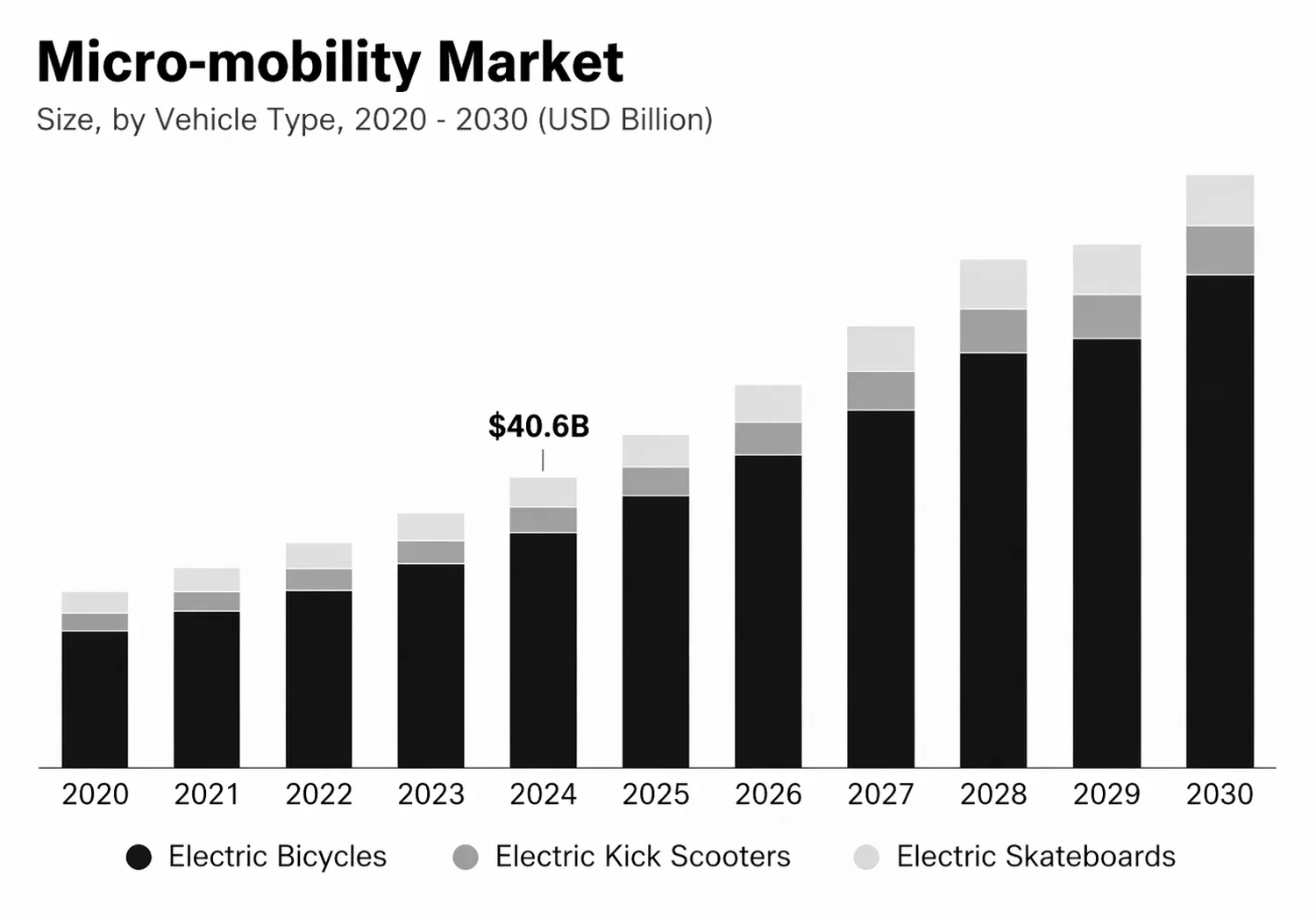
The numbers are hard to ignore. The global micro-mobility market, valued at approximately USD 40.6 billion in 2024, is projected to cross USD 91.2 billion by 2030, growing at a compound annual rate of more than 17%. E-scooters represent the single fastest-growing segment within this space, driven by falling hardware costs, improved battery technology, and an unprecedented shift in commuter behavior post-pandemic.
Key Market Drivers in 2026
- Urban Density Meets Infrastructure Gaps
More than 56% of the global population lives in urban areas, a number that grows every year. Cities weren't designed for the volume of private vehicles they carry today. E-scooters fill the "last-mile gap" between transit hubs and final destinations better than any other vehicle class, and city planners are actively creating the infrastructure to support them: dedicated lanes, geo-fenced zones, and designated parking areas.
- Government Push for Green Mobility
From the EU's aggressive emission-reduction mandates to India's FAME-II subsidies and the US Inflation Reduction Act's micro-mobility provisions, governments globally are either subsidizing or mandating cleaner urban transit. E-scooter platforms benefit directly from this regulatory tailwind, often securing municipal partnerships and subsidized deployment contracts.
- Gen Z and Millennial Adoption
The dominant consumer cohort of 2026 wants access to vehicles. The subscription-and-sharing economy has fundamentally changed how urban youth think about transportation. For a demographic that is mobile-first, sustainability-conscious, and experience-driven, e-scooter apps are the default.
- Corporate Last-Mile Programs
Enterprises in tech, logistics, and finance are now integrating micro-mobility into employee commute benefits, paying for platform credits the way they once paid for shuttle services. This B2B revenue stream has added a new dimension of business model viability to e-scooter platforms.
- Emerging Market Expansion
While North America and Western Europe remain dominant markets, Southeast Asia, Latin America, and Sub-Saharan Africa represent the next wave of explosive growth. Cities like Nairobi, Ho Chi Minh City, and Bogotá are leapfrogging traditional transit infrastructure and moving directly into app-based micro-mobility ecosystems.
The window for early movers in emerging markets remains open, but not for long. Businesses that invest in building robust, scalable e-scooter apps today are positioning themselves for long-term category leadership.
Why Businesses are Building Custom E-Scooter Apps?
With existing platforms like Uber, Ola, and Tier already operating in many markets, a natural question arises: why build your own? The answer, for most serious operators and investors, is compelling.
1. Full Control Over the User Experience
White-label or third-party platforms come with constraints on pricing, branding, feature sets, and data access. A custom-built app lets you design every touchpoint of the rider experience: from how the onboarding flow feels to how the payment confirmation looks. In a market where user retention often hinges on seamless UX, this control is invaluable.
2. Direct Access to First-Party Data
Data is the real asset in micro-mobility. Understanding where riders go, when they ride, how long trips take, which zones are underserved, this intelligence drives better fleet management, smarter expansion decisions, and more effective marketing. A custom app means your data stays yours, giving you a structural competitive advantage.
3. Flexible Monetization Architecture
Ride fees are just the beginning. Custom platforms can layer in subscription plans, in-app advertising, dynamic pricing, corporate account management, loyalty programs, multi-modal integrations, and more. A platform you control can evolve your business model as the market matures; a third-party platform cannot.
4. Seamless IoT Integration
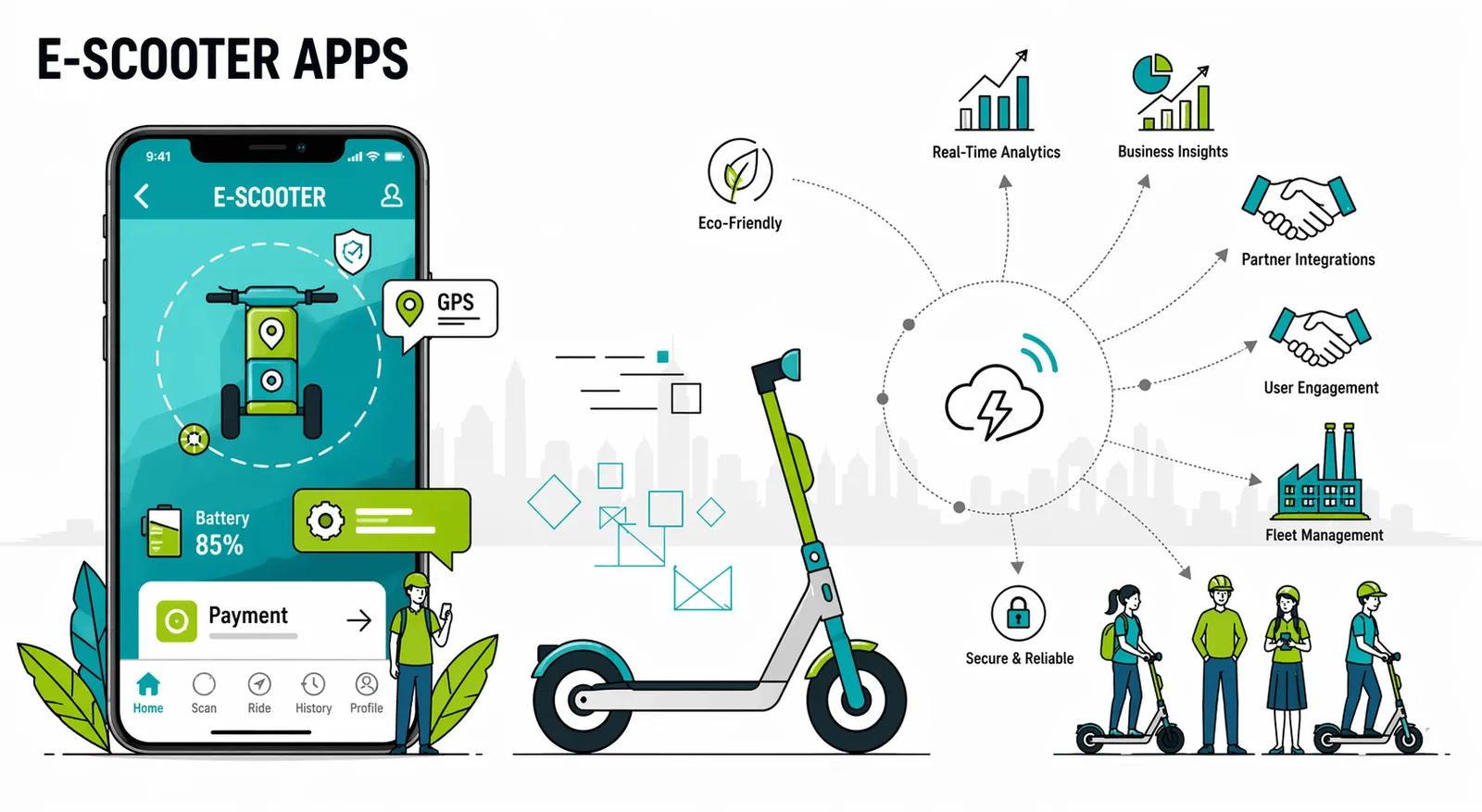
The e-scooter hardware ecosystem is diverse, with different manufacturers, different telematics modules, different battery management systems. A custom app can be built to integrate precisely with your specific fleet hardware, optimizing everything from real-time GPS tracking to remote lock/unlock to predictive maintenance alerts.
5. Regulatory Adaptability
Micro-mobility regulation varies dramatically from city to city and changes frequently. A custom development team can respond quickly to local compliance requirements with speed limit enforcement zones, curfew-based access restrictions, and helmet mandate reminders, without waiting for a third-party vendor to push an update.
6. Competitive Differentiation and Brand Equity
In markets where multiple operators compete for the same riders, brand and product quality become decisive. A beautifully designed, functionally superior custom app builds brand equity that is impossible to replicate on a generic platform.
How to Build an E-Scooter App?
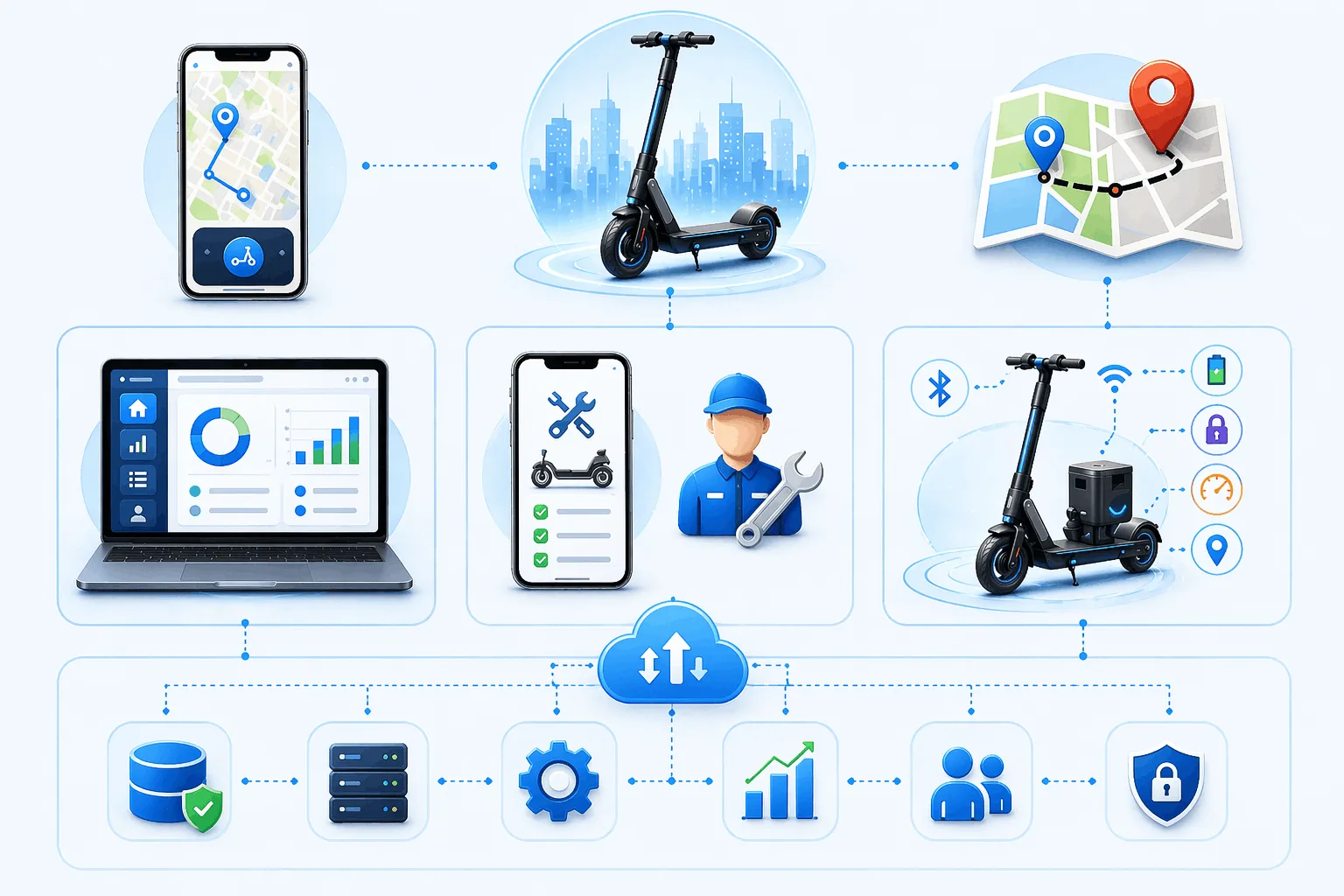
Building an e-scooter platform is not a single-app project. It is an interconnected ecosystem of applications, backend services, hardware interfaces, and third-party integrations. Here is a detailed breakdown of how the development process unfolds.
Understanding the Core Components
Here’s what goes into developing an e-scooter app…
Rider App (iOS & Android)
This is the consumer-facing product, which is the primary interface through which users discover, unlock, ride, and pay for scooters. Key features include:
- User Registration and Verification: Email/social login, phone number OTP verification, driving license or ID upload for age verification. Rider safety begins at onboarding.
- Interactive Map Interface: Real-time map showing nearby available scooters, battery levels, estimated range, and no-parking or geo-fenced zones. This is typically built on Google Maps SDK or Mapbox.
- QR Code and NFC Unlock: Riders scan the scooter's QR code (or tap NFC if enabled) to initiate a session. This triggers an unlock command through the IoT layer to the scooter hardware.
- Live Ride Tracking: During an active session, the app displays real-time GPS position, speed, elapsed time, estimated cost, and remaining battery.
- Ride History and Receipts: A clean, searchable log of past trips with itemized costs and downloadable invoices.
- In-App Payment: Wallet top-up, credit/debit card integration, UPI/Apple Pay/Google Pay support, and enterprise billing for corporate accounts.
- Push Notifications: Ride alerts, promotional offers, zone restriction warnings, and maintenance status updates.
- Safety Features: Speed limit alerts when entering restricted zones, helmet reminders, in-app SOS button for emergencies.
- Ratings and Support: Post-ride rating flow and in-app support ticketing for damaged scooter reports or billing issues.
Operator/Admin Dashboard (Web)
The command center for fleet operators and business administrators. This web-based panel handles:
- Fleet Management: Real-time visibility into every scooter, including location, battery level, operational status (available, in-use, maintenance), and last-service date.
- Geofencing Controls: Drawing and managing operating zones, no-ride areas, slow zones, and preferred parking locations with polygon-based map tools.
- Pricing and Promotions: Dynamic pricing engine like surge pricing by time/zone, promotional discount codes, subscription plan management.
- User Management: Rider profiles, verification status, ride history, support ticket resolution, and account suspension tools.
- Revenue Analytics: Trip revenue by zone/time/user segment, fleet utilization rates, payout management for revenue-share partners.
- Maintenance Scheduling: Flagging scooters for service based on mileage, battery health, and rider-reported issues.
Field Operations App (Mobile)
A separate mobile application for maintenance technicians and field operations staff to:
- Locate and collect scooters requiring charging or service using optimized routing.
- Report and resolve maintenance issues with photo-documentation and checklist-based workflows.
- Log battery swaps and charging completions.
- Redistribute fleet based on demand heatmaps generated by the admin dashboard.
IoT Integration Layer
is the technical backbone that connects the app ecosystem to the physical scooters. Each scooter is equipped with an IoT module (commonly using SIM-based cellular connectivity via protocols like MQTT or CoAP) that communicates with your backend to:
- Receive lock/unlock commands triggered by rider interactions.
- Transmit real-time GPS coordinates, speed data, and battery status.
- Detect and report hardware anomalies (fall detection, tampering alerts).
- Enforce geo-fencing rules at the hardware level (automatic speed reduction in slow zones).
Backend Infrastructure
The server-side architecture needs to be designed for high concurrency, real-time data processing, and geographic scalability. Typical components include:
- Microservices Architecture: Separate services for user management, ride sessions, payments, fleet tracking, and notifications, allowing independent scaling.
- Real-Time Communication: WebSocket or Server-Sent Events for live map updates and ride telemetry.
- Database Layer: PostgreSQL or MySQL for transactional data; Redis for session and cache management; time-series databases like InfluxDB for IoT telemetry.
- Payment Gateway: Stripe, Razorpay, or Braintree for card processing; deep integration with local payment methods by market.
- Cloud Infrastructure: AWS, GCP, or Azure with auto-scaling groups and CDN-backed static assets for global performance.
Technology Stack Overview
| Layer | Common Technologies |
| Mobile (Rider App) | React Native / Flutter (cross-platform) |
| Mobile (Ops App) | React Native |
| Admin Dashboard | React.js / Next.js |
| Backend API | Node.js / Python (Django/FastAPI) |
| Real-Time Layer | WebSockets / Socket.IO |
| Database | PostgreSQL + Redis + InfluxDB |
| Maps | Google Maps SDK / Mapbox |
| IoT Protocol | MQTT over TLS |
| Cloud | AWS / GCP |
| Payments | Stripe / Razorpay / Braintree |
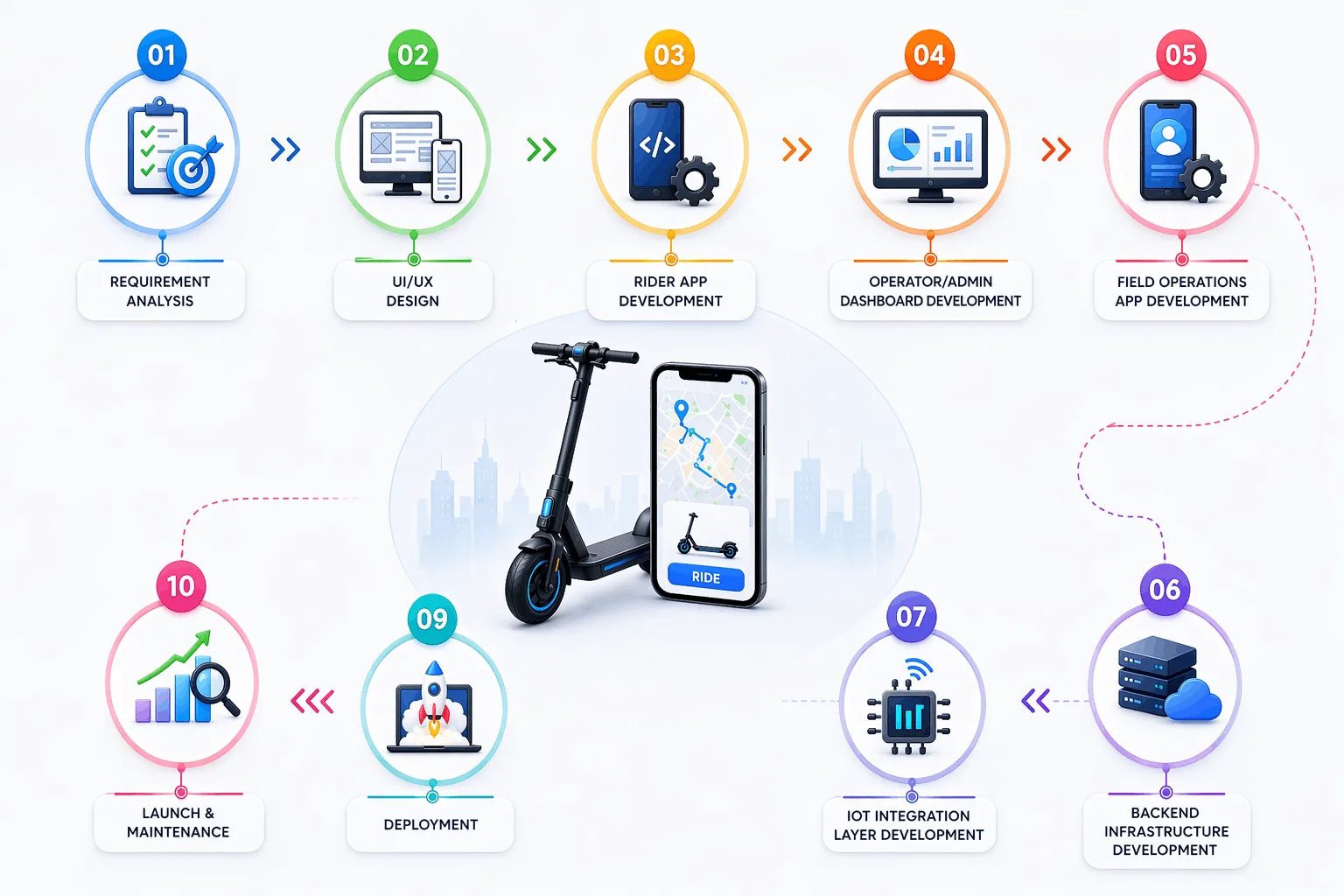
Development Phases
Phase 1 - Discovery and Architecture Design (4-6 weeks)
Market and user research, technical architecture planning, UI/UX wireframing, and API contract definition.
Phase 2 - MVP Development (12-16 weeks)
Core rider app features, basic admin dashboard, IoT integration with a reference hardware device, and payment processing.
Phase 3 - QA, Beta Testing, and Launch Preparation (4-6 weeks)
Performance testing under simulated load, security audits, hardware compatibility testing, and soft launch in a pilot city.
Phase 4 - Post-Launch Iteration (Ongoing)
Feature additions based on user feedback, expansion to new markets, and performance optimization.
Cost to Build an E-Scooter Mobile App
Cost estimation in app development is always contextual because it depends on team composition, geographic location of the development team, feature scope, and timeline. That said, here is a realistic breakdown for a production-grade e-scooter platform in 2026.
Development Cost by Component
| Component | Estimated Cost Range (USD) |
| UX/UI Design (all screens) | $8,000 – $18,000 |
| Rider App (iOS + Android) | $25,000 – $55,000 |
| Admin Web Dashboard | $15,000 – $30,000 |
| Field Operations App | $10,000 – $20,000 |
| Backend API + Database | $20,000 – $45,000 |
| IoT Integration Layer | $15,000 – $35,000 |
| Payment Integration | $5,000 – $12,000 |
| Maps and Geofencing | $5,000 – $10,000 |
| QA and Testing | $8,000 – $15,000 |
| DevOps / Infrastructure Setup | $5,000 – $12,000 |
Total Estimated Investment
- MVP (Core Features, Single Platform): $60,000 – $100,000
- Full Production Platform (Cross-Platform, All Components): $130,000 – $250,000
- Enterprise-Grade Platform with Advanced Analytics and Multi-City Support: $250,000 – $500,000+
Ongoing Monthly Costs (Post-Launch)
- Cloud infrastructure: $1,500 – $8,000/month depending on fleet size and user volume
- Payment gateway fees: 1.5–2.9% per transaction
- SMS/OTP services: $200 – $1,000/month
- Maintenance and updates: $3,000 – $10,000/month
Working with an experienced product engineering firm, rather than assembling an ad-hoc freelance team, significantly reduces total cost of ownership by front-loading architecture decisions, avoiding costly pivots, and compressing timelines.
Compliance and Security | The Non-Negotiables
In the rush to market, compliance and security are often treated as afterthoughts. In e-scooter app development, that is a dangerous mistake. These are the foundation of a sustainable, trusted business.
Regulatory Compliance
City and Municipal Licensing
Most cities require e-scooter operators to obtain permits before deploying fleets. These permits often mandate specific app-level capabilities: enforced speed limits in certain zones, mandatory helmet prompts, user age verification, ride data reporting to the municipality, and capped fleet sizes. Your app must be architected from day one to support these controls.
Data Privacy Laws
Depending on where you operate, GDPR in Europe, CCPA in California, PDPB in India, and LGPD in Brazil. These laws govern how you collect, store, process, and delete user data. Non-compliance carries severe fines and reputational risk. Privacy-by-design is an engineering principle.
Payment Compliance (PCI-DSS)
Any platform handling card payments must comply with Payment Card Industry Data Security Standards. This means never storing raw card data, using tokenization through certified payment processors, and maintaining secure communication protocols throughout the payment flow.
Age Verification
Many jurisdictions prohibit riders under 16 or 18 from operating e-scooters. Your app must implement robust age verification at onboarding, typically via government ID upload with a verification service or third-party KYC provider.
Security Architecture
End-to-End Encryption
All communication between the app, backend servers, and IoT devices must be encrypted using TLS 1.3. Unencrypted telematics data is a serious vulnerability, it can be intercepted to spoof scooter locations or trigger unauthorized unlocks.
IoT Device Authentication
Every scooter must be authenticated with unique cryptographic credentials before receiving unlock commands. A compromised device should be automatically quarantined and flagged in the admin dashboard.
API Security
All backend APIs must be secured with OAuth 2.0 / JWT token-based authentication, rate limiting, and input validation to prevent injection attacks. Regular penetration testing by third-party security firms is essential.
Fraud Detection
Payment fraud, account takeovers, and GPS spoofing are real threats in sharing economy apps. Implement behavioral analytics and anomaly detection, including unusual ride patterns, multiple failed payment attempts, or location inconsistencies, which should trigger automatic flags.
Secure Code Practices
Code must follow OWASP Mobile Security Guidelines. Hardcoded credentials, insecure local storage, and insufficient cryptography in mobile apps are among the most common and most avoidable vulnerabilities.
Incident Response Plan
Before launch, define a clear incident response playbook: how security breaches are detected, contained, communicated to users, and reported to regulators within mandatory timeframes.
Operational Safety Features
Beyond legal and technical compliance, responsible e-scooter apps build genuine safety into the product: no-ride zone enforcement at the hardware level, automatic ride suspension when scooter enters prohibited areas, real-time speed monitoring with in-app alerts, and accessible emergency contact integration.
How Antino can Help You Build Your E-Scooter App?
Building a production-grade e-scooter platform requires a development partner who understands not just the technology but the business domain, like the nuances of IoT integration, the sensitivity of payment architecture, the complexity of real-time fleet management, and the regulatory landscape of the cities you want to operate in.
Antino is an AI consulting & digital transformation company with deep expertise in building on-demand mobility platforms, IoT-integrated applications, and scalable consumer-facing digital products.
Antino architects platforms to scale from a 100-scooter pilot in a single city to a multi-city fleet of 50,000 units. The microservices-based backend, cloud-native infrastructure, and modular codebase ensure that growth never requires a platform rebuild.
Whether you're a Series A startup launching a city-specific fleet, an enterprise looking to build a proprietary last-mile platform for employees, or a municipality developing a public micro-mobility service, Antino has the technical depth and delivery track record to make it real.
The Road Ahead is Electric...
The e-scooter opportunity is not hypothetical. It is playing out on the streets of every major city on earth, right now, generating billions of dollars in rides and reshaping the daily lives of urban commuters. The platforms that will define this industry for the next decade are being built today.
Building a great e-scooter app is complex as it requires mobile development, IoT engineering, real-time backend architecture, payment infrastructure, geospatial intelligence, and regulatory foresight. But with the right roadmap, the right technology choices, and the right development partner, it is entirely achievable.
The streets are ready. The commuters are waiting. All that's missing is your app.
Ready to build your e-scooter platform? Connect with the Antino team to start your product discovery workshop today.