
The $11 Billion problem on wheels…and it’s something to pay attention to!!
Roughly 35 million commercial vehicles are operating across the world's top logistics markets today. Every one of them is burning fuel, accumulating wear, and navigating roads that are more congested, more regulated, and more expensive to operate on than ever before.
The numbers behind inefficiency are staggering.
According to the Department of Energy and the Argonne National Laboratory, 6 billion gallons of gasoline are wasted by idling alone every single year. That translates to $11 billion in fuel that delivers zero productive output. Fuel itself consistently ranks among the top three operating expenses for commercial fleets, accounting for 20% to 40% of total costs depending on fleet type and size.
In freight, last-mile delivery, and construction, margins are already under severe pressure. Inefficient fuel use does not just reduce profitability; rather, in the most cost-sensitive operations, it determines whether the business is commercially viable at all. That’s why, to tackle all these challenges, businesses go for their own custom fleet management software.
Because the challenge does not stop at the fuel pump.
Unplanned vehicle downtime costs fleet operators far more than the repair bill. When a vehicle goes offline unexpectedly, the ripple effects hit delivery commitments, driver scheduling, customer relationships, and revenue.
Repair and maintenance costs are rising 2x to 3x faster than overall consumer inflation. Supply chain disruptions have made critical parts harder to source, extending downtime windows. At the same time, driver shortages, compliance complexity, and rising wage pressure are compressing margins from multiple directions simultaneously. A single 15-mile daily route deviation can burn more than $6,000 in extra fuel per truck per year before factoring in overtime, idle time, and accelerated vehicle wear.
For C-suite leaders responsible for fleet-driven operations, the question is no longer whether technology is necessary. The question is which technology investment delivers the greatest return, and whether an off-the-shelf product or a custom-built platform is the right strategic choice. This blog addresses exactly that.
Fleet Management Software Market: What the 2026 Numbers Are Telling You
The fleet management software market is one of the fastest-growing segments in enterprise technology right now, and the numbers reflect the urgency with which operators are moving.
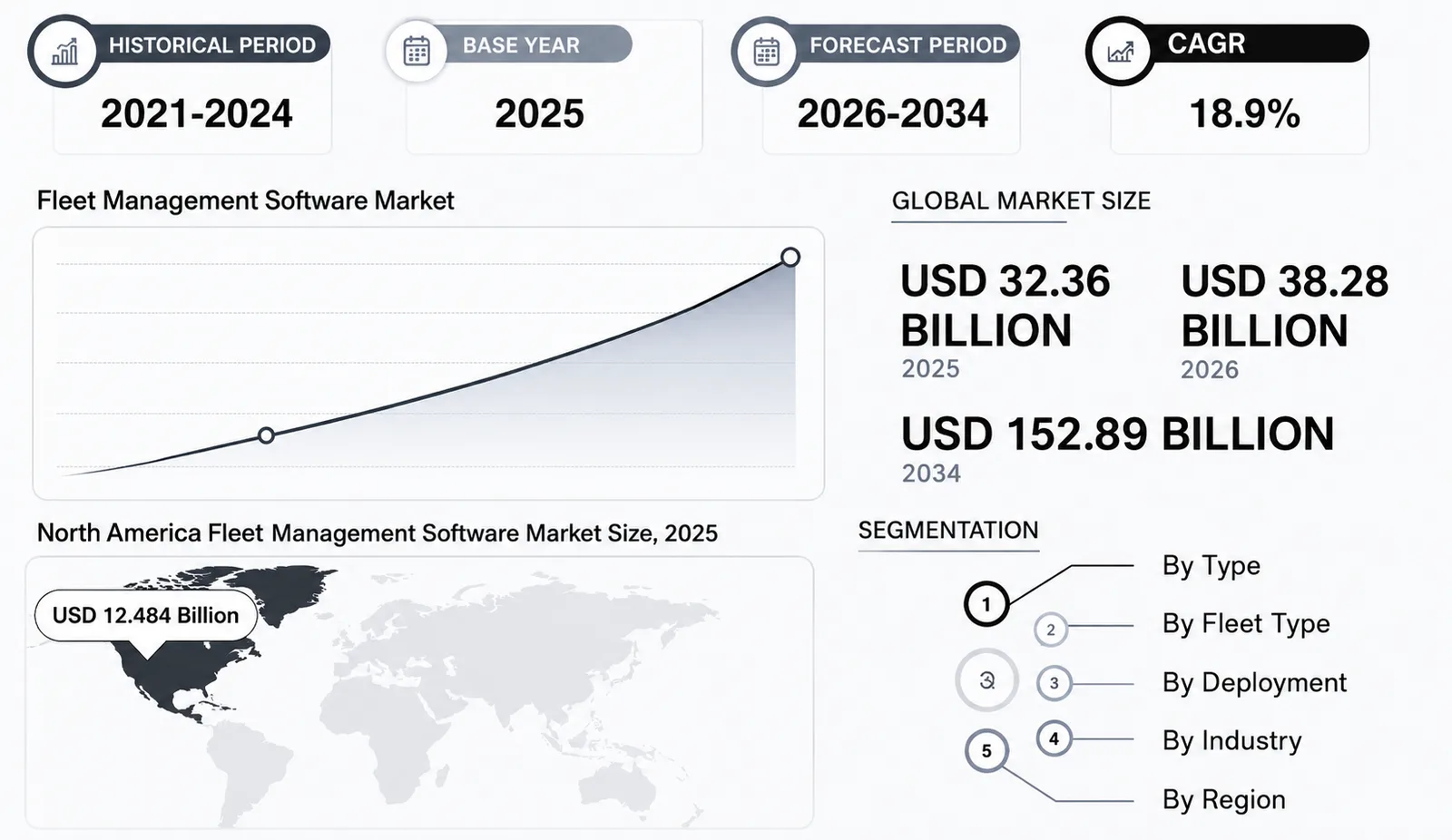
The global fleet management software market was valued at approximately $27.55 billion in 2024 and is projected to grow from $32.36 billion in 2025 to over $152.89 billion by 2034, at a compound annual growth rate of nearly 18.9%.
According to MarketsandMarkets, the broader fleet management market, which encompasses hardware, software, and services, is estimated at $37.71 billion in 2025 and is forecast to reach $70.26 billion by 2030. The software segment alone commands 49% of total market share in 2025 and is growing at a CAGR of 17.1% through 2035.
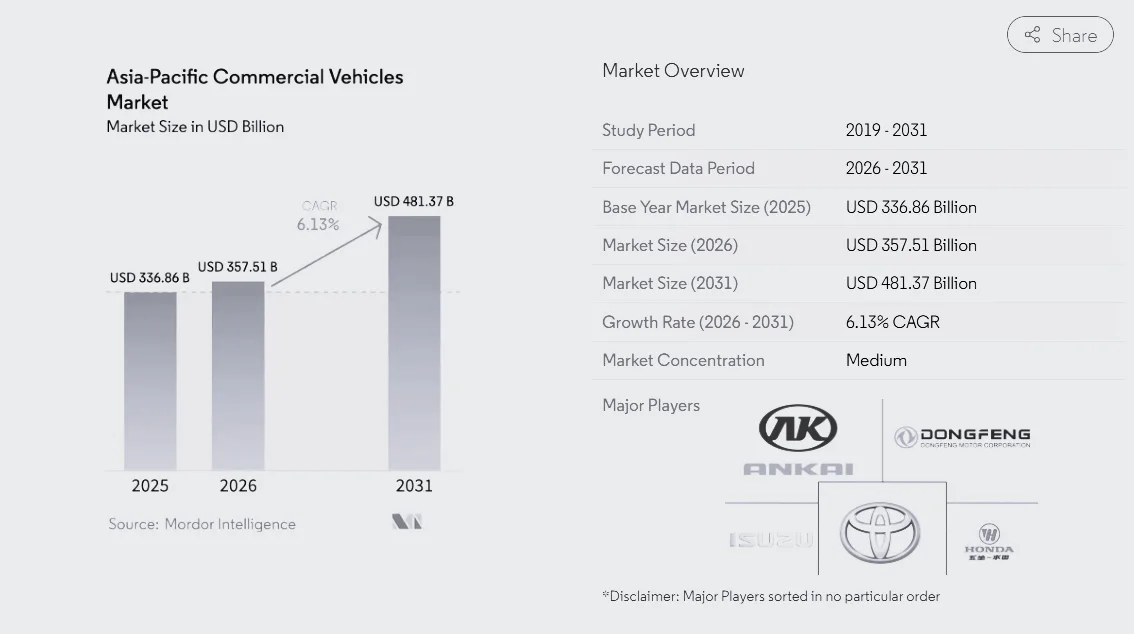
The Asia-Pacific region is the fastest-growing frontier, with the total regional market projected at $481.37 billion in 2031, led by India, China, and Japan as commercial vehicle fleets expand rapidly alongside e-commerce and infrastructure growth.
India alone stood at $1.36 billion in 2025, driven by national highway expansion, logistics sector formalization, and stricter emission and safety regulations.
64% of fleet managers now use GPS fleet tracking solutions, an increase of 8.5 percent year over year. 45% percent of fleet managers achieved positive ROI within 11 months or less from fleet management investments. Cloud-based solutions represent approximately 71% of new fleet software installations in North America, driven by scalability and mobile access. The direction of travel is unmistakable.
3 forces are driving this expansion at an accelerating pace
First, the growth of e-commerce and on-demand logistics is placing real-time visibility, last-mile efficiency, and delivery reliability at the center of commercial strategy. Transportation and logistics represent the single largest vertical for fleet software adoption, with a 32% market share, followed by construction at 18% and field services at 15%. For construction firms, stronger market visibility is equally important—a dedicated construction marketing agency can turn operational improvements into a consistent pipeline of new project opportunities through local SEO and targeted digital marketing.
Second, regulatory pressure is intensifying globally. Stricter emissions standards, mandatory electronic logging, driver hours regulations, and data governance requirements are pushing fleet operators to invest in software platforms that can automate compliance and reduce legal risk.
Third, the maturation of AI, IoT, and cloud technologies has made sophisticated fleet intelligence accessible to organizations that previously could not afford enterprise-grade platforms.
Why do businesses build custom fleet management software?
For organizations managing fleets of any meaningful scale, the case for custom software development comes down to a fundamental tension between generic functionality and operational specificity.
Off-the-shelf fleet platforms like Samsara, Geotab, and Fleetio offer genuine value, particularly for smaller operations or standardized use cases. But the economics shift materially as fleets grow in complexity and scale. Per-vehicle subscription fees ranging from $25 to $45 per vehicle per month may appear modest on a small fleet.
As the fleet grows, and as operators layer on additional modules for dispatching, compliance, fuel management, analytics, and ERP integration, the monthly bill compounds significantly. Organizations switching from fragmented SaaS stacks to custom platforms report reducing total software costs by 40% to 60% over a five-year period.
The strategic case for custom development goes beyond cost, however.
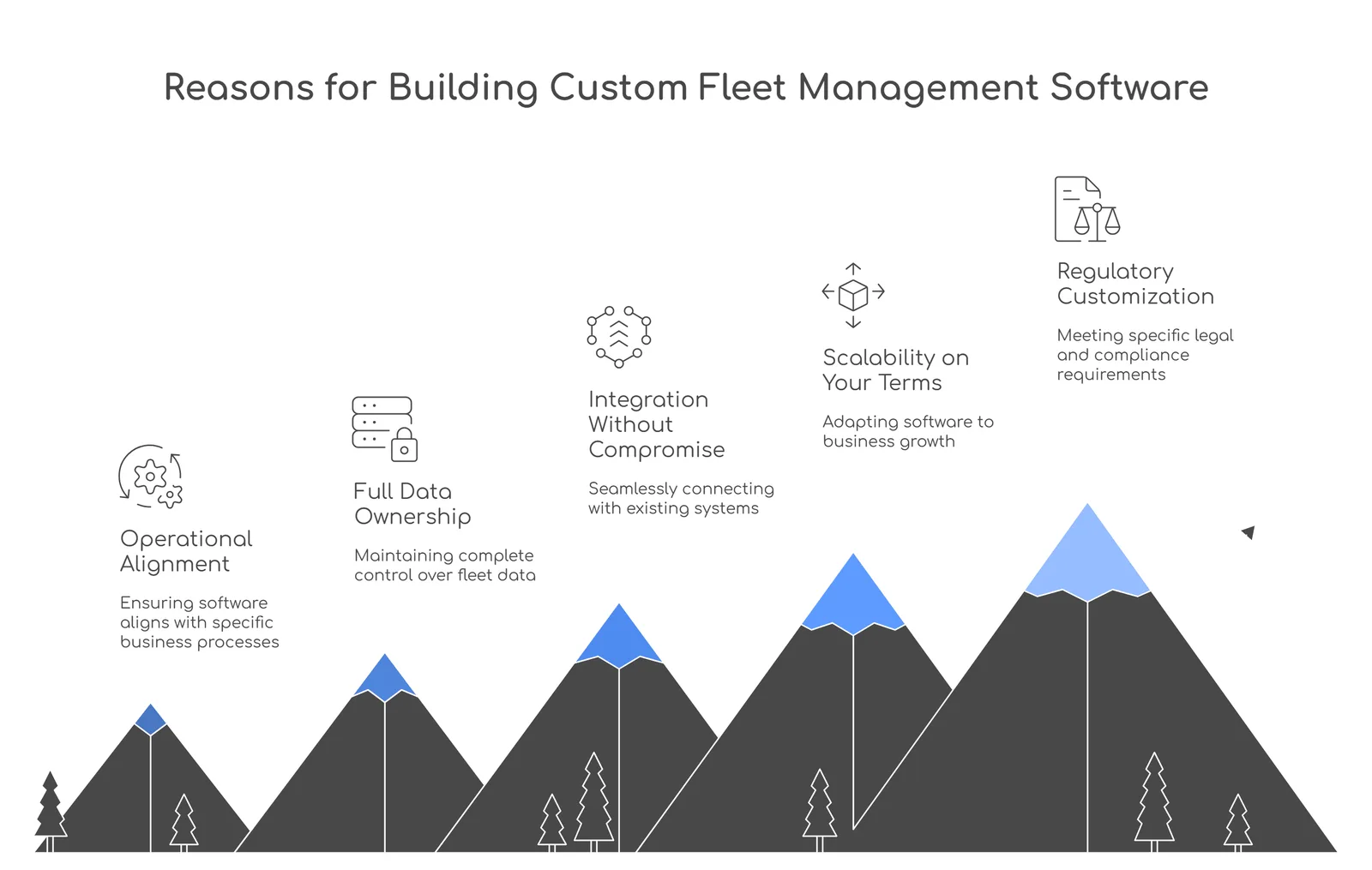
- Operational Alignment
Generic platforms are built for broad applicability. A custom system is designed around the specific way your operation works: your vehicle types, your regional compliance requirements, your dispatch logic, and your customer commitments. Companies like Mahindra Logistics in India have invested in proprietary fleet intelligence that integrates with their specific multi-modal supply chain model. Amazon's delivery operations globally run on custom-built last-mile fleet systems that no off-the-shelf product could replicate at the required scale and velocity.
- Full Data Ownership
Fleet data is competitively sensitive. Routes, delivery patterns, customer locations, and operational efficiency metrics are strategic assets. With a SaaS platform, that data sits in a vendor's infrastructure under their terms. Custom software gives organizations full control over where data lives, how it is processed, and who has access to it.
- Integration Without Compromise
Enterprise fleet operations do not run in isolation. They connect to ERP systems, CRM platforms, warehouse management systems, HR and payroll tools like Homebase that carry out the payroll process, and customer-facing applications. SaaS platforms offer integrations, but they are rarely seamless. Custom software is designed to integrate natively with the systems already in use, eliminating data silos and manual reconciliation.
- Scalability on Your Terms
When a business expands geographically, by fleet size, or by service type, a custom platform scales according to its specific growth trajectory. There are no per-seat charges for new users, no feature tier upgrades, and no dependency on a vendor's product roadmap.
- Regulatory Customization
Compliance requirements differ by country, state, and industry. A fleet operating across multiple geographies faces a patchwork of regulations. Custom software can encode the specific compliance logic relevant to each operating context, something off-the-shelf platforms handle imprecisely at best.
Real-world precedents make the case concretely. In the UK, DHL Supply Chain has invested significantly in proprietary fleet management and telematics infrastructure to meet its Net Zero commitments and manage a fleet of over 26,000 vehicles across diverse customer verticals.
In the UAE, Aramex has built a custom fleet and logistics technology deeply integrated into its cross-border e-commerce and courier operations across more than 600 cities worldwide.
In India, Blue Dart, part of the DHL Group, operates a combination of proprietary and customized fleet tracking systems that support over 35,000 locations across the country.
In the United States, UPS has invested billions in its ORION routing system, a custom-built AI-powered route optimization platform that drives one of the largest commercial fleet operations on earth.
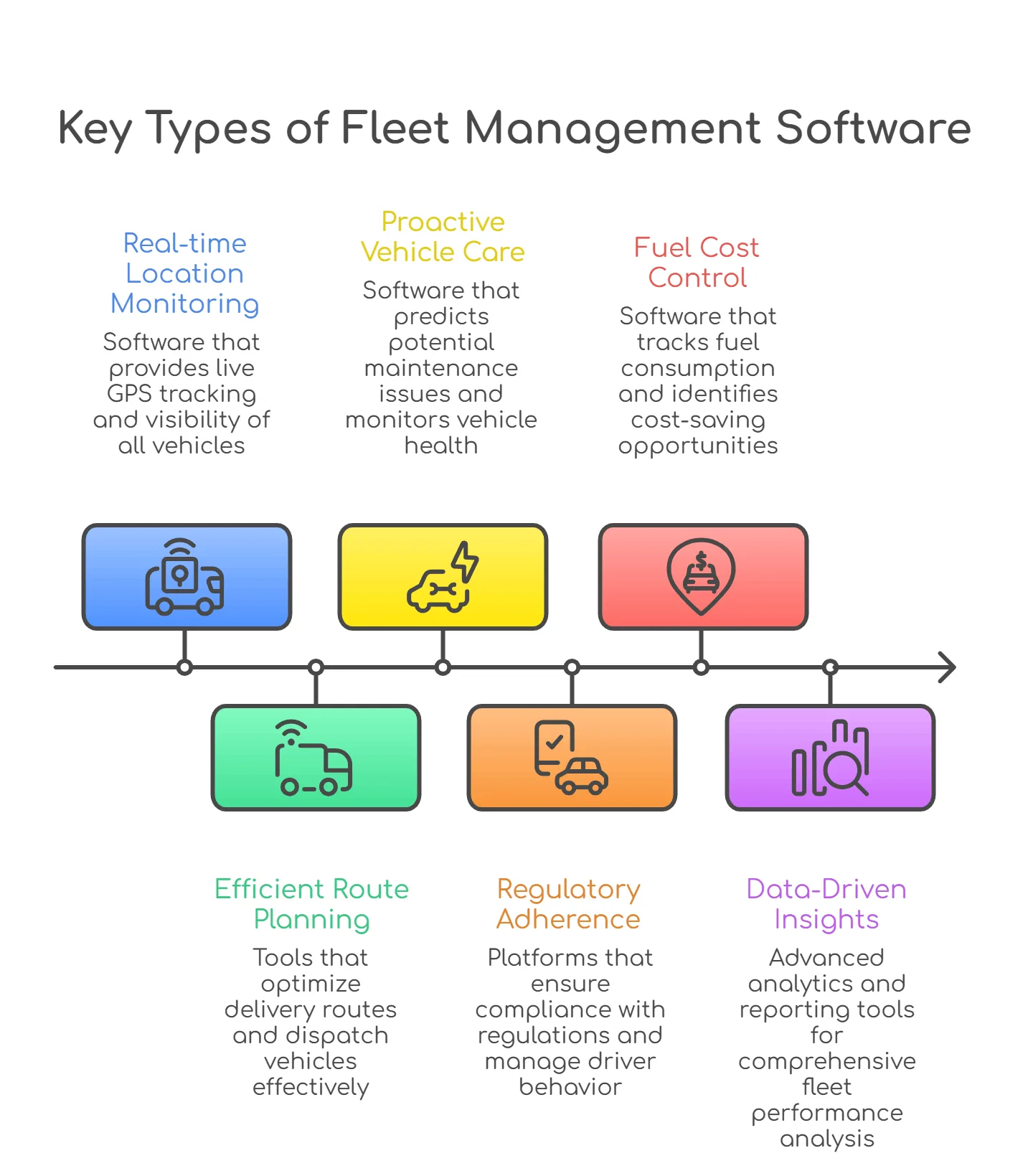
Types of Fleet Management Software
Custom fleet management software is not a single product. It is a category spanning several distinct platform types, each addressing a different operational need. Understanding the landscape helps leadership teams define the right scope for their investment.
Fleet Tracking and Visibility Platforms
These are the foundational layers of fleet management technology. They provide real-time GPS location data for every vehicle in the fleet, movement history, geofencing alerts, idle time monitoring, and route deviation detection.
For organizations moving from manual tracking or spreadsheet-based systems, a tracking platform delivers immediate, measurable ROI through route efficiency improvements, unauthorized use prevention, and faster customer response times. More than 72% of fleet operators globally now deploy software-enabled tracking for fleets exceeding 10 vehicles.
Route Optimization and Dispatch Software
This moves beyond visibility to active operational management. These platforms use AI and traffic data to generate the most efficient routes for each vehicle, dynamically adjusting for real-time conditions, driver availability, delivery windows, and vehicle capacity.
For large-scale logistics operations, route optimization alone can reduce fuel consumption by 15 to 20% and eliminate significant overtime costs. Platforms of this kind are core to operations at companies such as Flipkart's logistics arm Ekart in India, which handles millions of daily deliveries across hundreds of cities.
Predictive Maintenance and Vehicle Health Platforms
These platforms integrate with on-board diagnostics systems to continuously monitor vehicle health parameters, including engine performance, brake condition, tyre pressure, battery health, and emissions output.
Rather than servicing vehicles on a fixed calendar schedule, these platforms trigger maintenance recommendations based on actual vehicle condition data. This shifts maintenance from reactive to predictive, significantly reducing unplanned downtime and extending vehicle operational life.
Compliance and Driver Management Software
This automates the administrative burden of regulatory compliance. This includes electronic logging of driver hours, fatigue monitoring, licence validity tracking, vehicle inspection scheduling, and emissions reporting.
For commercial operators in markets with strict Hours of Service rules, including the United States under FMCSA regulations and the UK under drivers' hours legislation, compliance software eliminates manual record-keeping, reduces audit risk, and surfaces violations before they become regulatory incidents.
Fuel Management Platforms
This provides granular visibility into fuel consumption at the vehicle, route, and driver level. They integrate with fuel card data, GPS telematics, and driver behavior monitoring to detect waste sources, including excessive idling, inefficient driving patterns, unauthorized fuel purchases, and route deviations.
Companies that deploy dedicated fuel management tools report reducing fuel consumption by 10 to 15%, a material improvement in industries where fuel represents 30% or more of operating costs.
Enterprise Fleet Analytics and Reporting Platforms
This sits above the operational layers, aggregating data from tracking, maintenance, compliance, and fuel modules to deliver strategic intelligence. These platforms provide executives with total cost of ownership analysis by vehicle and fleet segment, asset utilization benchmarking, driver performance scoring, carbon emissions tracking, and fleet lifecycle planning.
For C-suite decision-making on capital allocation, fleet renewal cycles, and operational investment priorities, analytics platforms translate raw operational data into actionable intelligence.
Vehicle Telematics and IoT Integration
Telematics is the technological backbone of modern fleet management. At its core, a telematics system combines GPS positioning, cellular communication, and on-board vehicle diagnostics to create a continuous stream of data about every vehicle in a fleet. The integration of IoT sensors extends this data layer significantly, capturing environmental and mechanical information beyond what the vehicle's own systems report.
In practice, a vehicle equipped with a modern telematics unit transmits data on its location with five-meter accuracy, its speed, heading, and acceleration profile, engine RPM, fuel consumption rate, coolant temperature, brake pressure, tyre pressure, cargo temperature for refrigerated fleets, and dozens of other parameters. Fleet management software processes over one million data points per vehicle annually across these dimensions.
Commercial impact is significant and measurable…
- Telematics-enabled driver behavior monitoring allows fleet managers to identify and coach drivers who exhibit aggressive acceleration, harsh braking, or excessive speeding. These behaviors each independently increase fuel consumption and accelerate vehicle wear.
- Driver behavior improvements of this kind typically deliver fuel savings of 10 to 15% within months of implementation. In a fleet of 200 vehicles where fuel represents $2 million in annual operating costs, a 12% improvement generates $240,000 in annual savings.
- Geofencing, another core telematics capability, creates virtual geographic boundaries around operational areas, customer sites, fuel stations, and restricted zones. When a vehicle crosses a boundary unexpectedly, the platform triggers an immediate alert. This prevents unauthorized vehicle use, detects route deviations, and protects cargo security. For high-value cargo operations, geofencing is not a convenience feature; it is a risk management tool.
- IoT integration extends the telematics layer to assets beyond the primary vehicle. Trailer tracking, cargo condition monitoring, fuel tank sensors, and tyre pressure management systems can all be integrated into a unified fleet management platform. For cold chain operators such as pharmaceutical distributors and food logistics companies, cargo temperature monitoring is a compliance and liability requirement rather than an optional enhancement. Mahindra Logistics in India and Agility Logistics in the UAE have both invested substantially in IoT-enabled cargo monitoring as part of their fleet technology infrastructure.
- The shift to cloud-based telematics architecture has made this kind of real-time, high-frequency data processing economically viable at scale. Cloud platforms handle the storage, processing, and analytical workloads that would previously have required significant on-premise infrastructure investment. The result is that sophisticated telematics capabilities, once available only to the largest fleet operators, are now accessible to mid-market organizations as well.
How a Predictive Maintenance Engine Can Reduce Unplanned Downtime?
Unplanned downtime is one of the most financially destructive events in fleet operations. When a vehicle fails unexpectedly on the road, the direct costs of towing, expedited repair, and emergency parts sourcing are significant. The indirect costs are often larger: missed deliveries, customer penalties, driver idle time, dispatching disruptions, and reputational damage that compounds over time.
Fleet management software with a predictive maintenance engine addresses this problem by shifting maintenance from a reactive to a condition-based model. Rather than servicing vehicles on fixed mileage or calendar intervals, which either over-maintains vehicles that are in good condition or under-maintains vehicles that have accumulated unusual stress, a predictive system continuously analyzes vehicle health data and generates service recommendations based on actual condition.
Data inputs are extensive
Engine diagnostics from OBD-II and CAN bus systems provide real-time readings on oil pressure, coolant temperature, battery voltage, fuel injector performance, exhaust system health, and hundreds of fault codes. Transmission behavior patterns, brake wear rates, and tyre degradation signals are tracked and compared against manufacturer specifications and historical failure data.
Machine learning algorithms identify patterns in this data that precede component failure. These are patterns invisible to human maintenance schedulers but detectable in the data days or weeks before the failure occurs.
Business impact is well-documented
Fleet operators using predictive maintenance report up to 30% reduction in unplanned downtime. Vehicle uptime rates can reach above 92% in well-implemented systems, compared to significantly lower industry averages. The financial value of these improvements compounds across the fleet.
A medium-sized delivery fleet of 150 vehicles, where a single day of unplanned downtime per vehicle costs an average of $700 in combined direct and indirect costs, generates over $100,000 in annual downtime costs from an average of one unexpected failure per vehicle per year. Predictive maintenance that reduces this rate by 30% delivers $30,000 or more in annual savings from that single metric alone.
DHL, operating one of the world's largest commercial fleets across multiple geographies, has integrated predictive maintenance analytics into its fleet operations as part of its broader GoGreen sustainability and efficiency program. In India, companies like TCI Express have invested in telematics-driven maintenance scheduling to manage high-utilization long-haul fleets more efficiently. In the UAE, logistics operators serving the Dubai trade corridor use predictive maintenance as a core tool to maintain service reliability commitments on high-volume e-commerce fulfillment contracts.
- Digital Twin Technology
Beyond financial savings, predictive maintenance has safety implications that matter to fleet operators from both a duty of care and a liability perspective. Brake failures, tyre blowouts, and engine failures while vehicles are in operation are serious safety incidents. Predictive detection of these failure conditions prevents incidents before they occur.
The most sophisticated predictive maintenance implementations now incorporate digital twin technology, creating a virtual model of each vehicle that simulates performance under different operating conditions. This allows fleet operators to model the expected remaining useful life of key components and make informed decisions about vehicle replacement timing, a capability with significant implications for capital allocation planning.
Cost to Build Custom Fleet Management Software
One of the first questions that C-suite leaders and technology decision-makers ask when evaluating a custom fleet management software investment is: What does it actually cost? The answer depends on scope, functionality, integration complexity, and the geography of the development team, but the market has converged around a reasonably clear framework.
MVP and Basic Systems: $40,000 to $80,000
A minimum viable fleet management platform covering core GPS tracking, basic vehicle monitoring, simple reporting dashboards, driver management, and mobile access for drivers can be delivered in this range. This is appropriate for organizations validating a concept, building a foundation for future capability expansion, or operating fleets with relatively standard requirements. Development timelines are typically four to six months. These systems support fleets of 20 to 50 vehicles effectively.
Mid-Complexity Systems: $80,000 to $150,000
This tier encompasses the majority of mid-market fleet management builds. Platforms in this range include real-time telematics integration, route optimization, automated compliance reporting, driver behavior analytics, predictive maintenance alerts, fuel management modules, and integration with one or two external enterprise systems such as an ERP or HR platform. The resulting system handles fleets of up to 200 to 300 vehicles with a comprehensive feature set that eliminates the need for multiple point solutions. Development timelines range from six to nine months.
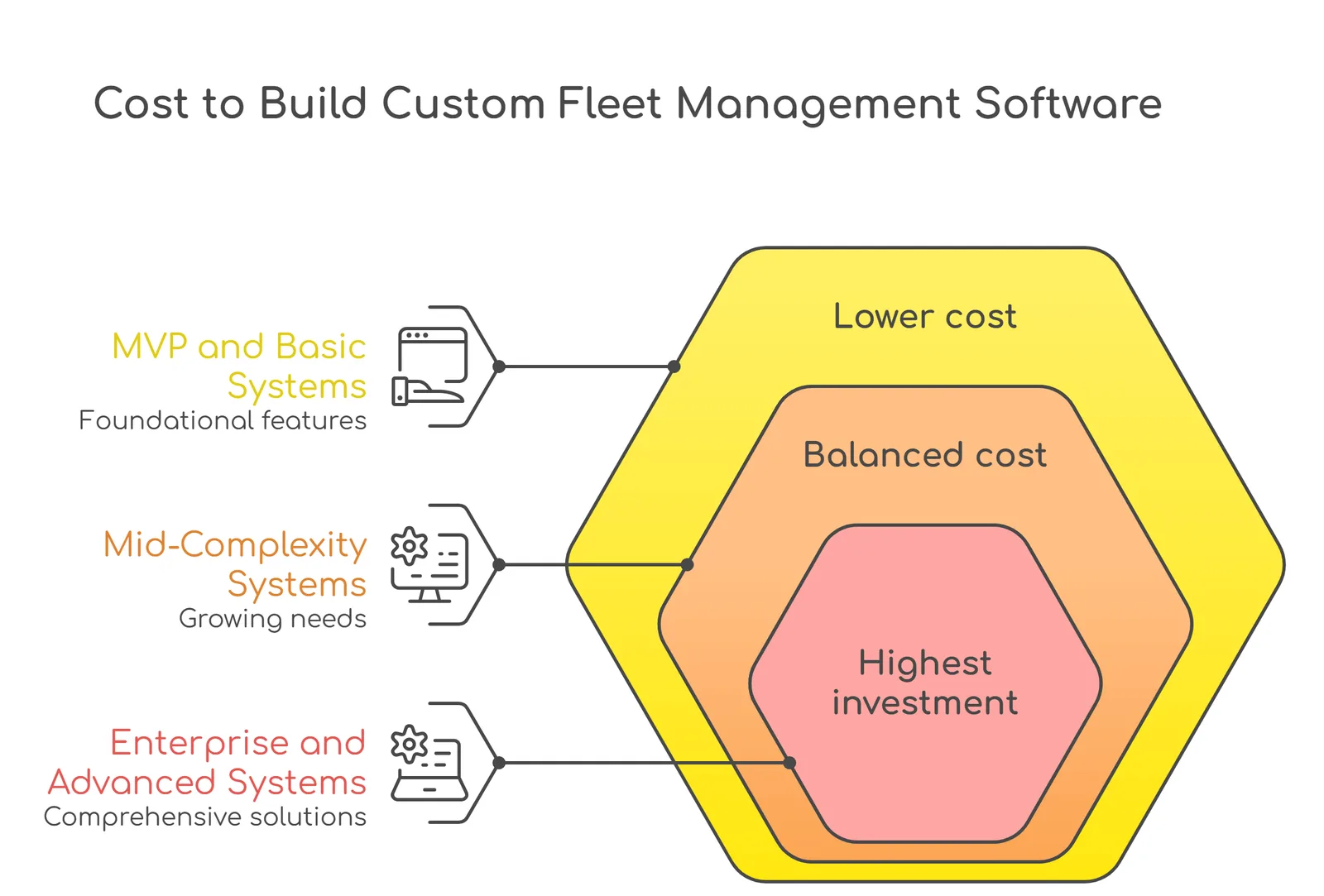
Enterprise and Advanced Systems: $150,000 to $400,000 and above
Large-scale, enterprise-grade fleet platforms operating across multiple geographies, vehicle types, and regulatory environments require investment in this range. These systems incorporate AI-powered route optimization, advanced predictive analytics, multi-region compliance automation, video telematics integration, real-time IoT sensor management, and deep integration with complex enterprise system landscapes, including ERP, WMS, CRM, and customer-facing portals.
For fleets of 500 or more vehicles, the total cost of ownership of a custom platform versus a SaaS stack becomes strongly favorable within a three-to-five-year horizon. Companies switching to custom platforms in this category report 40 to 60 percent reductions in total software costs over five years.
Development Cost by Region
Development team geography is a significant cost variable. U.S. and Western European development teams typically charge $100 to $200 per hour for senior engineers, making a mid-complexity system a $150,000 to $300,000 investment with domestic teams.
Indian development companies of comparable quality charge 40 to 70% less, bringing the same system into the $60,000 to $120,000 range. This cost differential is a primary reason why organizations in the U.S., UK, and UAE increasingly partner with Indian technology firms for fleet software development, without compromising on quality when the right partner is selected.
Custom vs. SaaS: The Five-Year Economics
The economics of custom development versus per-vehicle SaaS subscriptions shift decisively over time. A fleet of 300 vehicles paying $35 per vehicle per month on a SaaS platform spends $126,000 per year on software licenses alone, before add-on modules, integration costs, and implementation fees.
Over five years, that is $630,000 in licensing costs, with no ownership of the platform and complete dependency on the vendor's pricing decisions and product roadmap. A custom platform built for $200,000 with $30,000 per year in maintenance costs totals $350,000 over five years, representing a saving of $280,000 on the software budget, with full ownership, no per-vehicle fees, and a platform aligned to operational requirements.
The table below summarizes the cost framework:
| Build Tier | Estimated Cost | Fleet Size | Timeline |
| MVP / Basic | $40,000 - $80,000 | 20-50 vehicles | 4-6 months |
| Mid-Complexity | $80,000 - $150,000 | 50-300 vehicles | 6-9 months |
| Enterprise Grade | $150,000 - $400,000+ | 300+ vehicles | 9-18 months |
How Antino Can Help You Build the Right Fleet Management Platform?
Antino is an AI consulting & digital transformation partner with deep expertise in building enterprise-grade digital platforms for logistics, transportation, and fleet-intensive industries. For organizations evaluating a custom fleet management software investment, Antino brings together the technical capability, domain knowledge, and delivery process to turn a complex build into a structured, predictable engagement.
Antino's engineering teams have built platforms that handle real-time data streams, complex backend architectures, and mobile-first field interfaces across logistics and operations contexts.
Operating from India with delivery capabilities serving clients in the US, UK, UAE, and beyond, Antino offers the quality of a premium technology partner at a cost point that makes custom development economically compelling for mid-market fleet operators as well as large enterprises. To discuss your fleet management software requirements, contact our team right away!
Key Takeaways
The global fleet management software market will exceed $30 billion in 2026 and is growing at close to 20% annually. The cost of fleet inefficiency across fuel waste, unplanned downtime, compliance failure, and poor route planning is too significant to manage with generic tools and disconnected systems. For fleet operators at scale, custom software development is increasingly the financially rational choice, not just the technically preferable one.
The organizations that have built proprietary fleet intelligence, from UPS in the United States to Aramex in the UAE, DHL across Europe, and Blue Dart in India, have done so because the competitive advantage of a platform built to their exact operational requirements is irreplaceable. That strategic logic applies at every scale of fleet operation.
For C-suite leaders looking to move from reactive fleet management to data-driven fleet intelligence, the investment case for custom software is clear. The question that remains is: who do you build it with?
If you are evaluating a fleet management software investment for 2026 or beyond, speak to the Antino team. We will help you define the right scope, the right architecture, and the right economic model for your organization.