

Ride-hailing apps have quietly become a part of everyday life. Whether it’s a quick office commute, a late-night ride home, or getting around the city without the hassle of parking, booking a cab is now just a few taps away.
But in cities like Dubai, the experience goes a step further.
With smart mobility initiatives and government-backed integrations, services like Hala Taxi have redefined how people move around the city. So, if you’re a business looking to enter this space, the real question is, can you build something similar? And what does it actually take?
Let’s look at the bigger picture.
By 2030, the global ride-hailing market is expected to exceed $230 billion, with some estimates reaching $600 billion, driven by rapid urbanization, increasing smartphone penetration, and growing reliance on on-demand mobility. The market is also projected to grow at a CAGR of 5% to 11.3%, showing steady and long-term demand.
This raises some important questions:
- What makes apps like Hala Taxi so reliable and widely adopted?
- What features are essential to create a smooth rider and driver experience?
- How do integrations with local transport authorities impact development?
- And most importantly, how much does it cost to build an app like this?
As more startups and enterprises explore ride-hailing app development in the UAE, the focus is shifting from just launching an app to building a scalable, compliant, and user-friendly mobility platform.
In this guide, we’ll break down everything you need to know about building an app like Hala Taxi, so you can move forward with clarity.
About Hala Taxi: A Key Player in Dubai’s Ride-Hailing Ecosystem
Hala Taxi has become a core part of how people move around Dubai. Unlike typical ride-hailing apps, it stands out because it’s a joint initiative between Careem and the Roads and Transport Authority (RTA), bringing traditional taxis into a fully digital, app-based experience.
Launched in 2019, Hala was designed to modernize Dubai’s taxi ecosystem by combining Careem’s technology with RTA’s regulated transport network. Instead of replacing traditional taxis, it digitized them, making booking faster, more reliable, and accessible through a single app.
Today, Hala Taxi acts as a key layer in Dubai’s smart mobility vision.
Key Statistics & Insights
- Hala Taxi holds over 41% share of total taxi trips in Dubai, making it one of the dominant players in the city’s ride-hailing space.
- Dubai’s taxi sector recorded 59.5 million trips in just the first half of 2025, highlighting the massive demand for ride-hailing services.
- Around 74% of Hala rides have an arrival time of under 3.5 minutes, showing strong operational efficiency and availability.
- Hala has scaled to over 12,000 vehicles and nearly 24,000 drivers, ensuring high coverage across the city.
- The platform recorded double-digit growth, with taxi trips increasing by 12% and the user base growing by 10% in 2025 alone.
- Hala is deeply integrated into Dubai’s transport infrastructure, contributing to a system that saw over 115 million taxi trips annually across the emirate.
What makes Hala Taxi particularly interesting is its hybrid model. It doesn’t try to disrupt the system like global players, it enhances it. By combining regulated pricing, high availability, and a seamless app experience, it creates a balance between trust and convenience.
For businesses looking to build a similar app, this is a key takeaway as success doesn’t always come from reinventing the wheel. Sometimes, it comes from connecting the right pieces in the right way.
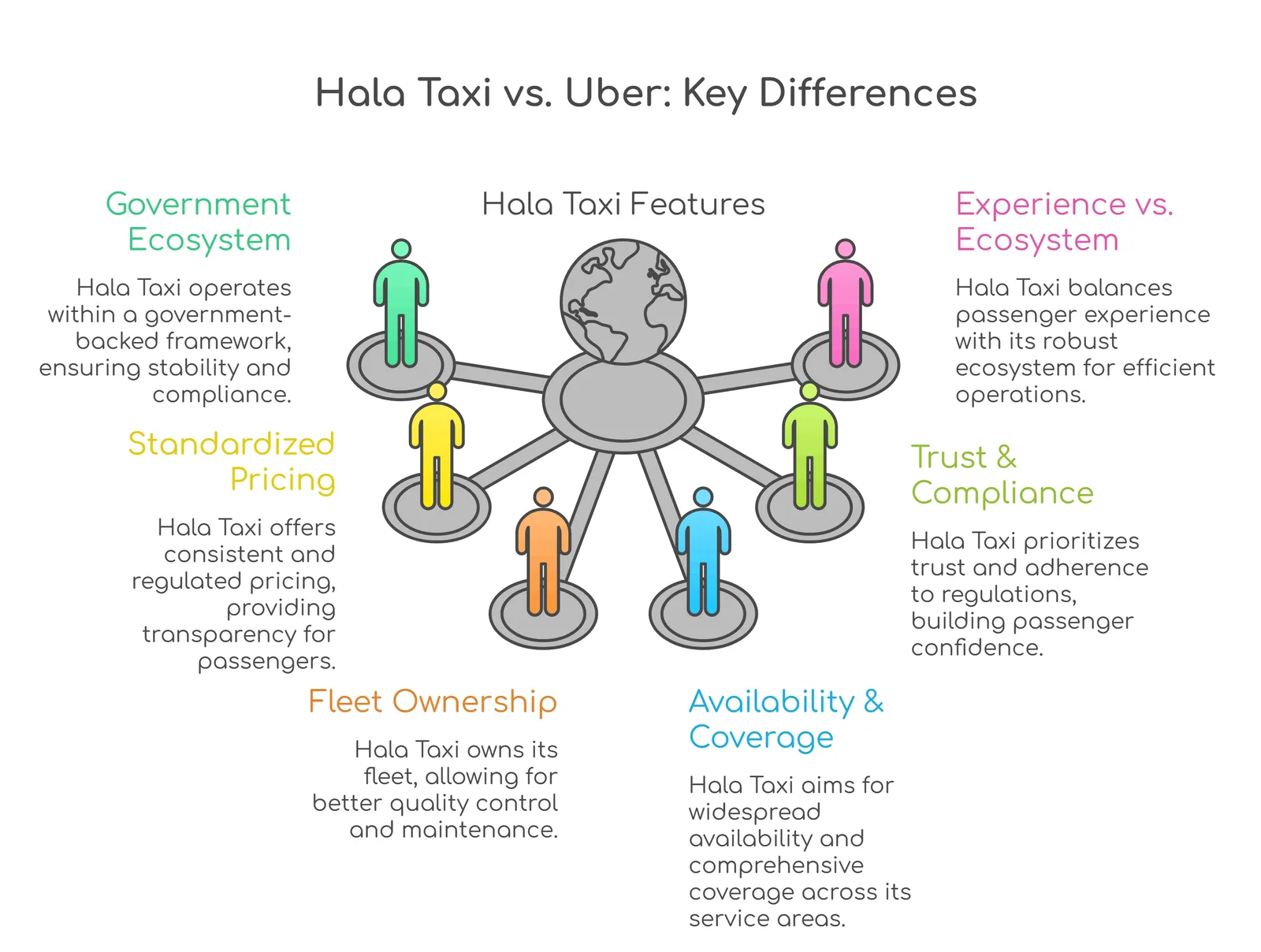
What Makes Hala Taxi Different From Uber?
At first glance, Hala Taxi and Uber may seem similar because both let users book rides, track drivers, and make payments through an app. But once you look closer, the difference lies in how the service is built and what it’s designed for.
1. Built on a Government-Backed Ecosystem
Hala Taxi isn’t a standalone private platform. It operates in partnership with Dubai’s transport authority, which means it is directly connected to the city’s official taxi network.
Uber, on the other hand, functions as an independent global platform that works with private drivers rather than being tied to a government-regulated fleet.
This makes Hala feel more like an extension of the city’s infrastructure, rather than just another ride-hailing option.
2. Standardized & Regulated Pricing
One of the biggest differences is pricing.
Hala follows RTA-regulated fare structures, which means:
- Prices are consistent and transparent
- Surge pricing is limited or controlled
- Users know what to expect
Uber uses a dynamic pricing model, where fares can increase significantly during peak hours due to demand.
For users in Dubai, this often makes Hala a more predictable and cost-effective option.
3. Fleet Ownership vs Aggregation Model
Hala connects users to licensed RTA taxis, which are part of an existing fleet managed under strict regulations.
Uber operates on an aggregation model, where independent drivers use their own vehicles to offer rides on the platform.
This difference impacts:
- Vehicle standardization
- Driver training and compliance
- Overall ride consistency
4. Availability & Coverage
Because Hala is integrated with Dubai’s taxi network, it benefits from wide city coverage and high vehicle availability.
This is why users often experience:
- Faster pickup times
- Better availability in busy areas
- More consistent service across locations
Uber’s availability can vary depending on driver supply and demand in a given area.
5. Trust & Compliance
Hala Taxi is closely aligned with local regulations, which builds a strong sense of trust among users.
- Drivers are licensed and verified by authorities
- Vehicles meet regulatory standards
- Pricing and operations follow government guidelines
Uber also maintains safety standards, but operates under a platform-based compliance model, which can differ across regions.
6. Experience vs Ecosystem
Uber focuses on delivering a premium, flexible ride-hailing experience across global markets.
Hala, on the other hand, focuses on creating a localized, reliable mobility solution that fits perfectly into Dubai’s smart city vision.
It’s less about disruption and more about integration.
Therefore, the biggest difference between the 2 is philosophy.
Uber is built to scale globally with a flexible, driver-based model. Whereas Hala Taxi is built to work within a city’s ecosystem, enhancing what already exists.
For businesses looking to build a similar app, this is an important distinction because you’ll have to choose between building a platform and building an ecosystem.
How Does the Hala Taxi Ride-Hailing App Work?
On the surface, booking a ride feels effortless, like you just need to enter your destination, confirm the ride, and a cab shows up. But behind that simple flow is a well-coordinated system of real-time data, location tracking, matching algorithms, and secure payments.
To truly understand how a ride-hailing app like Hala works, let’s break it down from both the user and system perspectives.
- Starts with the User Request
The process begins when a user opens the app and enters their pickup and drop location. The app uses GPS and mapping services to detect the current location and suggest accurate routes.
At this point, the system calculates:
- Estimated fare
- Approximate travel time
- Nearby driver availability
This information is shown instantly to help the user make a quick decision.
- Real-Time Driver Matching
Once the user confirms the ride, the system looks for the nearest available driver.
This isn’t random because it’s handled through intelligent matching algorithms that consider:
- Driver proximity
- Traffic conditions
- Driver availability and status
- Estimated arrival time
The goal is to assign the ride to the driver who can reach the user the fastest while maintaining efficiency across the network.
- Driver Acceptance & Confirmation
The ride request is sent to one or multiple nearby drivers. As soon as a driver accepts the request, the user is notified with:
- Driver details
- Vehicle information
- Estimated time of arrival
At the same time, the driver receives the user’s pickup location and navigation instructions.
- Live Tracking & Navigation
Once the ride is confirmed, both the user and driver can track each other in real time.
- The user sees the driver approaching on the map
- The driver uses integrated navigation for the best route
- Traffic data is continuously updated to optimize the journey
This real-time visibility adds transparency and reduces uncertainty.
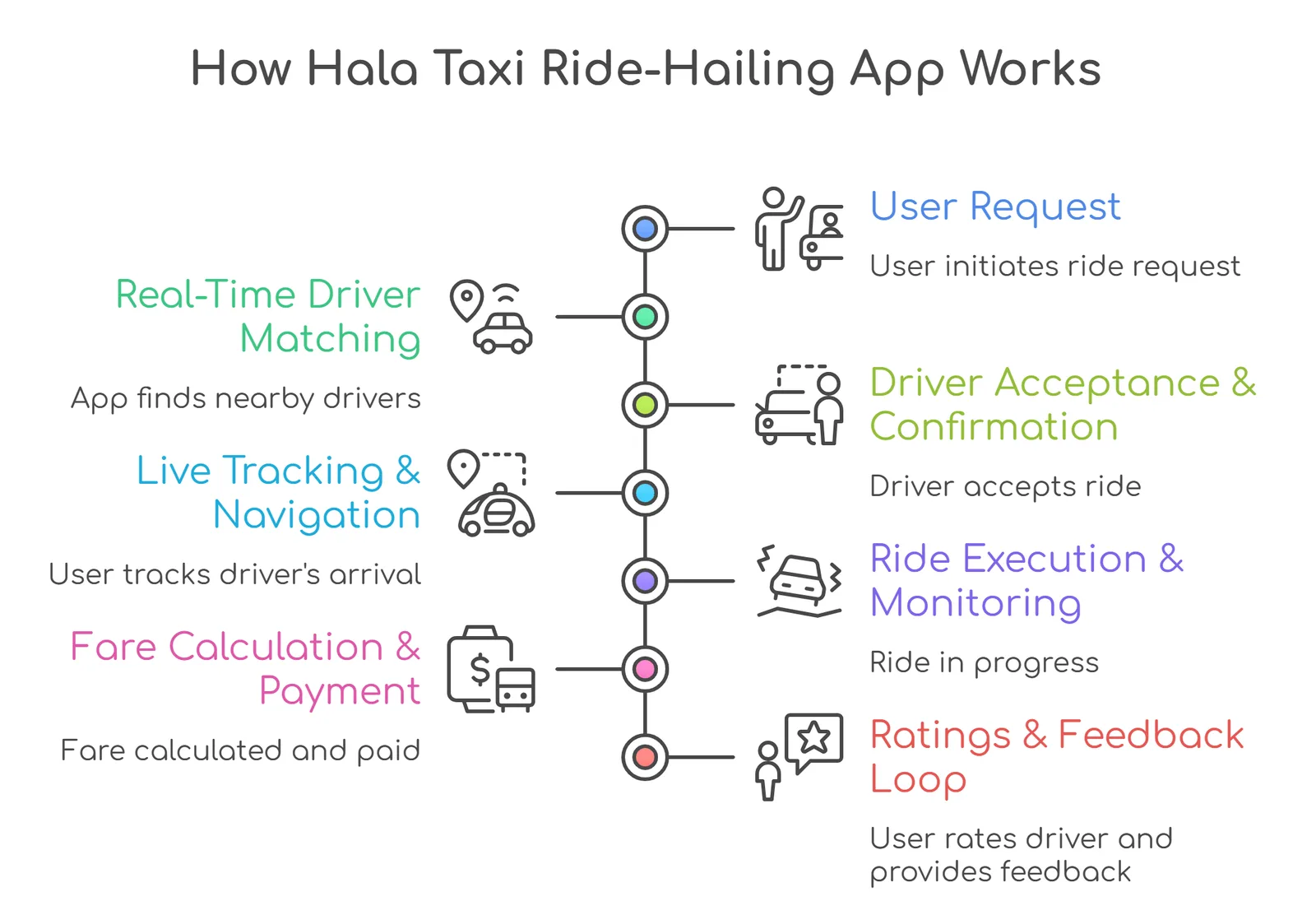
- Ride Execution & Monitoring
During the trip, the app continues to work in the background.
- GPS tracks the route taken
- The system calculates distance and time
- Any route changes or delays are updated instantly
In advanced systems, safety features like trip sharing and emergency alerts are also active during this phase.
- Fare Calculation & Payment
Once the ride is completed, the system calculates the final fare based on:
- Distance traveled
- Time taken
- Any applicable charges (like tolls or waiting time)
The payment is then processed through the app using:
- Cards or digital wallets
- In-app payment gateways
- Sometimes cash (depending on the region)
The user receives an instant receipt, and the driver gets their earnings updated.
- Ratings & Feedback Loop
After the ride, both the user and driver can rate each other.
This feedback system helps:
- Maintain service quality
- Identify issues early
- Improve overall experience over time
It also plays a role in driver rankings and future ride allocations.
What Happens Behind the Scenes?
While all this feels simple, the backend is constantly managing multiple processes at once:
- Handling thousands of ride requests simultaneously
- Managing driver availability in real time
- Ensuring accurate location tracking
- Processing secure payments
- Maintaining system performance during peak demand
This is usually powered by cloud infrastructure, APIs, and a microservices architecture to ensure scalability and speed.
Where AI & Automation Come In?
Modern ride-hailing apps go beyond basic functionality by using AI to improve efficiency.
- Predict demand in specific areas and position drivers accordingly
- Optimize routes based on real-time traffic patterns
- Detect fraudulent activities or unusual behavior
- Personalize user experience based on ride history
Automation also helps in reducing manual effort by managing ride assignments, notifications, and support workflows.
So, a Hala-like ride-hailing mobile app development is like developing a real-time coordination system.
It connects users, drivers, maps, payments, and data into one continuous flow where everything happens instantly and seamlessly.
And that’s what makes it powerful. The complexity stays behind the scenes, while the user gets a smooth, reliable experience every single time.
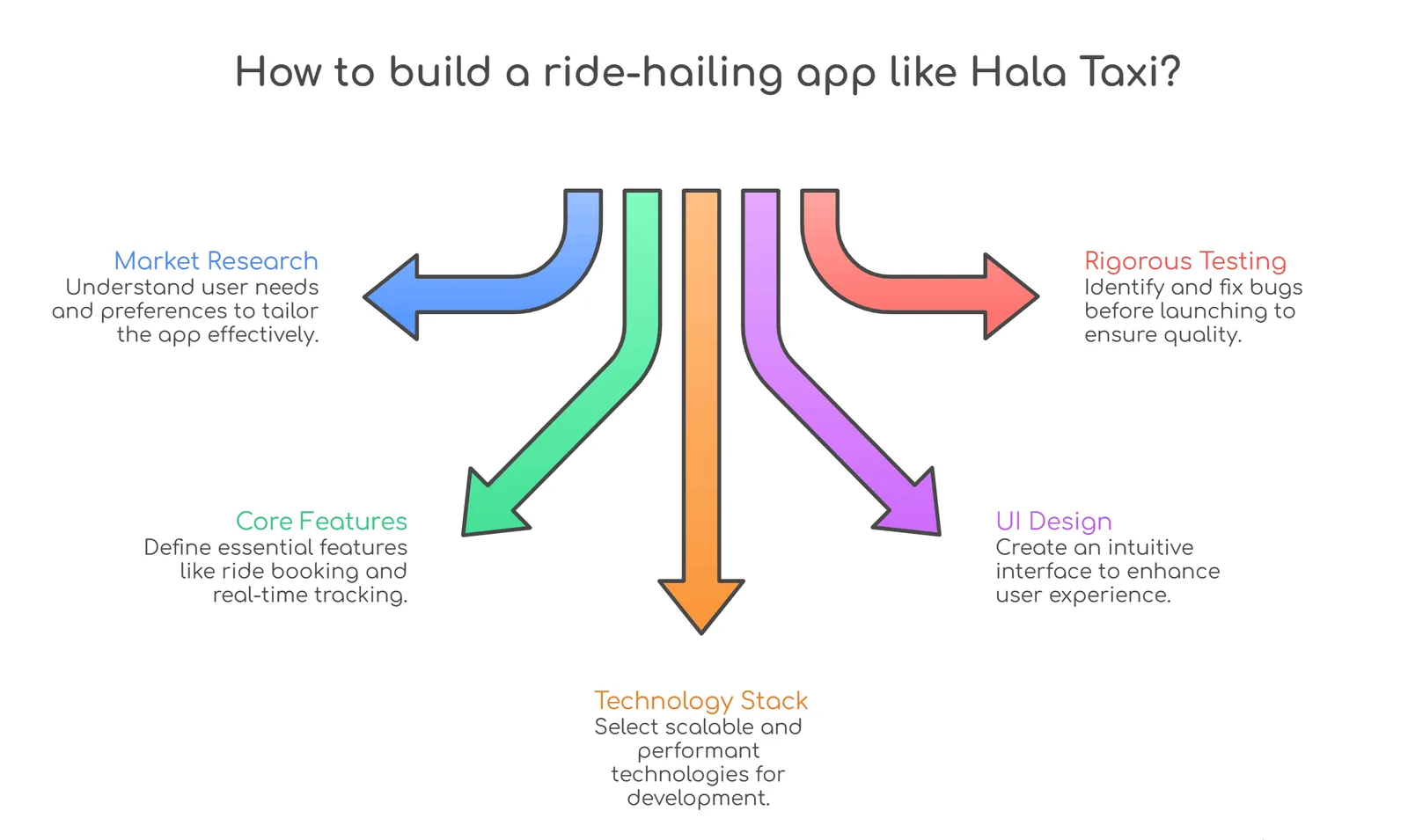
How to build an app like Hala Taxi?
Building a ride-hailing app like Hala Taxi is about designing a real-time mobility system that connects riders, drivers, maps, payments, and compliance into one smooth experience. To do this right, you need a clear step-by-step approach that balances speed, scalability, and user trust.
Here’s how you can go about it…
1. Start with Market Understanding
Before jumping into development, it’s important to understand the market you’re entering.
In cities like Dubai, ride-hailing is already mature and regulated. So instead of building just another app, you need to identify:
- What gap are you solving
- Who your target users are
- How your service will stand out
This step helps you avoid building features that users don’t actually need.
2. Define Your Business Model
Your business model shapes everything.
You need to decide:
- Will you partner with existing taxi fleets or onboard independent drivers?
- Will pricing be fixed, dynamic, or regulated?
- How will you generate revenue (commissions, subscriptions, etc.)?
A clear model ensures your product is not just functional, but also sustainable.
3. Plan Core Features (Start with MVP)
Instead of building everything at once, start with a focused version of your app.
Your initial version should include:
- Rider app (booking, tracking, payments)
- Driver app (ride management, navigation, earnings)
- Admin panel (monitoring and control)
The goal is to launch quickly with essential features and improve based on real user feedback.
4. Design a Simple & Intuitive UI/UX
Ride-hailing apps are used on the go, so the experience needs to be fast and easy.
- Keep the booking flow short and clear
- Ensure maps and navigation are easy to understand
- Minimize steps for payments and confirmations
A good design reduces confusion and increases repeat usage.
5. Build a Strong Backend Architecture
The backend is where most of the complexity lies.
You’ll need:
- Real-time data handling for ride requests and tracking
- Scalable infrastructure to handle multiple users
- APIs to connect maps, payments, and notifications
A solid backend ensures your app performs well even during peak demand.
6. Integrate Maps & Real-Time Tracking
Location tracking is the core of any ride-hailing app.
You need to integrate:
- GPS for live location tracking
- Mapping services for route optimization
- Real-time updates for accurate ETAs
This is what makes the experience feel seamless and reliable.
7. Set Up Secure Payment Systems
Payments should be quick, flexible, and secure.
- Support multiple payment options (cards, wallets, etc.)
- Ensure real-time transaction processing
- Maintain clear billing and receipts
A smooth payment experience builds long-term trust.
8. Focus on Driver Onboarding & Management
Drivers are a key part of your platform.
You need systems for:
- Easy onboarding and document verification
- Ride acceptance and navigation
- Earnings tracking and payouts
A well-managed driver experience directly impacts service quality.
9. Ensure Compliance & Regulations
In regulated markets, this step is critical.
- Follow local transport authority guidelines.
- Ensure driver and vehicle compliance
- Align with pricing and operational rules
Building with compliance in mind from the start saves time and risk later.
10. Add AI & Smart Features
Once the basics are in place, AI can enhance performance.
- Smart driver-rider matching
- Demand prediction for better availability
- Route optimization based on traffic
- Fraud detection and safety monitoring
These features improve efficiency and user experience over time.
11. Test, Launch & Improve
Before launching, thoroughly test the app.
- Check all user flows.
- Test under different network conditions
- Identify and fix performance issues
After launch, focus on:
- User feedback
- Continuous improvements
- Adding new features gradually
12. Scale Gradually
Don’t try to expand too fast.
Start with:
- A limited geography
- A controlled number of users and drivers
Then scale based on demand, performance, and operational readiness.
Building an app like Hala Taxi is not a one-time project. It requires the right mix of technology, strategy, and execution. If you focus on solving real user problems, building a strong foundation, and scaling step by step, you can create a platform that is truly reliable and impactful.
Core Features to Build an app like Hala
Building a ride-hailing app like Hala is about creating a system where riders, drivers, and operations work together in real time without friction. The right set of features ensures the app is not only functional but also reliable, scalable, and easy to use.
Here are the core features you need to focus on…
User Registration & Profile Management
The journey starts with a simple and secure onboarding process. Users should be able to sign up quickly using mobile numbers, social logins, or email. Profile management allows them to save personal details, preferred payment methods, and frequently used locations for faster bookings.
Ride Booking & Scheduling
At the heart of the app is the ability to book a ride instantly or schedule it for later. Users should be able to enter pickup and drop locations, view fare estimates, and confirm rides within seconds. A smooth booking flow is essential for repeat usage.
Real-Time GPS Tracking
Live tracking is a must-have feature. Users should be able to track the driver’s location before and during the ride, while drivers rely on navigation for optimized routes. This builds transparency and reduces uncertainty.
Driver Panel & Ride Management
A dedicated driver interface is equally important. Drivers need features to accept or reject rides, view trip details, navigate routes, and track earnings. A well-designed driver panel ensures better efficiency and service quality.
Fare Calculation & Payment Integration
The app should automatically calculate fares based on distance, time, and other factors. It must support multiple payment options such as cards, wallets, and cash (if applicable), along with instant receipts and transaction history.
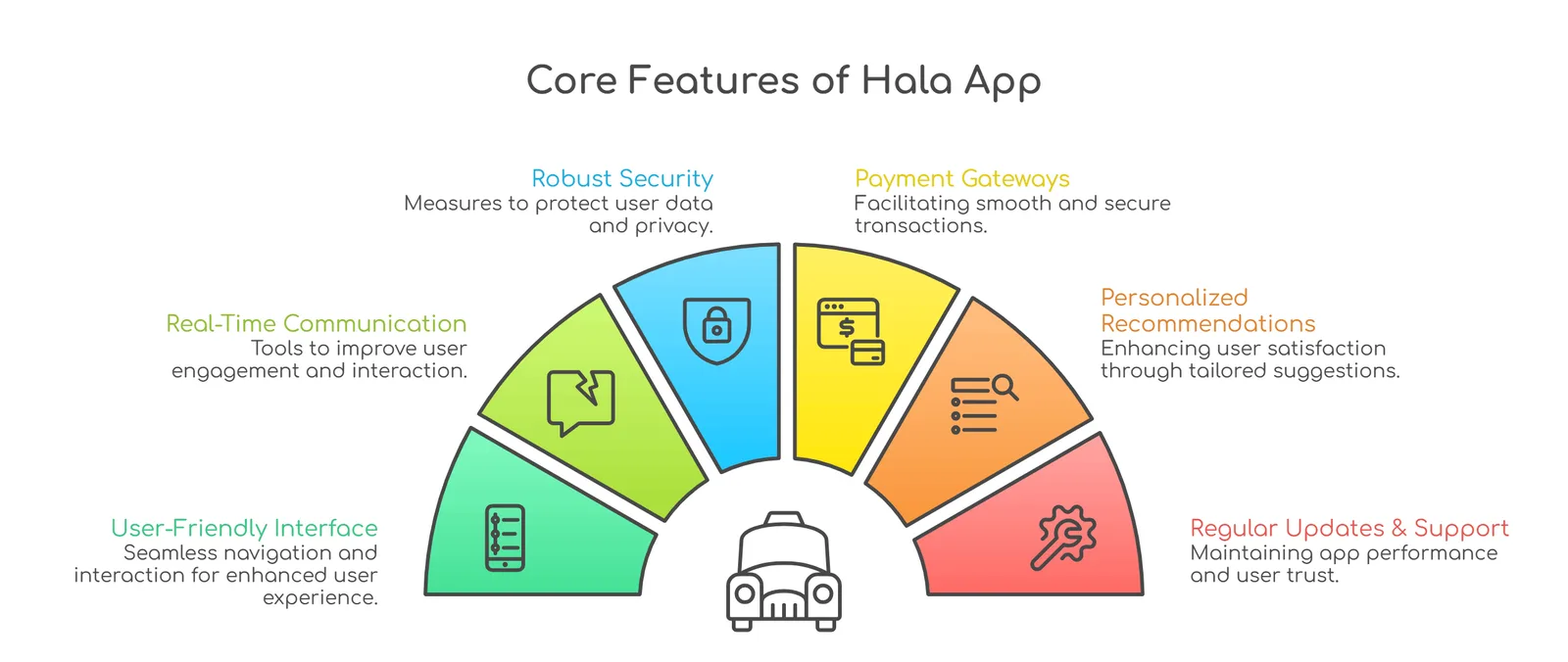
Push Notifications & Alerts
Timely notifications keep users and drivers informed. Whether it’s ride confirmations, driver arrival updates, or payment receipts, real-time alerts enhance the overall experience.
Ratings & Feedback System
A two-way rating system helps maintain service quality. Users can rate drivers, and drivers can rate passengers, creating accountability and improving trust across the platform.
Ride History & Trip Details
Users should be able to access past rides, invoices, and trip summaries easily. This adds convenience and helps with expense tracking or issue resolution.
Admin Dashboard
Behind the scenes, an admin panel is essential to manage operations. It allows businesses to monitor rides, manage drivers, track performance, handle disputes, and gain insights into overall platform activity.
Some Advanced AI Features That Separate Good Apps From Great Ones
Once the basics are in place, AI and automation can take your app to the next level.
Intelligent Ride Matching
Instead of assigning drivers randomly, AI can match users with the most suitable driver based on proximity, traffic, and demand patterns, reducing wait times and improving efficiency.
Dynamic Pricing Optimization
AI can help balance supply and demand by adjusting pricing intelligently, ensuring better availability during peak hours without negatively impacting user trust.
Predictive Demand Analysis
The system can forecast high-demand areas and proactively position drivers, improving ride availability and reducing idle time.
Smart Route Optimization
Advanced algorithms can suggest the fastest and most efficient routes by analyzing real-time traffic conditions, saving both time and fuel.
Fraud Detection & Safety Monitoring
AI can identify unusual patterns, detect fraudulent activities, and enhance safety by flagging suspicious behavior during rides.
Voice Assistance & Smart Search
Users can book rides or search destinations using voice commands, making the app more accessible and user-friendly.
Building an app like Hala is about creating a connected, real-time experience where everything works seamlessly. The core features ensure the app functions smoothly, while AI-powered capabilities make it smarter, faster, and more efficient. And that’s what ultimately defines a successful ride-hailing platform.
Business Model of Hala Taxi App
The business model of Hala Taxi is what makes it stand out in the ride-hailing space. Instead of operating like a typical ride-hailing platform, it follows a hybrid approach that combines government infrastructure with private technology.
At its core, Hala doesn’t own vehicles or operate as a completely independent marketplace. It works by digitizing Dubai’s existing taxi network, connecting users to licensed taxis through a seamless app experience. This allows the platform to scale quickly without the need to build a fleet from scratch.
Partnership-Led Model
Hala is built on a strong collaboration between Careem and the Roads and Transport Authority.
Careem provides:
- The technology platform
- App interface and user experience
- Payment systems and data infrastructure
The RTA provides:
- Licensed taxi fleet
- Drivers and regulatory framework
- Pricing structure and compliance guidelines
This partnership allows Hala to operate with both efficiency and trust, which is difficult to achieve with a purely private model.
Commission-Based Revenue
Hala generates revenue primarily through a commission model.
For every ride completed:
- A percentage of the fare is shared with the platform
- The rest goes to the driver/operator
Since pricing is regulated, the focus is not on increasing fares but on increasing ride volume and operational efficiency.
High-Volume, Low-Margin Strategy
Unlike premium ride-hailing services, Hala focuses on affordability and accessibility.
This means:
- Lower ride costs for users
- Higher ride frequency
- Consistent demand throughout the day
The business model relies on scale, where a large number of daily rides drives overall revenue.
Integration with a Larger Ecosystem
Hala operates within the broader ecosystem of Careem, which includes:
- Food delivery
- Payments
- Other mobility services
This allows:
- Cross-service usage
- Higher customer retention
- Increased lifetime value of users
Instead of being a standalone product, Hala benefits from being part of a multi-service platform.
Asset-Light Operations
One of the biggest advantages of Hala’s model is that it is asset-light.
- No need to purchase or maintain vehicles
- No direct hiring of drivers at scale
- Lower operational risks compared to fleet ownership
By leveraging existing infrastructure, the platform can focus more on technology and user experience.
Regulated Pricing Advantage
Since fares are standardized by the RTA:
- Users trust the pricing
- There is minimal fluctuation
- The platform avoids extreme surge pricing scenarios
This creates a predictable and stable revenue environment, even if margins are controlled.
Data-Driven Optimization
Hala also benefits from data insights gathered through the platform.
- Ride demand patterns
- Peak usage times
- Location-based trends
This data helps improve:
- Driver allocation
- Wait times
- Overall efficiency
Over time, this leads to better service quality and higher user satisfaction.
The Hala Taxi business model is about integration and optimization. Instead of replacing traditional taxis, it enhances them through technology. Instead of focusing on high margins, it focuses on scale, efficiency, and trust.
For businesses looking to build a similar app, the key takeaway is that success often comes from connecting and improving what already exists.
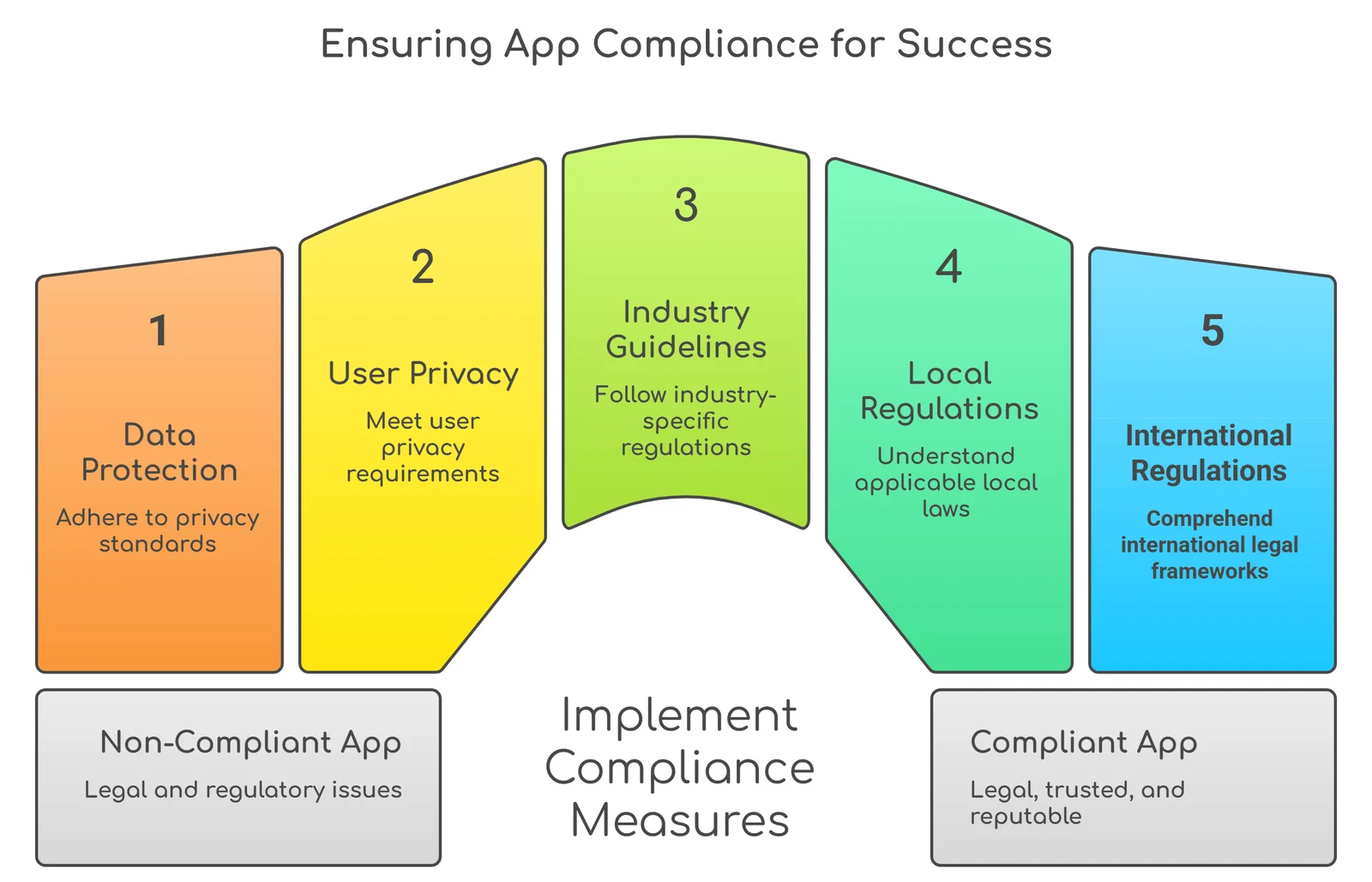
Regulatory & Compliance Layer you must take care of while considering building an app like Hala
When it comes to building a ride-hailing app, technology is only one part of the equation. The real challenge, especially in markets like Dubai, is navigating the regulatory landscape. Unlike many other digital products, ride-hailing platforms operate in a space that is closely monitored and highly regulated.
Ignoring compliance early on can lead to delays, penalties, or even complete shutdowns. That’s why understanding the regulatory layer from day one is critical.
Local Transport Authority Regulations
In cities like Dubai, transport services are governed by authorities such as the Roads and Transport Authority.
This means:
- You cannot operate freely without approvals
- Your platform must align with local transport policies
- Driver onboarding and vehicle usage must follow strict guidelines
Unlike global platforms that adapt later, compliance here needs to be built into the foundation of your app.
Driver & Vehicle Compliance
One of the most important areas is ensuring that drivers and vehicles meet regulatory standards.
This typically includes:
- Verified driver's licenses and background checks
- Approved vehicle types and condition standards
- Regular inspections and documentation
In regulated markets, drivers are not just users of your platform, they are also a part of a licensed ecosystem.
Pricing & Fare Regulations
In many regions, especially in government-backed models like Hala, pricing is not entirely flexible.
- Fare structures may be standardized
- Surge pricing may be restricted or monitored
- Transparency in pricing is mandatory
This impacts your business model, as you need to design systems that comply with controlled pricing frameworks.
Data Protection & Privacy Laws
Ride-hailing apps handle sensitive user data, including:
- Location information
- Personal details
- Payment data
This requires strict adherence to data protection laws.
Your app must ensure:
- Secure data storage and encryption
- User consent for data usage
- Compliance with regional privacy regulations
Failure to do so can lead to serious legal and reputational consequences.
Payment & Financial Compliance
Since payments are a core feature, your platform must follow financial regulations.
This includes:
- Integration with approved payment gateways
- Compliance with anti-money laundering (AML) norms
- Secure transaction processing standards
In some regions, even digital wallets and payment flows are regulated, which directly affects how your app handles transactions.
Operational & Safety Standards
User safety is a major priority in ride-hailing.
Regulators often require:
- Emergency support features within the app
- Ride tracking and sharing capabilities
- Incident reporting mechanisms
These features are often mandatory for approval.
Licensing & Permits
Before launching, you’ll likely need:
- Operational licenses for ride-hailing services
- Permissions to connect with transport networks
- Approval for driver onboarding models
The process can be time-consuming, which is why it should be planned early in your development journey.
Continuous Compliance & Updates
Regulations are not static because they evolve over time.
- New policies may be introduced
- Existing rules may change
- Technology standards may be updated
Your platform needs to be flexible enough to adapt quickly without major disruptions.
Where Technology Can Help?
A well-built system can make compliance easier to manage.
- Automated document verification for drivers
- Real-time monitoring of rides and safety parameters
- Secure data handling and audit trails
AI and automation can also help identify risks early and ensure that your platform stays aligned with regulatory requirements.
Building an app like Hala is about building a platform that fits within a regulated ecosystem. Compliance is a foundation of apps like Hala. If done right, it builds trust, ensures long-term stability, and makes your app more reliable in the eyes of both users and authorities.
How much does it cost to build an app like Hala?
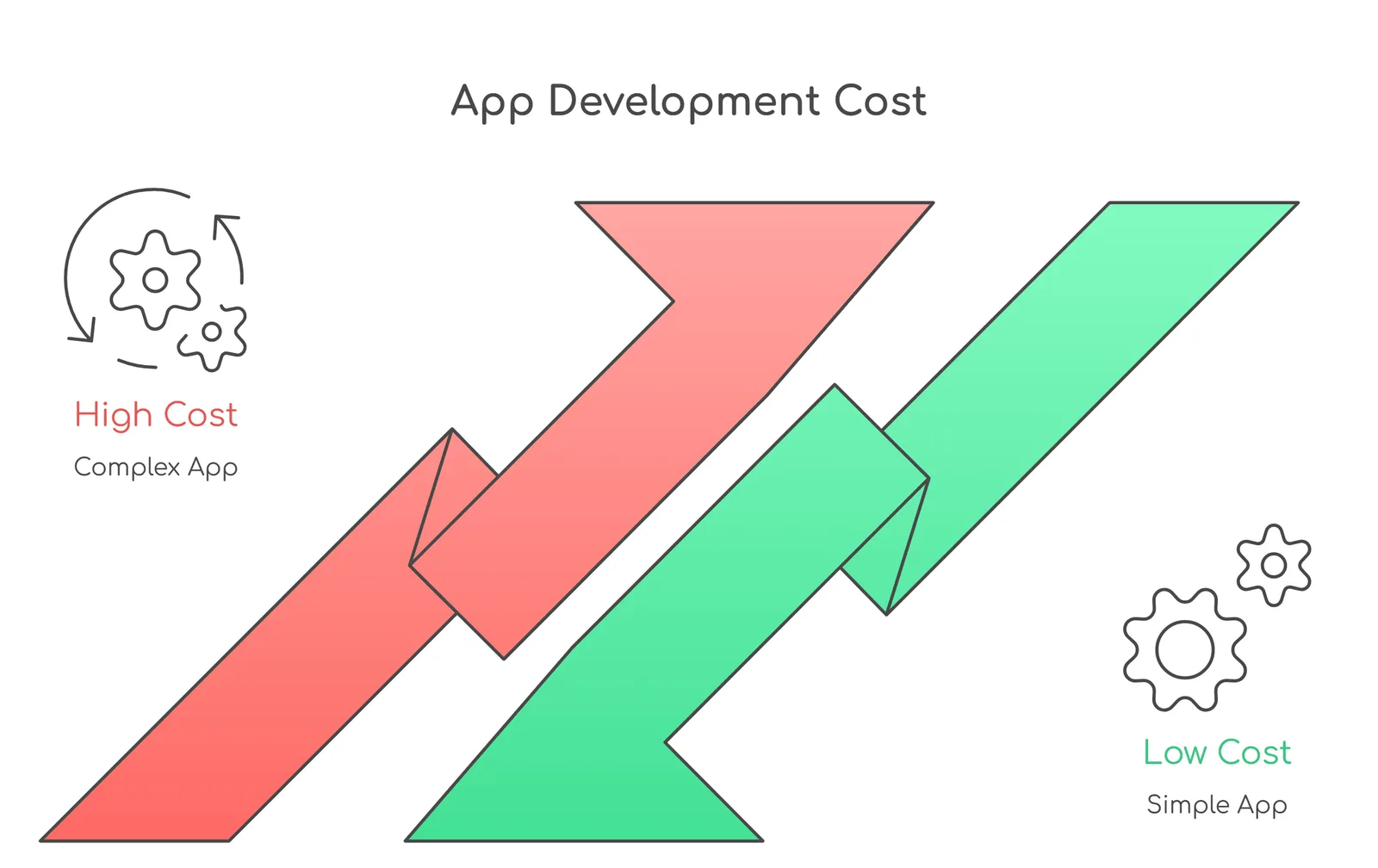
If you’re planning to build a ride-hailing app like Hala, one of the first questions that comes up is cost. And rightly so, because this isn’t just about building an app interface, it’s about creating a real-time, multi-user, location-based system that needs to be fast, reliable, and scalable.
The cost can vary significantly depending on how advanced you want your platform to be. Factors like features, integrations, compliance requirements, and AI capabilities all play a major role in determining the final investment.
What Drives the Cost?
Several elements influence the overall development cost:
- The number of features for riders, drivers, and admin panels
- Real-time GPS tracking and map integrations
- Payment gateway setup and transaction handling
- Third-party integrations (like SMS, notifications, analytics)
- Backend infrastructure and scalability requirements
- Security, compliance, and data protection layers
- AI-based features like smart matching and demand prediction
The more refined and scalable your platform needs to be, the higher the cost.
Cost Comparison Breakdown
Here’s a simplified comparison to help you understand how costs scale based on complexity.
| App Type | What You Get | Estimated Cost (USD) | Timeline |
| Basic App | Core ride booking, simple UI, basic GPS tracking, limited features | $30,000 - $60,000 | 2 - 4 months |
| Advanced App | Real-time tracking, multiple payment options, driver app, and admin panel | $70,000 - $150,000 | 4 - 8 months |
| Complex App | Full-scale platform like Hala with AI, integrations, scalability, and compliance | $180,000- $350,000+ | 8 - 14+ months |
Understanding the Levels
A basic app is ideal if you want to test your idea quickly. It includes essential ride-booking features but limited scalability and integrations.
An advanced app brings you closer to a real-world product. It includes better UI/UX, real-time systems, secure payments, and multiple user panels, making it suitable for market entry.
A complex app is where you build a full ecosystem similar to Hala. This includes deep integrations, compliance layers, AI-driven features, and infrastructure that can handle large-scale operations.
Hidden Costs to Consider
The development cost is just one part of the equation. There are ongoing expenses you need to plan for:
- Cloud hosting and server costs
- Maintenance and updates
- Third-party API and service fees
- Customer support and operations
- Security upgrades and compliance changes
These costs grow as your user base expands.
Smarter Approach
Instead of building everything at once, many businesses start with a focused version of the app and gradually expand. This helps reduce initial investment, speeds up go-to-market, and allows you to build based on real user feedback.
Therefore, building an app like Hala is a significant investment, but it’s also an opportunity to tap into a growing, high-demand market. The key is not just how much you spend, but how strategically you invest by starting with the right features, building a strong foundation, and scaling over time.
How can Antino help you build an app like Hala?
Building an app like Hala Taxi is about getting a lot of moving parts to work smoothly together. Antino is a leading app development company that helps you simplify that journey. From planning what features you actually need in the beginning to building a fast, reliable app for both riders and drivers, our team focuses on making sure your product works well from day one. We don’t just build for launch, we build keeping your growth in mind.
What makes it easier with Antino is that we handle the complex stuff without making it feel overwhelming for you. Whether it’s integrating maps, setting up payments, or ensuring your app is ready for scale, we guide you at every step. As your app grows, we help you add smarter features, improve performance, and keep everything running smoothly, so you can focus on building your business while we take care of the tech behind it.